Catering is the second-biggest line item on almost every South African wedding budget, right behind the venue itself, and it's usually the one couples spend the least time actually researching before booking. Most people pick a style because it's what they've seen at other weddings, not because they've weighed it against their actual guest list, venue, and budget. That's worth fixing, because the catering style you choose shapes the whole feel of the reception more than almost any other single decision.
Jump to a section
- The four catering styles
- Buffet vs. plated: direct comparison
- Where catering fits in the timeline
- Where speeches fit with the food
- Common problems, and how to prevent them
- What it actually costs
- Planning around your guest list
- Traditional and cultural catering
- Choosing a caterer
- Contract red flags
- Bar and drinks
- Load shedding
- Staffing
- Outdoor and marquee weddings
- Questions to ask your venue
- FAQ
The four real catering styles, and who each one actually suits
Plated service
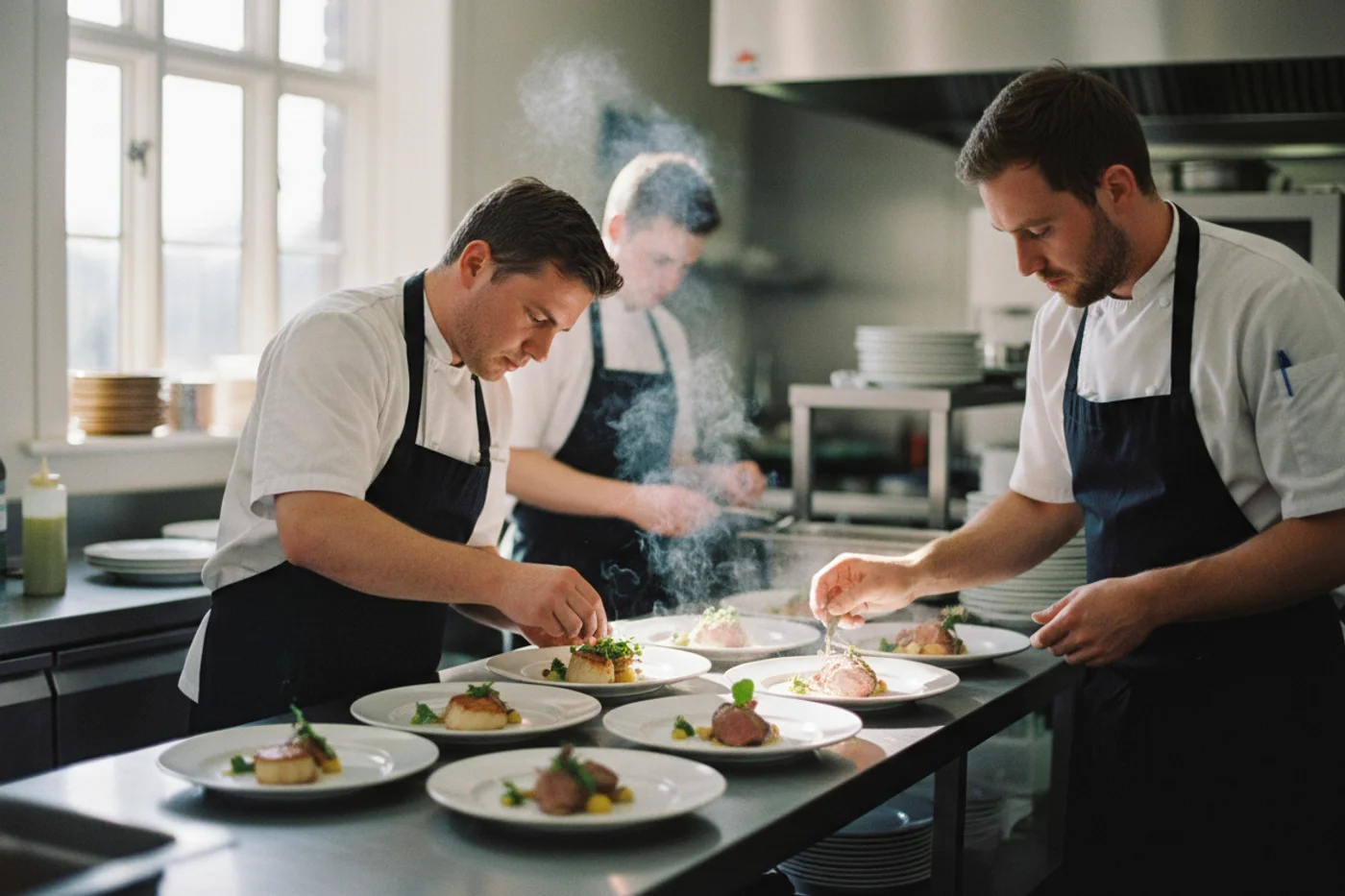
Guests stay seated while each course is brought to the table in sequence, timed and controlled by the catering team. It's the most formal option and the one that photographs best, everyone seated, courses arriving in order, nothing left half-eaten on a buffet line. It suits black-tie receptions, indoor venues with a formal room layout, and couples who want a tightly run, predictable evening. The trade-off is cost and flexibility. Plated service needs more waitstaff per guest than any other style, and menu choices are locked in weeks ahead, usually to two or three options per course, which means less room for last-minute dietary changes.
Buffet service
Long tables of food, guests serve themselves. It's the most familiar style at South African weddings and for good reason: it's genuinely more affordable per head than plated, since it needs fewer staff and lets a caterer prepare in larger batches rather than plating hundreds of individual servings. It also naturally accommodates a wider range of dietary needs, since guests can build their own plate around what works for them. The downside is pacing. A poorly managed buffet queue at a 150-guest wedding can eat 45 minutes out of the evening, and food sitting out longer needs more careful temperature management in South African summer heat.
Family-style service
Large shared platters brought to each table, passed around the way a big family dinner works. It sits between plated and buffet in both cost and formality, and it does something neither of the other two does well: it gets people talking and reaching across the table together, which suits a warm, informal reception better than either alternative. It genuinely struggles past about 150 guests, since it needs long or round tables with real surface space for platters, and service gets logistically messy once you're managing dozens of tables at once.
Food stations
Multiple serving points around the reception space, each built around a specific dish, cuisine, or live-cooked element, a carving station, a pasta station, a braai station. It's the most interactive and social of the four styles, guests move, mingle, and choose rather than sitting through a fixed sequence, and live cooking doubles as a bit of entertainment in its own right. It needs more floor space than any other style and usually costs more per head, since chef-attended stations need more skilled staff on-site than a buffet line does. Older guests in particular sometimes prefer being served at the table rather than moving between stations, worth factoring in if your guest list skews older.
Buffet vs. plated: the direct comparison
These two get compared more than any other pairing, since they sit at opposite ends of how a reception actually feels. Here's the head-to-head:
| Buffet | Plated | |
|---|---|---|
| Cost per guest | Lower — fewer staff needed | Higher — more waitstaff per table |
| Formality | Casual to semi-formal | Formal, most photogenic |
| Guest choice | High — build your own plate | Locked in weeks ahead, 2-3 options per course |
| Dietary flexibility | Easy — guests self-select | Needs advance notice per guest |
| Pacing risk | Queue backing up at large weddings | Course timing tightly controlled by staff |
| Temperature risk | Higher — food sits out longer | Lower if timed well, high if service is delayed |
| Best guest count | Scales well to large weddings | Scales well, but cost climbs with headcount |
Neither is objectively better. Buffet wins on cost, flexibility, and dietary ease; plated wins on formality, pacing control, and photographs. The temperature risk row matters more than people expect, and it's worth its own section below, since it's the single most common complaint from wedding guests about either style.
Where catering fits in the actual South African reception timeline
South African MCs generally run receptions on a different structure to what most international wedding-planning advice describes, and it's worth understanding before you build your own timeline with your caterer. The guiding principle experienced local MCs use is "an EVENT, then a MEAL": a formal moment, followed by a course, followed by the next formal moment, followed by the next course, rather than one long uninterrupted meal with all the speeches bolted onto either end. In practice, that usually looks like:
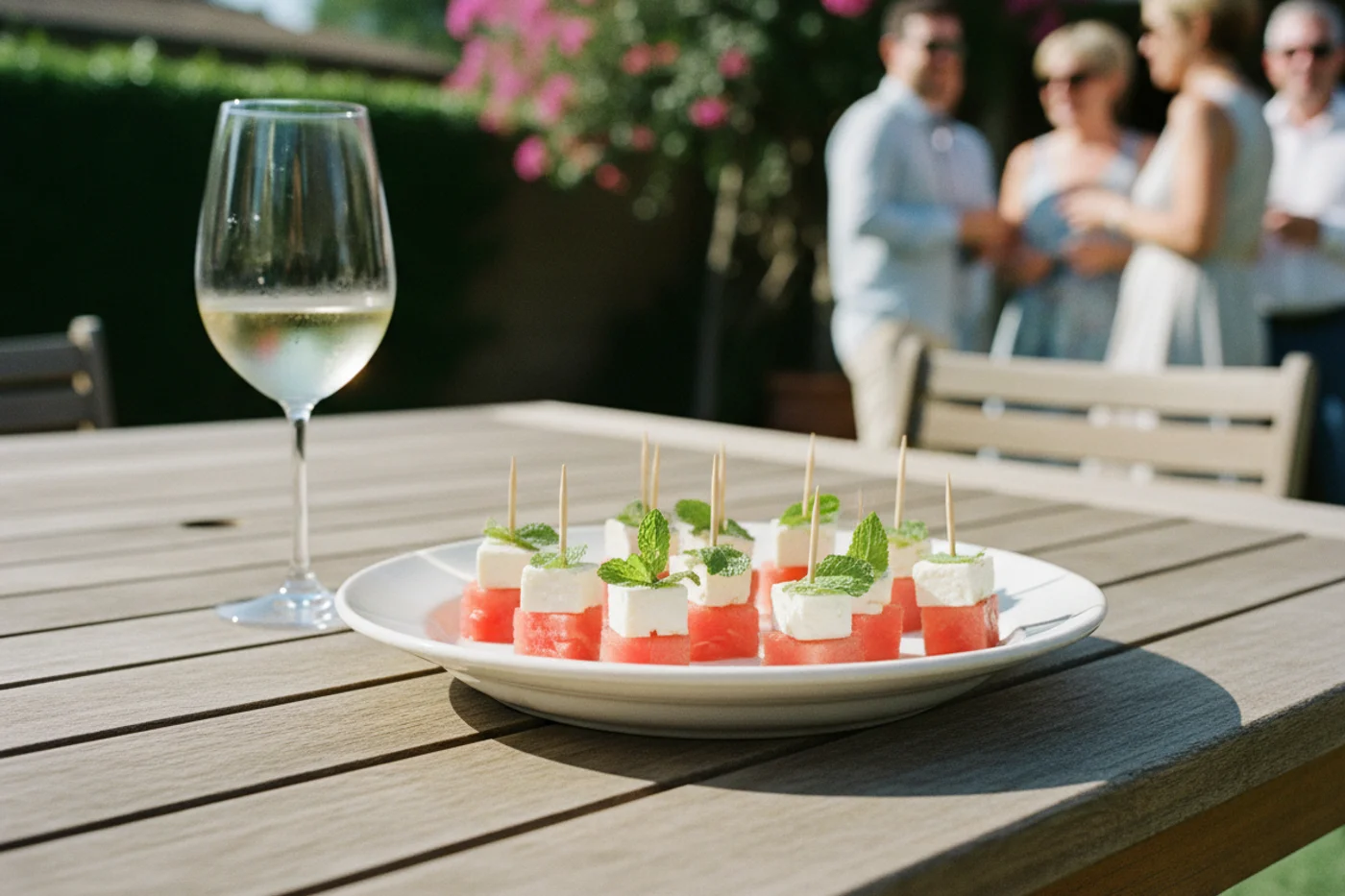
- Ceremony ends → cocktail hour (60-90 min): the single most important block for keeping guests fed and happy, and the one couples plan around least. While you're off having couple and family photos taken, often 45 minutes to well over an hour, your guests are standing around with nothing to do unless you've arranged it. Passed or stationary canapés and a drinks station solve exactly this. Skipping this, or keeping it too short, is one of the most common regrets couples mention after the day.
- Guests enter the reception, welcome, bridal party entrance.
- Formalities and courses alternate: a starter course, then a round of speeches, then the main course, then another round if there are more speakers. This is the part that surprises couples used to Western wedding content, which almost always assumes speeches happen once, either mid-meal or after it. South African MCs deliberately spread them across the meal instead, partly so no single stretch of the evening runs too long, and partly so food service and formalities never compete for the room's attention at the same time.
- Everything formal wraps up before the dance floor opens, ideally by around 9pm. This is close to a hard rule among experienced local MCs: once dancing starts, nothing else formal should interrupt it, since guests who've been fed, had a drink or two, and sat through the program are reluctant to stop and refocus once they're up and dancing.
- Cake cutting, then the first dance, immediately after, right at the close of formalities. This is the one place South African convention differs most sharply from what generic wedding content assumes: the first dance isn't an early moment right after the couple's entrance, it's one of the last formal beats before the room is handed over to open dancing.
- Dance floor opens, catering's remaining role is usually just a late-night snack station if you've included one.
Where speeches actually fit with the food
Given the structure above, speeches in a South African reception are rarely one single block, they're usually split across courses, interspersed rather than delivered all at once. A common split for four speakers, father of the bride, maid of honour, best man, groom, is two before the starter or between starter and main, and two more between main and dessert, though your MC will adjust this around your actual guest list and how many speakers you have. Plated receptions generally need to budget less total speech time than buffet ones, since a buffet's own service time already eats into the evening.
What actually causes catering problems isn't which structure you choose, it's poor coordination between whoever's running the program and whoever's running the kitchen. Starting a speech while plates are still being served or cleared means courses arrive cold because waitstaff can't move through the room, or, for buffet, means part of the room is still queuing and misses the toast entirely. Brief your MC, DJ, and caterer to coordinate directly with each other, not just work off a shared printed timeline independently — the caterer needs to know exactly when the room will fall silent so they can hold service rather than plating food nobody's ready to eat.
Common catering problems, and how to actually prevent them
Cold food
The most common single complaint from wedding guests, and it almost always comes down to one of three causes: the distance between the kitchen and the reception space, food sitting too long before service starts, or speeches running long while plated food waits. Proper hot-holding equipment keeps food above 60°C, the safe minimum, and a good caterer refreshes chafing dish contents every 60 to 90 minutes rather than letting one batch sit for the full reception. For food transported any real distance from a prep kitchen to the venue, ask specifically whether your caterer uses insulated transport carriers, not just covered trays, since that's the difference between food arriving properly hot and food arriving lukewarm no matter how good the recipe was.
The other real fix is procedural, not equipment: tell your caterer immediately if the programme is running behind, rather than letting them find out when they check the room. A caterer who knows speeches ran 20 minutes over can hold plated food in the kitchen rather than plating on schedule and letting it sit cold on a serving trolley waiting for the room to be ready.
Food drying out
This hits meat dishes and starches hardest. Sliced meat held for a long service window dries out fast unless it's kept in a light jus or broth rather than served bone-dry; ask your caterer directly how they hold meat for service, not just how they cook it. Rice and pasta behave like sponges under heat lamps, drying out or turning gluey depending on how they're held, and an experienced caterer will store starch and sauce separately until the last possible moment rather than combining them early and holding the finished dish. The general rule worth asking your caterer to confirm: the gap between a dish coming off the heat and reaching a guest's plate should be as short as physically possible, which is really a question about kitchen-to-table logistics as much as recipe choice.
Running out of food
Almost always a headcount problem, not a cooking problem. Lock your final numbers with your caterer as close to the RSVP deadline as your contract allows, and build in a small buffer, typically 5 to 10% over your confirmed headcount, rather than catering to the exact number on the list. Plus-ones, last-minute additions, and a guest or two who simply eats more than average are normal, not edge cases, and a caterer working to the bare confirmed number has no room to absorb any of that.
Guests going hungry while you're off taking photos
Already covered above under the reception timeline, but worth repeating on its own because it's one of the most common sources of guest complaints and one of the easiest to fix: a properly stocked cocktail hour with real food, not just a bowl of nuts, closes this gap entirely. If your photo session is running long, tell your venue coordinator so cocktail hour can be extended rather than guests being left standing with empty glasses and no food while they wait for you to reappear.
What it actually costs, per style
Building on the numbers in our full wedding cost breakdown: South African catering typically runs R350 to R700 per guest, and the style you choose sits at different points inside that range for a given quality level. This is the food cost only, alcohol is its own separate line item, covered under Bar and drinks below, so don't assume one quote covers both unless your caterer has told you explicitly that it does.
- Buffet: generally the most affordable per head at a given quality tier, since fewer staff and simpler service logistics keep labour costs down.
- Family-style: a step up from buffet, roughly in the middle of the range, since it needs more staff coordination than a self-serve line but less than individual plating.
- Plated: typically the highest per-head cost at the same food quality, driven almost entirely by the extra waitstaff needed to serve courses individually and in sequence.
- Stations: variable, but often comparable to or above plated, since chef-attended stations need skilled staff at each point rather than one central kitchen team.
The single biggest cost lever isn't the style at all, it's the menu itself. A buffet built around premium proteins can easily cost more per head than a simple plated two-course meal. Style affects labour cost; ingredients affect food cost; both matter, and it's worth pricing both separately when comparing quotes rather than assuming "buffet" automatically means "cheaper."
Planning around your actual guest list
Send dietary requirement questions with your RSVPs, not as an afterthought a month before the wedding. A simple checkbox for vegetarian, vegan, halal, kosher, and a free-text field for allergies gives your caterer real numbers to plan around instead of a vague estimate. Strictly kosher guests generally need individually sealed meals from a certified kosher kitchen, arranged through a specialist provider, not adapted from your main caterer's kitchen, and the same goes for strict halal requirements if your caterer's kitchen isn't already halal-certified. Both need arranging well in advance, ideally as soon as you know you have guests who require it, not folded in at the final headcount stage.
A wider vegetarian option, not just "the vegetarian dish," genuinely improves the experience for a meaningful slice of most South African guest lists these days. Ask your caterer directly how many vegetarian and vegan guests they typically plan for as a proportion of total headcount, and price a realistic number rather than the bare minimum.
Traditional and cultural wedding catering
Everything above covers the Western-style plated, buffet, family-style and stations model, but a large share of South African weddings need catering built around a specific cultural tradition instead, or alongside it, and that changes both the menu and the caterer you need. Three of the most common worth understanding in some depth, though South Africa's traditions extend well beyond these, Tswana, Cape Malay, Afrikaans, and many others each carry their own food customs, which vary by family and region as much as by culture.
Zulu traditional wedding catering
A Zulu wedding typically involves several distinct ceremonial stages rather than a single event, lobola negotiations, then izibizo and umembeso, gift-giving ceremonies between the two families, then umbondo, where the bride reciprocates with groceries for the groom's family, before the wedding celebration itself, umabo. Food plays a real role at each stage, not only the final celebration, and traditional dishes commonly served include umqombothi, a traditional beer brewed from maize and sorghum, amasi, fermented milk, phuthu, a stiff maize porridge, isijingi, a pumpkin and maize dish, and meat, chicken, mutton, beef or goat, prepared in quantity for a large gathering. These were traditionally cooked by family, neighbours, and community members rather than a hired caterer, and while that's still genuinely common, more families now bring in a caterer experienced specifically in traditional Zulu cuisine, particularly for larger modern celebrations where the guest count has grown well beyond what home cooking can comfortably manage. If you're planning one of these ceremonies, ask a prospective caterer directly whether they have real experience with this specific menu and the scale these events often reach, rather than assuming a general wedding caterer can adapt on the day.
Xhosa traditional wedding catering
A Xhosa wedding, umtshato, also runs across multiple stages rather than a single day, from the initial ukubona ceremony where the bride's family formally presents her to the groom's side, through umembeso gift-giving, to the wedding celebration itself. Food and drink carry real ceremonial weight throughout, not just at the final reception. Ceremonial slaughter, typically a cow or goat, is a genuine part of many traditional Xhosa weddings, understood as introducing the bride to the groom's family ancestors, and it's worth understanding this is a meaningful cultural practice, not simply a catering choice, if you're planning or catering one of these events. The meat from this slaughter is prepared and served to guests as part of the feast that follows.
Common traditional dishes include umngqusho, a hearty dish of samp and sugar beans, often served alongside umleqwa, free-range chicken prepared with a firmer texture than commercially farmed poultry, inkobe, boiled maize kernels, and umqombothi, the same traditional sorghum and maize beer found across several Nguni traditions. As with Zulu catering, these events were traditionally cooked by family and community members, and many families still do exactly that, but larger modern celebrations increasingly bring in a caterer experienced specifically with this menu and the scale these gatherings often reach.
South African Indian wedding catering
South African Indian weddings, particularly in and around Durban's long-established Indian community, are often multi-day events, each day with a different catering need entirely. A mehndi typically calls for lighter snacks and finger foods over a longer, more relaxed gathering. A sangeet leans toward interactive, mingling-friendly food, live stations and street-food-style dishes work well here, rather than a seated formal meal. The main ceremony and reception are where the full, formal spread comes in, often biryani, a range of curries, fresh breads, chutneys, and desserts like gulab jamun or kheer.
Dietary requirements here deserve more care than a single "vegetarian option" on a menu. Hindu vegetarian and Jain dietary standards are often a baseline expectation, not an add-on, and some families specifically want a fully vegetarian-only kitchen for the event, not simply a vegetarian dish prepared in a kitchen that also handles meat. For Muslim South African Indian families, halaal requirements vary by family: some need a fully halaal-certified caterer as a non-negotiable, others are satisfied with separated serving stations and confirmation that alcohol is kept well away from the food. Ask directly and early rather than assuming, since getting this wrong is one of the more consequential mistakes a caterer or couple can make for this kind of wedding. Caterers who specifically list Indian wedding experience, ideally with halaal certification if your family needs it, are worth prioritising over a general caterer offering to adapt an unfamiliar cuisine for the day.
Choosing a caterer: what actually matters
Ask whether they've worked at your specific venue before. A caterer who already knows a venue's kitchen setup, load-in access, and power supply avoids a whole category of on-the-day problems that a first-timer at that venue might not anticipate. Ask for real client references, not just a portfolio, and actually follow up on them. Confirm they carry proper catering liability insurance, since you don't want to be personally exposed if something goes wrong with food safety on the day.
Book 9 to 12 months out for a popular caterer in peak wedding season, since good ones fill their calendar early. Bring your tasting group down to two or three trusted people, yourself, your partner, and one or two others whose judgment you actually trust, rather than a large group generating conflicting opinions in a single sitting.
At the tasting itself, take notes and photos of each dish, since it's easy to forget which exact plate you loved once you're comparing several caterers' tastings weeks apart. Ask directly how they scale a tasting-portion recipe up to a full event, quality can shift at volume in ways a small tasting plate won't reveal, and an experienced caterer should be able to speak to that confidently. Walk through the actual service timeline with them: when food service starts relative to speeches, how long service takes at your specific guest count, and what happens if the programme runs late.
Contract red flags worth checking before you sign
Skipping a tasting before booking is the single most consequential mistake couples make with catering, according to caterers themselves, more than any contract clause. Never book purely on reputation or referrals without tasting the actual menu you'll be served. Beyond that, a few contract specifics are worth checking line by line before any deposit changes hands.
- Get it in writing, fully. No written contract at all is the clearest red flag there is. Verbal agreements about menu, headcount, or price are worth nothing if a dispute comes up later.
- Check the payment and cancellation terms. A 25-50% deposit to secure your date is standard practice in this industry. A contract demanding 100% upfront with zero refund on any cancellation, regardless of notice given, is worth pushing back on.
- Watch for "price subject to change" language. Genuine market volatility on specialty ingredients is real, but a professional caterer prices that risk in rather than leaving your final bill open-ended. You should be locking in a firm per-person rate, not signing a blank cheque.
- Confirm exactly what's included. Setup, breakdown, dishware, glassware, cutlery, and linen are sometimes billed separately even when a quote looks all-inclusive at first glance. Ask directly rather than assuming.
- Get dietary accommodations written into the contract itself, not just discussed on a call. If halal, kosher, vegan or specific allergy handling was agreed verbally, it needs to be in the document, since a verbal agreement is hard to enforce if it's forgotten or handled differently on the day.
- Ask for proof of insurance and any required licensing (liquor licensing if they're also handling the bar). A caterer who can't produce this on request is a real warning sign, not a paperwork technicality.
- Slow or unclear communication before you've signed anything tends to predict the same after you've paid a deposit. If getting a straight answer already feels like pulling teeth during the sales process, that pattern rarely improves once they have your money.
Bar and drinks: the cost most people underestimate
Alcohol is almost always a separate budget line from food catering, not included in the R350-700 per-guest figure above unless your quote states otherwise in writing. Drinks are frequently budgeted separately from food, and frequently underestimated as a result precisely because couples assume one number covers both. A reasonable per-guest bar budget in South Africa runs around R150 to R300 depending on whether it's a full open bar, a limited selection, or a cash bar for spirits with wine and beer included. Corkage fees apply at venues that don't run their own bar, and they add up fast if guests bring their own drinks, confirm this cost explicitly before assuming a "bring your own" arrangement saves money.
Waiter-served vs. self-service bar
A waiter-served bar, drinks brought to tables or passed on trays, keeps service controlled and feels more formal, but needs more staff and moves slower for a large guest list. A self-service bar station lets guests get their own drinks on their own timeline, which suits a casual reception and needs less staffing, but creates queues at busy points in the evening, right after speeches and once dancing starts, unless you've got more than one bar station for a larger guest count.
Open bar (host bar) vs. cash bar vs. limited bar
An open bar, the couple covers the full cost and guests drink at no charge, is the most expensive option but the easiest for guests and does the most to get a room mingling and dancing. A cash bar, guests pay for their own drinks, cuts your cost significantly but is a real dent in guest experience at what's meant to be a hosted celebration, and it's worth thinking carefully before choosing it purely to save money. A limited bar, open bar for a fixed window only, cocktail hour and the first part of the reception, for instance, then switching to cash or closing entirely, is a common middle ground. A popular hybrid: free wine and beer all evening with cash-only for spirits, which controls cost and heavier drinking without guests feeling like they're paying for the basics.
The abandoned-drink problem
Worth knowing before you commit to a full open bar: guests who aren't paying for their own drinks are far more likely to set a glass down half-finished, lose track of which one was theirs, and simply get a fresh one rather than search for it. Multiply that across a few hundred guests over a five-hour reception and it becomes a real, measurable cost, not just a minor annoyance, since you're effectively paying for drinks that are poured and never actually finished. A few things genuinely help: briefing bar and floor staff to top up existing glasses with ice or a fresh pour rather than automatically clearing anything that looks abandoned; keeping wine and beer in visibly labelled glassware if you're running multiple drink types, so guests can identify their own glass at a glance; and, if cost control matters to you, switching from a fully open bar to a limited or hybrid model after the first couple of hours, when this kind of waste tends to increase as the night goes on and guests pay less attention to what's already in their hand.
Load shedding: the South African catering problem generic advice misses
Almost none of the wedding advice written for other markets accounts for this, and it's a real risk here. A power outage mid-service doesn't just mean dark rooms, it means hot-holding equipment losing temperature, walk-in fridges warming up, and any electric oven going cold exactly when it's needed most. Ask your caterer directly, not your venue, what their actual backup plan is: do they run gas equipment as standard rather than relying on mains electricity for cooking and holding, and do they carry or have access to a generator sized for their full setup, not just lighting.
Ask your venue separately whether they have generator backup covering the kitchen and reception space specifically, since a venue generator sized only for basic lighting and sound won't necessarily carry catering equipment. If your wedding date falls during a period of scheduled outages, build the current stage into your final planning call with both your venue and caterer in the week beforehand, not as an afterthought if the lights happen to go out on the day.
Staffing: how many waitstaff you actually need
A useful benchmark when comparing quotes: plated service typically runs one waiter per 10 to 12 guests to keep course timing on track, while buffet and family-style can run comfortably with fewer, since guests do more of the work themselves. A quote that's noticeably cheaper than others for the same style and guest count is worth questioning specifically on staffing numbers, since understaffing is one of the most common ways a caterer cuts cost invisibly, right up until service on the day runs slow and food starts sitting out too long, which loops straight back into the cold-food and drying-out problems above.
Outdoor and marquee weddings: what changes
A marquee or fully outdoor reception adds real catering variables that an indoor venue with its own kitchen doesn't have. Confirm exactly where your caterer will actually cook and hold food, a full mobile kitchen setup, a nearby prep kitchen with food transported in, or something in between, since that answer changes both the cold-food risk and the equipment they need on-site. Wind is a genuine problem for open-sided marquees and outdoor buffets specifically, since it cools food faster than an enclosed room would and can be a real nuisance for lighter dishes and garnishes. Confirm your caterer has weather contingency built into their plan, not just yours, since a sudden change in conditions affects their equipment and setup as much as it affects your guests' comfort.
Questions to ask your venue about catering, so there are no issues on the day
Separate from vetting the caterer itself, your venue controls a set of practical answers that determine whether catering runs smoothly, and it's worth getting these in writing before you book either one.
- Is there an in-house caterer, a preferred-supplier list, or can we bring anyone we choose? Some venues require you to use their own kitchen team or a fixed shortlist; others charge an external-caterer or corkage fee if you bring your own. Know this before you fall in love with an outside caterer who isn't actually allowed on-site.
- What kitchen facilities actually exist on-site? A full commercial kitchen, a warming kitchen only (food prepared elsewhere, finished on-site), or nothing at all for a bare marquee or outdoor space. This single answer determines most of your cold-food and drying-out risk before your caterer even walks in the door.
- What's the backup power situation? Ask specifically whether generator backup covers the kitchen and reception space, not just lighting and sound, and confirm this explicitly if your date falls during a period of scheduled outages. See load shedding above for why this matters more than it sounds like it should.
- Is there a corkage fee, and does it apply to catering-supplied alcohol as well as guest-brought drinks? Corkage policies vary on whether they only apply to guests bringing their own bottles, or whether your caterer's own bar service is also affected.
- What's included versus billed separately? Tables, chairs, linen, crockery and glassware sometimes come with the venue, sometimes with the caterer, and sometimes neither, confirm explicitly rather than assuming.
- What are the setup and breakdown time windows? A caterer needing four hours to set up a full mobile kitchen for an outdoor wedding needs venue access confirmed well before guest arrival, and a strict breakdown deadline can mean rushed clearing that adds cost.
- What's the wet-weather or contingency plan for outdoor spaces? Confirm there's an actual indoor fallback or covered contingency, not just a hope that it won't rain, and that your caterer's setup can adapt to it if needed.
Frequently asked questions
What's the most affordable wedding catering style?
Buffet service is generally the most affordable per guest at a given food quality level, since it needs fewer waitstaff and simpler service logistics than plated, family-style, or stations. The menu itself, not just the style, is the other major cost lever worth pricing separately.
How much does wedding catering cost per person in South Africa?
Typically R350 to R700 per guest, depending on style, menu, and season. Buffet tends to sit at the lower end of that range for comparable quality; plated and stations tend toward the higher end due to higher staffing needs.
How far in advance should I book a wedding caterer?
9 to 12 months out for a caterer in high demand during peak wedding season. Booking early also gives more room to plan around dietary requirements and menu customisation before their calendar fills.
How should I plan for guests with dietary restrictions?
Collect dietary requirements directly on your RSVPs rather than waiting until closer to the date, and share a clear breakdown with your caterer as early as possible. Strictly kosher or halal requirements usually need a certified specialist provider arranged well in advance, not an adaptation from a general caterer's kitchen.
What questions should I ask at a catering tasting?
Ask how the tasting portions scale up to a full event, walk through the actual service timeline for your guest count, and confirm they've worked at your venue before if possible. Bring only two or three trusted people to keep the feedback focused rather than conflicting.
Is a buffet or plated dinner better for a large wedding?
Buffet generally handles larger guest counts more efficiently, since plated service scales staffing costs directly with headcount. Family-style struggles past roughly 150 guests due to table-space and service logistics; buffet and plated both scale further with the right staffing.
Once you know which style fits your wedding, browse wedding caterers on The Wedding Directory to start collecting real quotes, and use our free wedding budget tracker to weigh catering against your other big-ticket items as quotes come in.