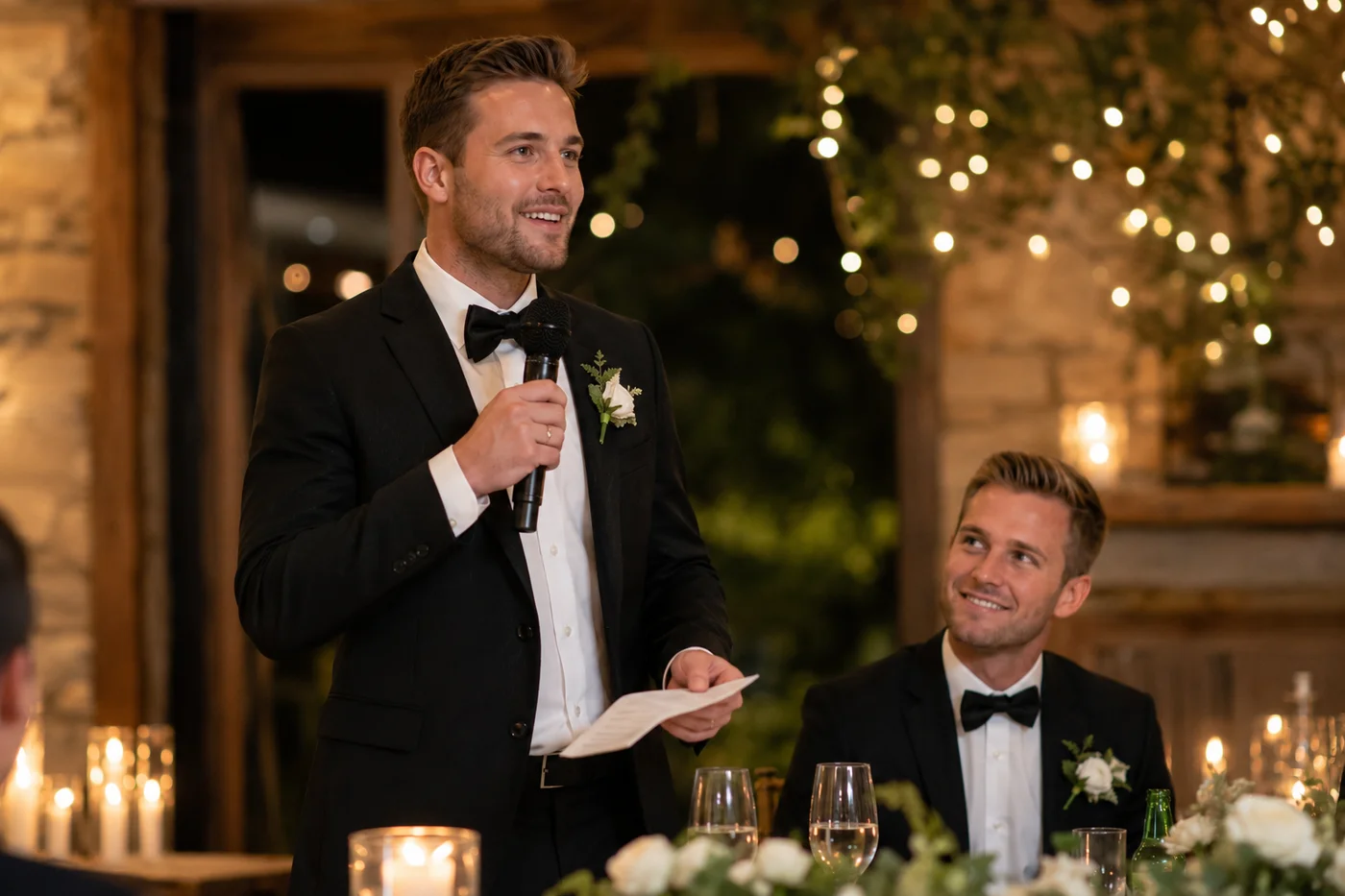
Being asked to give a wedding speech tends to trigger two feelings at once: genuine flattery that you've been chosen, and genuine dread at the idea of standing up in front of a room full of people, many of whom you might not know, and trying to say something meaningful without falling apart. That's a completely normal reaction. Public speaking ranks among the most commonly feared experiences for most people, ahead of things that arguably deserve more fear, and even experienced performers get nervous before a wedding speech specifically, because the stakes feel personal in a way a regular presentation doesn't. The good news is a wedding speech is far more forgiving than most people assume, and a bit of structure goes a long way toward calming the nerves and producing something genuinely good.
Understanding the Order and Who Speaks
Traditionally, three speeches anchor a wedding reception: the father of the bride (or whoever is walking her down the aisle), followed by the groom, and finally the best man. Increasingly, this lineup has expanded and loosened considerably; it's now common for the bride herself to speak, for the maid of honour to give a toast alongside the best man, and for the specific order to be adjusted based on who's actually comfortable speaking rather than following the traditional sequence rigidly. Whatever the final lineup, confirm your position in the running order with the couple or their planner well ahead of time, since knowing whether you're opening, closing, or somewhere in the middle affects how you pace and structure your own speech.
What Each Speech Traditionally Covers
The father of the bride's speech traditionally welcomes guests, reflects on watching the bride grow up, and formally welcomes the groom into the family. It tends to be warm and sentimental, often the most emotionally weighted speech of the three. The groom's speech traditionally thanks both sets of parents for their support, thanks guests for attending, and introduces his new bride, often including a toast to the bridesmaids. The best man's speech is traditionally the lighter, funnier one, often including well-chosen embarrassing stories about the groom, though it should always end on a genuinely warm, sincere note rather than closing on a joke. If a maid of honour or the bride herself is speaking, there's no fixed traditional content, giving genuine freedom to structure it however feels right, sentimental, funny, or a blend of both.
Building the Structure of Your Speech
Regardless of who you are in the lineup, a genuinely good wedding speech tends to follow a similar shape. Open with a brief introduction of who you are and your connection to the couple, particularly if there are guests present who won't automatically know you. Move into the heart of the speech: a story, memory or observation that says something real about the couple or the person you're speaking about, ideally something specific rather than generic. Avoid the trap of a speech built entirely from generic sentiments ("they're such a wonderful couple, so perfect together") without any concrete detail to back it up; a specific, well-chosen anecdote will always land better than a string of pleasant but vague compliments. Close with a genuine, warm sentiment and a formal toast, raising a glass and inviting the room to join you.
Timing: Shorter Than You Think
One of the most common speech mistakes is running too long. A wedding speech should generally run between three and five minutes; anything longer starts to lose the room's attention, particularly later in the evening after a meal and several other speeches. Write your speech out in full, then read it aloud at a natural, unhurried pace with a timer running, since most people speak faster when nervous than when reading calmly to themselves. If your first draft runs over five minutes, cut ruthlessly rather than trying to speed up your delivery on the day to compensate; a speech delivered too quickly out of nerves is far harder for a room to follow and enjoy.
What to Avoid
A few consistent mistakes derail otherwise well-intentioned wedding speeches. Avoid inside jokes that only a handful of people in the room will understand; if a story requires extensive context that most guests won't have, either explain the context briefly or cut the story entirely. Avoid ex-partners, particularly any reference to a previous relationship of either the bride or groom, even if meant affectionately; this almost never lands well in a room full of family. Avoid anything that could genuinely embarrass either the couple or a guest present, a story is only appropriate for a wedding speech if the person it's about would be comfortable with everyone present hearing it, including their own parents and grandparents. And avoid reading directly from your phone if at all possible; printed cue cards look more composed and are considerably less likely to fail you mid-speech than a phone screen that dims or receives a notification at the worst possible moment.
Handling Nerves on the Day
A little nervous energy is completely normal, and a small amount actually helps deliver a more animated, engaged speech than one delivered too flatly. Practise your speech aloud multiple times in the days beforehand, ideally in front of at least one other person, so the words feel familiar in your mouth rather than only ever having existed on paper. On the day itself, have a printed copy as backup even if you've largely memorised it, since nerves can genuinely blank a mind that would otherwise have recalled everything perfectly. Take a breath before you start, make eye contact with a few friendly, familiar faces in the room rather than staring at the couple the entire time, and remember that this particular room is about as forgiving and warmly disposed toward you as any audience you'll ever speak in front of. Nobody at a wedding is hoping you'll fail.
A Few Etiquette Notes Worth Knowing
- Confirm your speaking slot and rough timing with the couple or their planner in advance, don't assume you know when you're expected to speak.
- If you're not confident reading aloud, request to go earlier in the running order rather than later, before nerves have had time to build across a long evening.
- Keep alcohol consumption modest before your speech; a small drink to settle nerves is fine, but a speech delivered while genuinely drunk almost never goes as well as the speaker believes it did in the moment.
- If you're mentioning specific people in the room, family members, close friends, briefly acknowledge them by name if appropriate, since it's a small touch that makes a speech feel more personally tailored to this specific wedding rather than generic.
- Always end with a toast, even a brief one; it gives the room a clear, unified moment to respond to and signals that your speech has concluded.
Adapting to South African Wedding Traditions
South African weddings often blend several cultural traditions in a single day, and speech expectations can shift accordingly. At weddings incorporating traditional Zulu, Xhosa, Sotho or other cultural ceremonies alongside a Western-style reception, additional speeches from family elders, uncles or community representatives are common and often carry as much or more weight than the best man or father-of-the-bride speech familiar from a purely Western format. If you're speaking at a wedding blending traditions you're not fully familiar with, it's worth asking the couple or a family member beforehand what's expected of your specific role, since speech order, length and tone can vary meaningfully between cultural contexts, and getting this right shows genuine respect for the day's full significance rather than just following a generic template.
Multilingual weddings are also common, and a short phrase or sentence in Afrikaans, isiZulu or another home language relevant to the couple or their families, even if the bulk of your speech is in English, is a small but meaningful gesture that guests notice and appreciate. It doesn't need to be extensive or perfectly delivered; the effort itself communicates something a flawless delivery in a single language wouldn't.
Writing for the Couple, Not for Applause
The best wedding speeches aren't the funniest ones or the most polished ones; they're the ones that clearly come from genuine affection and say something true about the people getting married. If you're torn between including a joke that might get a big laugh but doesn't say much, versus a quieter, more sincere line that reflects something real about the couple, choose sincerity. Guests remember how a speech made them feel about the couple far more than they remember specific jokes, and the couple themselves will remember the sincerity of what was said about them long after the laughs have faded. A speech that's a little rough around the edges but genuinely heartfelt will always outperform a technically polished speech that feels hollow. Write it from that place, practise it enough to feel steady, and trust that a room full of people who love the couple will meet you more than halfway.
Finally, give yourself grace if it isn't perfect. Voices shake, a joke lands quieter than expected, a line gets slightly out of order; none of that matters nearly as much in the moment as it feels like it will beforehand. What guests actually remember, and what the couple will genuinely treasure, is that you stood up, said something true, and meant every word of it.

The Father of the Bride's Speech: A Complete Guide
The Best Man's Speech: Structure, Timing and What to Include
The Bride's Speech
Do we have to invite every guest with a partner or ‘plus one’ even though we know they are single?

My wedding guest list has gotten way out of control, how can I trim the list down to a more manageable number?