Most weddings are built on tradition so deeply ingrained that guests rarely stop to ask where any of it actually comes from. The garter toss, the veil, the ring finger, all treated as simply "what happens" at a wedding, without much thought given to the history behind them. Understanding where these customs originated makes it much easier to decide, deliberately, which ones genuinely belong in your wedding and which you're happy to leave out. Here's the story behind nine of the most common wedding traditions.
Throwing the Garter and Bouquet
Centuries ago, it was considered good luck for a wedding guest to obtain a piece of the bride's outfit. Unfortunately, that "acquisition" wasn't always gentle, and brides frequently ended up with a torn, ruined dress by the end of the celebration as guests grabbed at whatever they could reach. To protect both the bride's dress and her dignity, the ritualised tossing of the garter and bouquet was introduced instead, giving guests a sanctioned, far less destructive way to participate in the "good luck" ritual.
The Mehndi (Henna) Ceremony
In this pre-wedding ritual with deep roots in South Asian tradition, a henna artist applies intricate mehndi designs to the bride's hands and feet, often over several hours. The custom is believed to ward off evil spirits, with the complexity of the design intended to confuse and repel them, preventing any harm from reaching the bride before her wedding. Beyond its symbolic purpose, the mehndi ceremony is also a genuinely joyful, social pre-wedding gathering in its own right, often accompanied by music, food and celebration among close family and friends.
The Bridal Veil
Ancient tradition holds that the veil was originally worn to protect the bride from evil spirits, which were believed capable of entering a person through the eyes; a veiled bride was considered fully shielded. The veil's popularity persisted for centuries partly due to another custom, arranged marriage, where a veil could conceal a bride's face from the groom until the ceremony was complete, making it far harder for him to back out once he finally saw her. Today, the veil is generally worn as a symbol of humility and respect toward the ceremony and, for many, the religious tradition it's part of, though plenty of modern brides choose it purely for its aesthetic and emotional weight rather than any of its older symbolism.
The Embroidered Handkerchief
This is an old Celtic tradition in which the bride carries a hand-embroidered handkerchief believed to bring fertility and happiness to the marriage, typically incorporated into the wedding dress itself or carried within the bridal bouquet. Traditionally, upon the arrival of the couple's first child, the handkerchief would later be repurposed into a christening bonnet, turning a wedding-day accessory into a family heirloom passed between major life events.
The Honeymoon
The origins of the honeymoon are considerably less romantic than the word suggests today. In some ancient cultures, when a man wanted to marry a particular woman, he would simply abduct her. Thankfully, that literal practice was eventually abandoned, but the story lived on through ritualised re-enactments, which evolved into a tradition where the newly married couple would go into hiding together for one full lunar cycle, roughly a month, while a close family member supplied them with honeyed mead throughout, hence the name "honeymoon." The modern honeymoon has, fortunately, become a far more pleasant affair, though the core idea, a period of retreat together immediately after the wedding, has survived remarkably intact.
Breaking the Glass
Breaking the glass is a time-honoured Jewish wedding tradition in which the groom crushes a glass underfoot during the ceremony, after which guests respond with a joyful "Mazel tov." The custom carries several layered meanings, the most significant being a solemn remembrance of the destruction of the Temple in Jerusalem, ensuring that even at the height of joy, an important piece of history is not forgotten. Other interpretations include the glass symbolising the fragility of a relationship and the care needed to protect it, and the idea that joy itself must always be tempered, so that the breaking marks a natural limit before celebration tips into excess.
Wearing the Ring on the "Ring Finger"
Before modern medicine and anatomy were properly understood, it was believed that a vein ran directly from the third finger of the left hand straight to the heart, sometimes referred to as the "vein of love." Given this belief, it seemed only fitting that the wedding ring be placed on that exact finger, symbolising an unbroken, direct connection of eternal love between the married couple. Though we now know the anatomy doesn't quite work that way, the tradition has proven far more durable than the science behind it.
Something Old, Something New, Something Borrowed, Something Blue
This popular Victorian-era rhyme is still followed by many brides today, with each element carrying its own distinct symbolism:
- Something old might be antique jewellery passed down through the family, representing the bride's bond to her family and respect for her ancestry.
- Something new is often the wedding dress itself, representing the couple's fresh start and happy new life together as husband and wife.
- Something borrowed is typically an item lent by a happily married woman, in the hope that her marital happiness will pass along to the bride in her own new chapter.
- Something blue could be a blue garter or a small hidden detail elsewhere in the outfit, traditionally said to represent purity and fidelity.
The White Wedding Dress
For centuries, white fabric was the most expensive of all cloth colours to produce, due to the considerable cost and difficulty of the bleaching process available at the time. Most brides simply didn't have access to that luxury and instead wore whatever their best available dress happened to be, regardless of colour. It was Queen Victoria who, breaking from royal convention, wore a white gown for her 1840 wedding rather than the silver traditionally worn by royalty, and that single choice set a trend still followed by countless brides today. White fabric, thankfully, is now considerably easier and cheaper to come by than it once was.
South Africa's Own Layered Traditions
South Africa's wedding traditions are genuinely diverse, reflecting the country's many cultures, each with rituals that carry deep meaning of their own: from the lobola negotiations that precede many traditional African marriages, to Zulu and Xhosa ceremonial dress and ritual, Afrikaner church traditions, Cape Malay wedding customs, and the rich variety of Hindu and Muslim wedding rites practised across Indian South African communities. Increasingly, couples from blended or intercultural backgrounds are weaving elements from more than one tradition into a single ceremony, honouring both families' heritage rather than choosing one over the other. If this applies to your wedding, it's worth having an early, thoughtful conversation with both families about which customs matter most to include, and how to blend them respectfully rather than as an afterthought.
The Wedding Cake
The tradition of a wedding cake dates back to Ancient Rome, where a loaf of bread was broken over the bride's head as a symbol of good fortune and fertility, with guests scrambling for the crumbs believed to carry luck. The tiered white cake familiar today emerged much later, in Victorian England, when white icing, again a signal of wealth and refinement given the cost of producing fine white sugar, became a status symbol at fashionable weddings. The custom of the couple cutting the cake together, hand over hand, is said to represent their first shared task as a married couple, a small, symbolic rehearsal for a lifetime of doing things together.
Carrying the Bride Over the Threshold
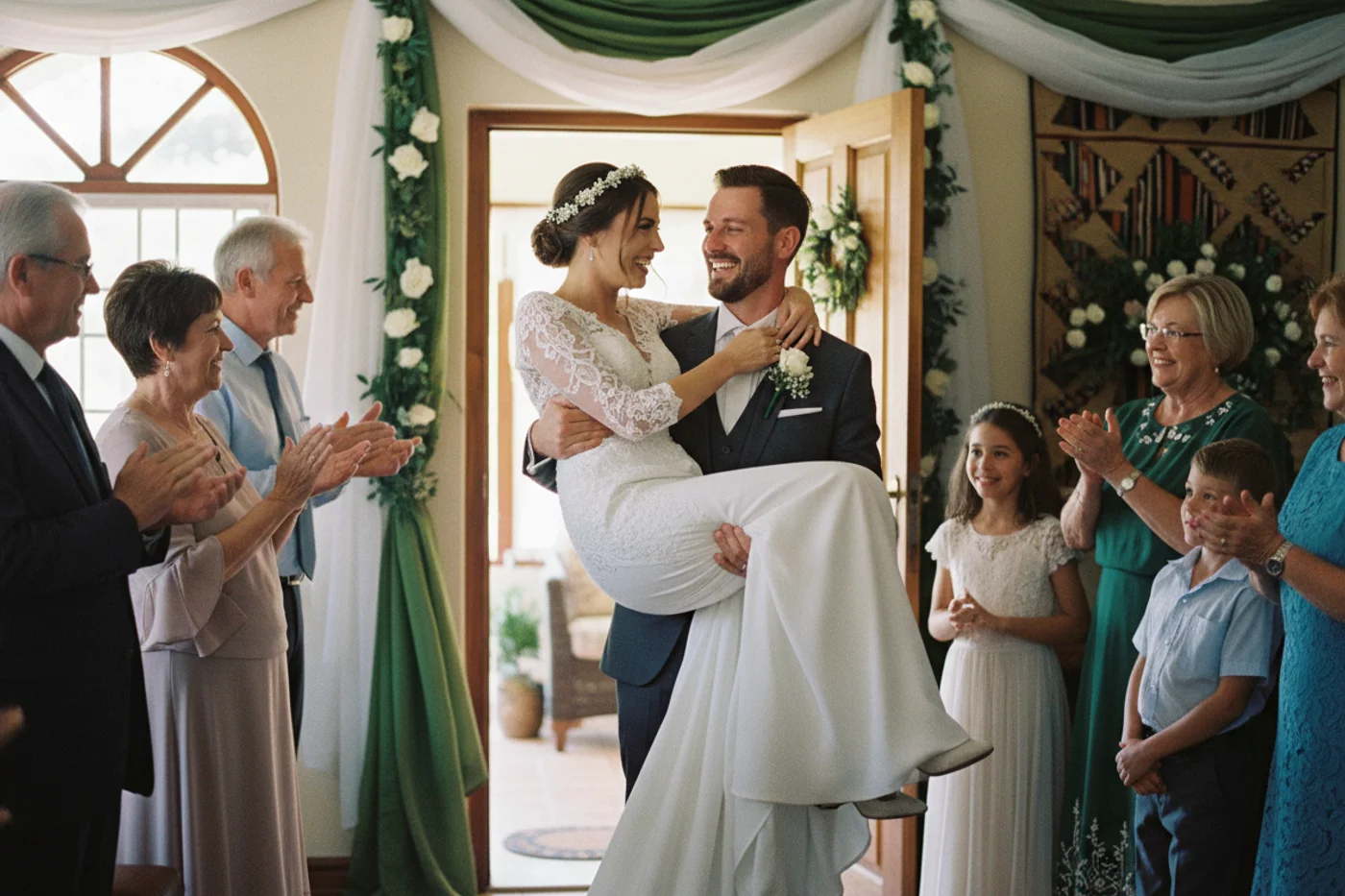
This custom has a few competing origin stories, but the most commonly cited is an old superstition that a bride was especially vulnerable to evil spirits lurking around the threshold of her new home on her wedding night. Carrying her over it, rather than letting her walk in on her own feet, was thought to protect her from anything waiting to cause harm. A less superstitious, more practical theory suggests it simply symbolised the bride's reluctance to leave her family home, with the groom playfully "helping" her over the final step into married life. Either way, it remains one of the more light-hearted traditions still practised today, usually met with laughter rather than solemnity.
Deciding Which Traditions Are Right for You
None of these customs are compulsory, and understanding where they came from often makes the decision to keep or skip them much easier. Some couples love the idea of connecting their wedding to centuries of shared human ritual and keep as many traditions as they can. Others find that certain customs, once they know the history, no longer feel like a fit for their relationship or values, and choose to leave them out entirely. There's no correct answer here beyond honesty: keep what feels meaningful to you as a couple, adapt what feels close but not quite right, and don't feel obligated to include anything purely because "that's what weddings do." A wedding built from customs you've genuinely chosen, rather than simply inherited without thought, tends to feel far more personal on the day itself.
Wedding Superstitions: Where They Came From and What They Mean
Questions to ask your wedding venue

Wedding Planner Pros and Cons

How Much Does a Wedding Cost in South Africa? (2026 Budget Breakdown)

In what order should my wedding party line up in - shortest to tallest or by order of importance
