"Happy marriages begin when we marry the ones we love, and they blossom when we love the ones we marry." — Tom Mullen
An Open Invitation to Think Differently
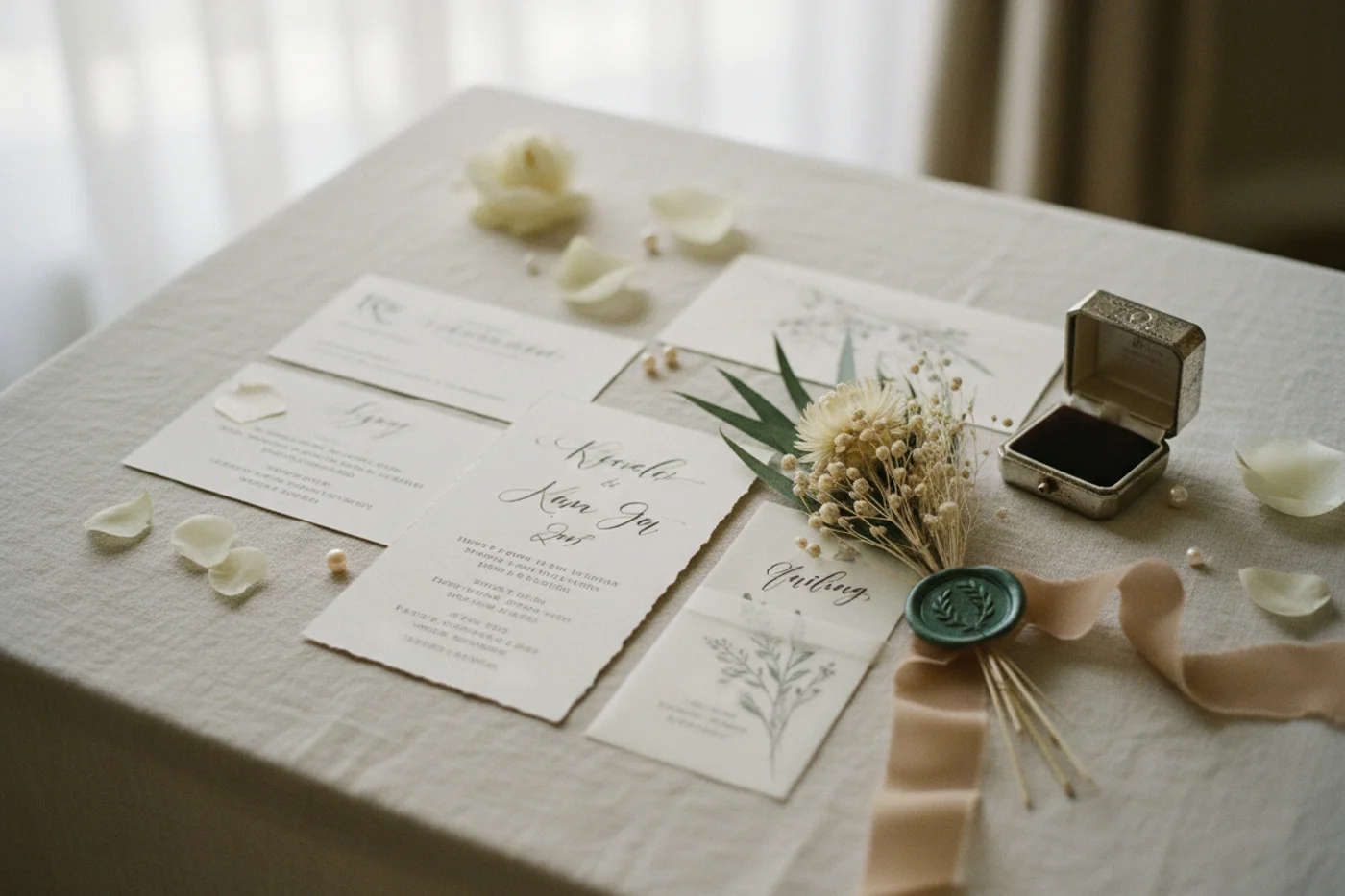
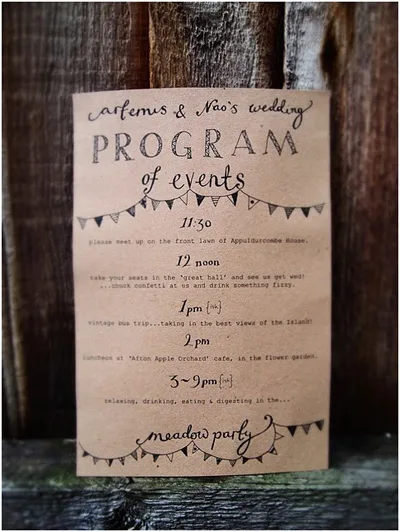
The wonderful thing about modern weddings is that almost anything goes. Couples today are encouraged to think beyond convention, and as a result are putting real personality into every part of their big day. Stationery is one area of wedding planning that has changed enormously. There's no longer a reason for it to be boring. Why default to predictable black print on white card when your invitation can carry some of your own style, wit and warmth before a single guest has even RSVP'd?
The options are genuinely wide open, from recycled and handmade paper to custom illustration to unconventional formats that guests actually keep. Below are several creative directions worth considering, along with the etiquette and logistics that keep even the most inventive invitation functioning properly as, well, an invitation.
Etiquette Still Matters, However Creative You Get
No matter how unconventional your approach, don't lose sight of accepted wedding invitation etiquette along the way. Your guest list will likely span different ages, backgrounds and levels of formality comfort, so keep the essential information clear, clean and easy to find, even inside a beautifully creative concept. Every invitation, however playful, needs to clearly communicate: who is getting married, the date and time, the venue for both ceremony and reception, how and by when to RSVP, and the dress code if there is one.
Five Creative Invitation Concepts
1. The Front Page
Turn your upcoming wedding into headline news. This concept creates a newspaper-style invitation, sometimes printed on genuine newsprint stock for full effect. Use an attention-grabbing headline in place of a traditional greeting, then include brief "interviews" with both partners and photographs of each of you, separately and together. Frame the event details and RSVP information in a corner, just as a real newspaper would run a small notice. It works particularly well for couples who met through work in media, writing, or a shared love of a good story.
2. The Novel Invitation
This concept mimics a classic romance novel cover, with the invitation details appearing where the back-cover blurb would normally sit. Give your "novel" a catchy title, commission or find an illustration that evokes the mood you're after, and write a short, playful tagline hinting at how the two of you met or fell in love. Use both surnames as a fictional "publishing house" credit at the bottom for a nice finishing touch. For extra impact, have the cover laminated and attached to a blank notebook guests can keep and use, turning a one-time invitation into an ongoing memento.
3. The Portrait Keepsake
If commissioning custom artwork isn't in the budget, a simple, stylised portrait of the two of you, whether illustrated, painted, or a striking photograph, printed onto a small keepsake like a fridge magnet or coaster, with the invitation details on the reverse, gives guests something tangible to hold onto well after the wedding. Choose a colour palette that echoes your wedding's overall theme so the piece feels considered rather than like a novelty add-on.
4. The Playlist Invitation
Build a short playlist of songs that matter to you as a couple, whether that's the song from your first date, a track from the proposal, or simply music you both love, and share it via a QR code or streaming link printed on the invitation itself. Give the "album" a title that plays on your love story, and use the format to hint at the mood of the wedding day itself, whether that's a laid-back acoustic set or a full dance-floor energy. It's a genuinely personal touch that costs nothing beyond a little creative thought, and gives guests something to enjoy in the lead-up to the day.
5. The Small Gift Invitation
For a more indulgent option, some couples attach the invitation to a small, thoughtfully wrapped gift, a few pieces of good local chocolate, a miniature bottle of something the couple loves, or a small potted succulent for guests who appreciate something living. Include a short handwritten or printed note explaining the significance of the item if there is one. This approach works particularly well for a smaller, more intimate guest list, since the cost per invitation rises quickly at scale.
Wording Your Invitation Correctly
Whatever format you choose, the wording itself needs a few essentials, in roughly this order: who is hosting (traditionally the couple's parents, though increasingly the couple themselves), the request to attend, both partners' full names, the date and time, the ceremony venue, reception details if held elsewhere, and RSVP instructions with a clear deadline. If parents are divorced and both contributing to or hosting the wedding, list both names on separate lines without indicating marital status between them, unless you'd prefer to word the invitation entirely from the couple, which is a perfectly acceptable modern alternative that sidesteps any awkwardness.
Never print gift registry details directly on the invitation itself; that's considered presumptuous by traditional etiquette standards. Instead, include registry information on a wedding website, with the website address given on a small separate insert card, or let word travel through bridesmaids and close family if guests ask directly.
Timing: When to Send What
If you're planning well ahead, marrying during a busy season like December, or expecting a significant number of guests to travel from other provinces or countries, send save-the-dates 6 to 12 months before the wedding. These can be simple and informal, even digital, since their only job is to secure the date in people's diaries before other plans fill it.
Send the formal invitation itself 8 to 12 weeks before the wedding for a local guest list, or 4 to 6 months ahead if a large portion of guests need to arrange travel, leave or accommodation. Set your RSVP deadline roughly 3 to 4 weeks before the wedding, giving you enough buffer to finalise numbers with your caterer and venue without leaving it right up to the wire.
Printed or Digital?
Digital invitations have become genuinely mainstream, and there's no need to feel you're cutting corners by choosing one. They're faster, cheaper, easier to update if a detail changes, and more environmentally friendly than printed stationery sent to every guest. Many couples now use a hybrid approach: a digital save-the-date to everyone, followed by a printed invitation sent only to close family and out-of-town guests who might appreciate a physical keepsake, with a wedding website carrying the full details, RSVP form, registry and logistics for everyone else.
If you do print, factor postage costs into your stationery budget early. South African postal delivery times can be unpredictable, so if you're mailing invitations rather than hand-delivering or emailing them, build in extra weeks of buffer, or consider a registered or courier option for anything time-sensitive.
Budgeting for Stationery
Wedding stationery is one of those line items that quietly grows if left unchecked, especially once save-the-dates, invitations, RSVP cards, envelope printing, order-of-service sheets, table plans, place cards and thank-you notes are all added together. Decide early which pieces genuinely matter to you and which can be simplified or handled digitally instead. Many couples find that spending more on a beautiful, unique invitation while keeping day-of stationery (place cards, menus, table numbers) simple and consistent gives the best visual impact for the money, since the invitation is the piece guests actually keep and remember, while day-of items are seen briefly and then discarded.
Get quotes from at least two or three stationers or printers before committing, and ask specifically about turnaround time, since custom or illustrated designs can take considerably longer than standard printed cards, particularly around peak wedding season when printers are busiest.
Matching Your Invitation to Your Wedding's Tone
Your invitation is the first real signal guests get about what kind of day to expect, so it's worth making sure the two are aligned. A playful, illustrated invitation sets guests up for a relaxed, personality-driven wedding; a classic letterpress design on heavy cotton card signals something more formal and traditional. Neither is better, but a mismatch, a whimsical invitation followed by a strict black-tie reception, or a very formal invitation followed by a casual backyard celebration, can leave guests unsure how to dress or what to expect, which is worth avoiding simply through clear, consistent messaging across your invitation, wedding website and any save-the-date.
A Few Practical Reminders
- Proofread every detail multiple times, and have someone outside the wedding party check dates, times and addresses too. A misprinted date is an expensive mistake to fix after the fact.
- Order slightly more invitations than your final guest count, since addressing errors and last-minute additions happen more often than couples expect.
- If you're using an unconventional format, test it on one or two trusted friends first to make sure the essential details are actually easy to find. A beautiful concept that buries the RSVP deadline defeats its own purpose.
- Keep one invitation of each design for yourselves. Most couples treasure these as keepsakes long after the wedding, and they make a lovely addition to a wedding album or memory box.