You will only do this once, and unlike almost everything else on your wedding day, the photos are the part that outlasts the day itself. The flowers wilt, the cake gets eaten, the DJ packs up and leaves, but the photographs are what you'll actually look at in five, twenty, fifty years. That's a lot of pressure to put on a couple of hours in front of a camera, especially if neither of you has ever done a proper photo shoot before.
The good news is that great wedding photos come down to being relaxed, comfortable and a little bit prepared, far more than they come down to knowing how to pose. Here's how to get through your shoot looking and feeling like yourselves.
1. Know Your Style Before You Book Anyone
Photography styles vary hugely, and knowing what you like before you start meeting photographers will save you from booking someone whose whole aesthetic doesn't match what you actually want on your wall. Spend real time looking through full wedding galleries, not just a photographer's ten best highlight shots, before you decide. Ask yourself honestly: do you want candid, documentary-style images that capture the day as it happens, or more formal, directed portraits? Black and white or full colour? Bright and airy, or moody and dramatic? A traditional, timeless feel, or something more editorial?
There's no wrong answer here, only a mismatch if you hire someone whose natural style pulls in a different direction from yours. Once you know your own taste, you'll spend far less time in consultations and far more time confidently shortlisting photographers whose existing work already looks like what you want.
2. Meet Your Photographer Before the Day
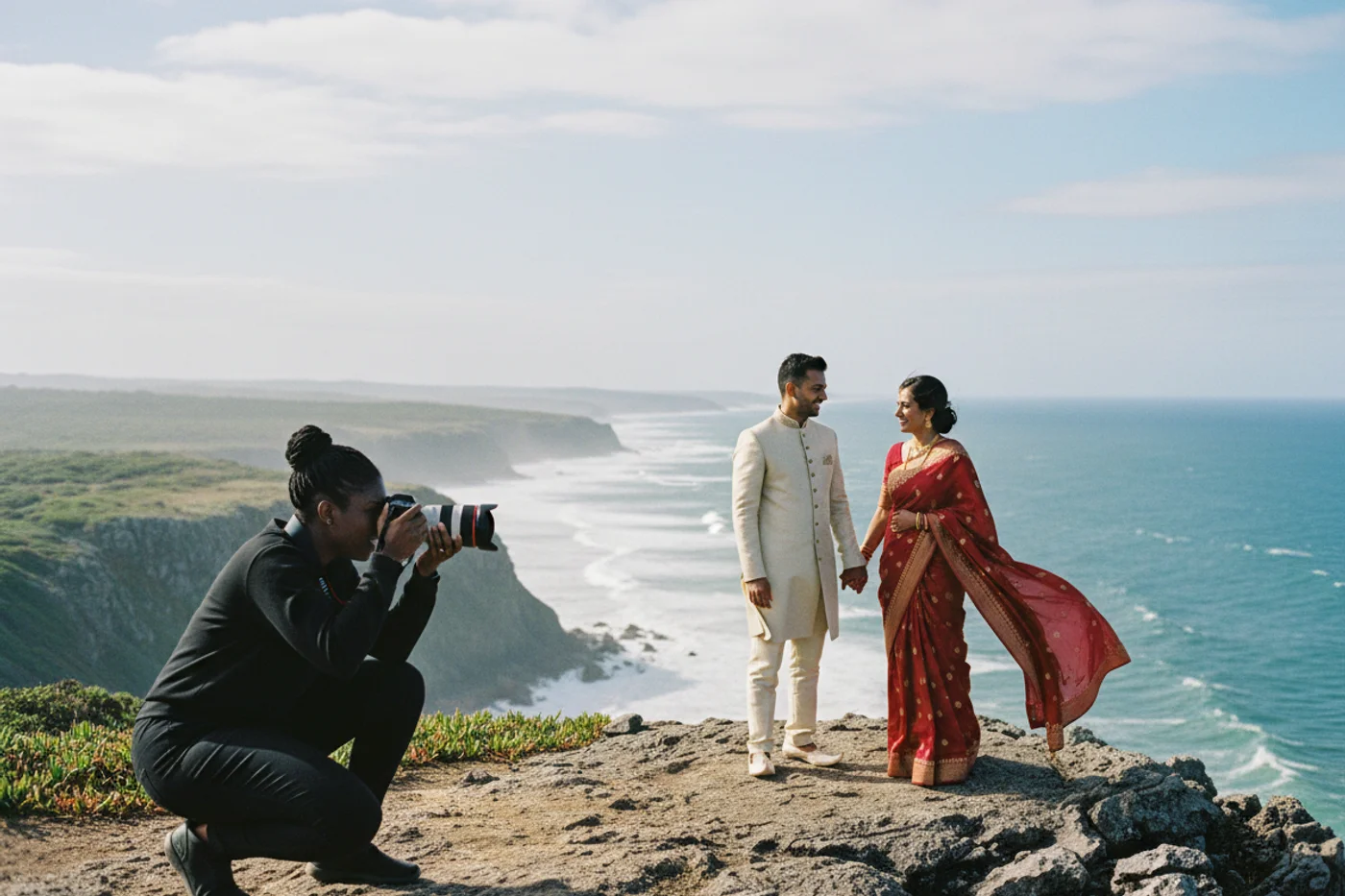
A pre-wedding meeting, ideally at the actual venue, changes how comfortable you'll feel in front of the camera on the day. Walk the space together, talk through a rough shot list, and let the photographer get a sense of you as a couple, how you naturally stand together, whether you're touchy and affectionate or more reserved, whether you like to be directed closely or left to interact naturally while they capture it.
You don't need to stick rigidly to a shot list on the day, but having discussed one removes a huge amount of uncertainty. Knowing broadly what's coming, and that your photographer already understands what matters to you, does more for your comfort in front of the lens than any amount of last-minute pep talk.
3. Bring a Few Props, Even If You Don't Use Them
Go through a few playful ideas with your photographer in advance. A light blanket to sit on for any outdoor or grass-based shots keeps your dress clean and gives you somewhere comfortable to settle for a few minutes between poses. A spare pair of flats or comfortable shoes is worth packing if you're planning any shots that involve walking any real distance; you can always swap back to heels for the formal portraits.
A few genuinely silly props, sunglasses, a fun hat, confetti, a couple of balloons, are worth having on hand even if you never plan to use the resulting photos publicly. The point isn't the prop itself. It's that five minutes of deliberately ridiculous photos, laughing at yourselves, does more to release nerves and tension than almost anything else you can do during a long shoot.
4. Stay in Control of Your Own Comfort
These photographs are yours, and they need to be an honest record of your day, not a performance for someone else's portfolio. If a pose feels physically awkward, if you're being asked to hold something uncomfortable for too long, or if you simply don't want a particular shot, say so. A photographer you're paying to document your wedding should welcome that feedback, not push past it. The best photos come from couples who feel like themselves in front of the camera, not couples contorted into a shape that looks good on Instagram but felt wrong the whole time.
5. Bring Music if the Shoot Is Away From the Main Party
If your couple's shoot happens somewhere away from your guests, a garden, a nearby park, a quiet corner of the venue grounds, silence can make things feel stiffer than they need to. A small portable speaker with a playlist you both love does a surprising amount of work to loosen everyone up, including the photographer. Music gives you something to move to naturally between poses and fills the awkward gaps while lighting and angles are adjusted.
6. Build in Enough Time
Ask your photographer directly how much time they realistically need for the shots you both want, then add a buffer. Being rushed through a shot list shows on your face; tension and irritation photograph just as clearly as joy does. A well-planned timeline slots the photo session naturally into the flow of the day rather than fighting against it, ideally with a little breathing room either side in case hair, makeup, or the ceremony itself runs long, which it very often does.
In South Africa, this is worth planning around the season and the light. Summer weddings give you long evenings and golden hour that stretches well past 7pm, which is a gift for outdoor portraits. Winter weddings, particularly in Gauteng and the interior, lose light fast after 5pm, so a shoot planned for late afternoon in June or July needs a tighter schedule than the same shoot in December.
7. Do Family and Group Photos First
If you're doing formal family or bridal party photos, get them done immediately after the ceremony, while everyone still looks put together and is still sober enough to follow simple instructions. Leave group photos until later in the reception and you'll be herding a smaller, less cooperative crowd, someone will have wandered off, a child will be having a meltdown, and the results will be noticeably less polished if that's the look you were going for.
Keep your family shot list short and specific, the exact combinations you actually want (both sets of parents together, grandparents, siblings, the full bridal party), rather than an open-ended "let's just see who's around." A tight list gets you through formal photos quickly, leaving more time for the candid, unposed shots that usually end up being everyone's favourites anyway.
Planning for Weather You Can't Control
South African weather doesn't always cooperate with a photography schedule, and a good plan accounts for that before the day rather than scrambling on it. Highveld summer afternoons bring sudden thunderstorms that can arrive and clear within an hour; coastal weddings deal with wind that plays havoc with veils and loose hair; and a hot December midday sun creates harsh, unflattering shadows that most photographers will actively try to avoid by shifting formal portraits earlier or later in the day.
Talk to your photographer about a genuine backup plan, not just "we'll figure it out," for at least one likely scenario: a covered or indoor space for portraits if rain moves in, and a rough sense of how the shot list changes if you lose your outdoor golden hour window entirely. Photographers who've shot dozens of weddings in your region will usually already have a mental backup plan; ask them what it is rather than assuming there is one.
Coordinating With a Videographer or Drone Operator
If you've booked video coverage or aerial drone shots alongside stills photography, make sure both suppliers know about each other well before the day. Overlapping crews without a plan can mean a video camera and boom mic drifting into the edge of every still photo, or a drone circling overhead during a quiet, intimate ceremony moment when the last thing you want is a buzzing distraction. A short call between your photographer and videographer beforehand, even just to agree on who leads during key moments like the first kiss and the confetti exit, saves a lot of frustration on the day itself.
A Few Extra Things Worth Knowing
- Touch up before, not during. Ask your makeup artist to stay through the start of photos if your budget allows, or at minimum, pack blotting papers and a small touch-up kit for a quick fix between the ceremony and the shoot.
- Practise your first kiss and your first look. These moments happen fast and often feel more awkward in the moment than you expect. A little forewarning from your photographer about where to stand and where to look helps enormously.
- Trust your photographer's eye for light. If they ask you to move somewhere that seems like an odd spot, it's usually because the light there is doing something beautiful that you can't fully see yourself in the moment.
- Second-shooter coverage matters for bigger weddings. One photographer can't be in two places, so if you want candid guest reactions and formal portraits both properly covered, ask whether a second shooter is included or available as an add-on.
The Bottom Line
Your wedding photos will only feel effortless if the process behind them was manageable, not chaotic. Know your style, meet your photographer properly beforehand, protect your own comfort during the shoot, and build a realistic timeline that doesn't rush the moments that matter most. Do that, and the nerves you're feeling right now will barely register in photos you'll be looking at for the rest of your lives.

Wedding Day Photos - The Absolute Must-Have's

Creating a Wedding Scrapbook

10 Reasons Why You Should Hire a Professional Wedding Photographer

Questions to Ask Your Wedding Photographer Before You Book
Top Wedding Photographers in the Eastern Cape (2026)
