Every couple has a version of this story: flipping through their wedding gallery weeks later, thrilled with most of it, and then noticing a gap. No photo of the favourite aunt who flew in from overseas. Nothing showing the detail on the dress everyone complimented all night. Not a single shot of the grandparents together. A skilled photographer captures beautiful moments instinctively, but they can't read your mind about which specific people and details matter most to you. That's what a shot list is for, not to make your photographer robotic, but to make sure the handful of photos you'll actually treasure in twenty years don't slip through the cracks of a busy, fast-moving day.
Why a Shot List Actually Matters
A wedding day moves faster than almost anyone expects, and even the most experienced photographer is working with limited time, shifting light, and dozens of moving parts. Going through a shot list with your photographer well in advance, ideally during your final planning meeting rather than the morning of, means they know which specific people, relationships, and details matter most to you personally, beyond the standard shots every photographer captures as a matter of course. It's not about controlling every frame; it's about flagging the handful of things that would genuinely disappoint you to miss.
Getting-Ready Details
- The dress hanging up before it's worn, ideally somewhere with good natural light.
- Rings, shoes, and any jewellery or accessories laid out together.
- The invitation suite, laid flat alongside a small detail like a flower or the rings.
- Hands: hair and makeup being applied, a mother or bridesmaid helping with buttons or a veil.
- Candid reactions during getting ready, laughter, nerves, a quiet emotional moment.
- The groom or second partner's own getting-ready moments, often under-photographed compared to the bride's side.
Family and Group Combinations
This is the category most likely to go wrong without a list, simply because there are too many possible combinations to remember on the day itself. Write out every specific group combination you want, rather than trusting a photographer to guess who matters together:
- Couple with each set of parents individually, then together with both sets.
- Couple with grandparents, individually and as a group, since these photos often become the most treasured over time.
- Couple with siblings, individually and as a group.
- Extended family groupings, aunts, uncles, and cousins who travelled specifically for the day.
- The full bridal party together, then broken into smaller combinations, bridesmaids only, groomsmen only.
- Any specific individual the couple wants a dedicated photo with, a favourite aunt, a childhood mentor, a close family friend who feels like family.
Appoint one organised family member or your planner to help gather people quickly for this portion, since family photos are notorious for eating far more time than couples expect, mostly due to people wandering off between groupings.
Ceremony Moments
- The groom or partner's reaction the moment they see the bride for the first time, whether that's a first look or the aisle walk itself.
- A wide shot of the full ceremony space from the back, capturing the setting and the guests.
- The processional, capturing each member of the bridal party as they walk.
- Close-ups during the vows and ring exchange, particularly hands during the ring exchange itself.
- The first kiss as a married couple.
- The recessional, the couple's first walk together as newlyweds.
- Guest reactions during key moments, tears, laughter, applause.
Portraits of the Couple
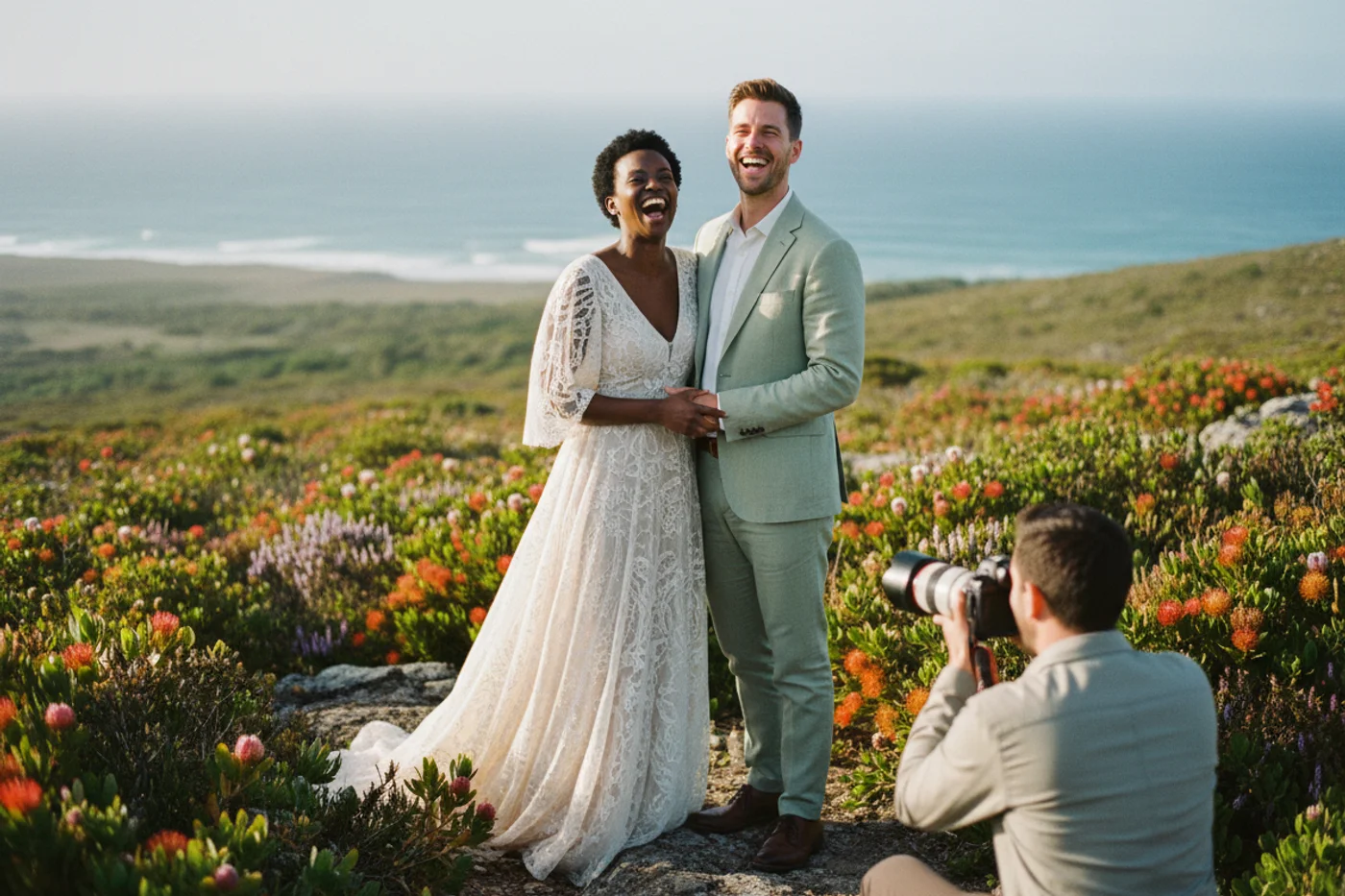
This is where a good photographer's skill really shows, but it's still worth flagging a few specifics: a request for at least one portrait session away from the reception noise, ideally during golden hour if timing allows, and any specific locations at the venue that matter to you personally, a particular view, a tree, a spot where you got engaged if the wedding is at the same location. If there's a specific pose or style you've seen and loved, silhouette shots against a sunset, a candid walking shot rather than a posed stare at the camera, mention it directly rather than assuming it'll happen organically.
Reception Details and Moments
- The venue's full decor before guests arrive, table settings, florals, the cake, signage.
- The couple's grand entrance into the reception.
- Speeches, capturing both the speaker and the couple's reactions.
- The first dance, plus dances with parents if included.
- Cake cutting and the couple's first bite.
- Candid dance floor shots once the party gets going, these are often the most joyful, least posed images from the whole day.
- The send-off, whether that's sparklers, confetti, or simply the couple's exit at the end of the night.
The Small Details People Forget to Ask For
Beyond the obvious big moments, a handful of smaller details tend to be the ones couples wish they'd specifically requested afterward: a photo of any handwritten notes exchanged before the ceremony, the view from the getting-ready room, a shot of any pets included in the day, a close-up of a grandmother's or mother's hands if she's wearing a piece of family jewellery passed down for the occasion, and a genuine, non-posed photo of the couple simply talking to each other, caught mid-conversation rather than looking at the camera.
How to Actually Communicate the List to Your Photographer
A shot list works best as a guide, not a rigid script your photographer follows minute by minute, since the best wedding photography still relies heavily on a photographer's instinct to capture spontaneous moments as they happen. Share your list in writing at least a week before the wedding, organised by the categories above rather than as one long undifferentiated list, and flag your genuine non-negotiables clearly, three or four specific shots that would truly disappoint you to miss, separate from the "nice to have if time allows" items. On the day itself, delegate a family member or your planner to help the photographer identify people they may not recognise on sight, since even the most experienced photographer can't know which unfamiliar face in the crowd is your favourite aunt without being told.
Building Enough Time Into the Schedule
The most common reason couples end up missing photos they wanted isn't a photographer's oversight, it's a schedule with no buffer built in. Family photo sessions routinely run longer than planned, golden hour portrait sessions get squeezed by a late-running ceremony, and reception details need to be photographed before guests arrive, which means someone needs to finish setting the venue with enough time to spare. When building your day's timeline with your planner or venue coordinator, add at least fifteen to twenty minutes of buffer around each photography block, family photos, couple portraits, and reception detail shots especially. A rushed fifteen-minute family photo session produces stiff, hurried images; a relaxed twenty-five-minute session produces the same photos with people actually smiling naturally by the end of it.
If your ceremony and reception are at different venues, factor travel time generously into this calculation too, since a photographer can't capture the reception's untouched decor if the couple and bridal party are still stuck in transit twenty minutes behind schedule.
Second Shooters and Multiple Angles
For weddings with more than around 100 guests, or any wedding where the couple wants both the ceremony's front-facing emotional moments and the guests' reactions captured simultaneously, a second shooter earns their cost quickly. One photographer capturing the couple's expressions during vows cannot, at the same time, capture a parent's reaction three rows back, and a second angle during the reception entrance or first dance often produces a more dynamic, more usable set of images than a single photographer working alone can manage. If budget allows for only one addition to your photography package, a second shooter for the ceremony and the first hour of the reception tends to deliver the best return on the additional cost.
Trusting Your Photographer Beyond the List
A shot list solves the problem of missing specific people and details you know matter to you. It doesn't replace the value of a skilled photographer's own eye for the unscripted, unexpected moments that end up becoming everyone's favourite images from the day, the flower girl mid-tantrum, an unplanned laugh between the couple, a grandparent wiping away a tear during the vows. Give your photographer both: a clear list of what matters most to you specifically, and enough creative freedom to capture everything else that happens around it. The best wedding galleries are always a mix of both.
One last practical note: ask your photographer, before the day, roughly how many edited images to expect in your final gallery and how long the turnaround will take. Knowing this in advance means you won't be anxiously refreshing your inbox two weeks after the wedding, and it gives you a realistic sense of how thorough your final collection will actually be across all the categories above.
It's also worth asking whether raw, unedited images are available on request in addition to the final edited set. Most couples never need them, but for a handful of once-off moments, an unusual expression during a family grouping, a candid caught mid-laugh, the unedited version occasionally captures something the final selected edit leaves out entirely.
7 Tips to Survive Your Wedding Photo Shoot
Creating a Wedding Scrapbook

10 Reasons Why You Should Hire a Professional Wedding Photographer

Wedding Photo Tips for Amateur Photographers

Top Wedding Photographers in Gauteng (2026)
