Some poems earn their fame one wedding at a time, quoted so often at ceremonies over the decades that they've become genuinely woven into how we talk about love in English. If you want a reading your guests might already half-recognise, one that carries the weight of having moved thousands of couples before you, this collection is for you: five of the most quoted, most beloved love poems in the language.
If you're after something a little less expected, our other collections cover classic English poetry with a more traditional focus, modern and unconventional 20th-century poems, Shakespeare's sonnets specifically, and short readings for a tighter ceremony programme. Here, we're going straight for the greatest hits.
Love's Philosophy
The fountains mingle with the river And the rivers with the ocean, The winds of Heaven mix forever With a sweet emotion; Nothing in the world is single; All things by a law divine In one spirit meet and mingle. Why not I with thine? -
See the mountains kiss high Heaven And the waves clasp one another; No sister-flower would be forgiven If it disdained its brother; And the sunlight clasps the earth And the moonbeams kiss the sea: What is all this sweet work worth If thou kiss not me?
Percy Bysshe Shelley (1792-1822), considered one of the finest poets in the English language, builds this poem around a simple, playful argument: if everything in nature is joined together, mountains to sky, river to ocean, wave to wave, then two people in love should be no exception. It's a persuasive, almost cheeky piece of reasoning dressed up as romantic philosophy, and it remains one of the most frequently quoted love poems for exactly that charm.
Love Is
Love is…
Love is feeling cold in the back of vans Love is a fanclub with only two fans Love is walking holding paintstained hands
Love is. Love is fish and chips on winter nights Love is blankets full of strange delights Love is when you don't put out the light
Love is. Love is the presents in Christmas shops Love is when you're feeling Top of the Pops Love is what happens when the music stops
Love is...
Love is white panties lying all forlorn Love is pink nightdresses still slightly warm Love is when you have to leave at dawn
Love is. Love is you and love is me Love is prison and love is free Love's what's there when you are away from me
Love is...
Adrian Henri (1932-2000), British poet and painter, and a founding figure of the Liverpool poetry scene, wrote accessible, everyday verse that took poetry out of the academy and into ordinary life. "Love Is" catalogues the small, unglamorous, deeply real moments that actually make up love, cold van rides, fish and chips, laundry, rather than grand romantic gestures. It's a beautifully down-to-earth choice for a couple who want their reading to feel warm and familiar rather than lofty.
A Birthday
My heart is like a singing bird Whose nest is in a water'd shoot; My heart is like an apple-tree Whose boughs are bent with thickset fruit; My heart is like a rainbow shell That paddles in a halcyon sea; My heart is gladder than all these Because my love is come to me.
Raise me a dais of silk and down; Hang it with vair and purple dyes; Carve it in doves and pomegranates, And peacocks with a hundred eyes; Work it in gold and silver grapes, In leaves and silver fleurs-de-lys; Because the birthday of my life Is come, my love is come to me.
Christina Rossetti (1830-1894), one of the most celebrated Victorian poets, wrote this as a pure, joyful outpouring of happiness at love's arrival, comparing her heart to a singing bird, a laden apple tree, a shell adrift in a calm sea. The second stanza builds toward something almost celebratory and regal, calling for silk, gold and carved doves, as though her own happiness deserves to be marked as a coronation. It's an unashamedly joyful poem, ideal for a couple who want their reading to sound purely, unreservedly happy.
Bright Star, Would I Were Stedfast As Thou Art
Bright Star, would I were stedfast as thou art - Not in lone splendour hung aloft the night And watching, with eternal lids apart, Like nature's patient, sleepless Eremite, The moving waters at their priestlike task Of pure ablution round earth's human shores, Or gazing on the new soft-fallen mask Of snow upon the mountains and the moors - No - yet still stedfast, still unchangeable, Pillow'd upon my fair love's ripening breast, To feel for ever its soft fall and swell, Awake for ever in a sweet unrest, Still, still to hear her tender-taken breath, And so live ever - or else swoon to death.
John Keats (1795-1821) wrote this in the final years of his tragically short life, and it remains one of the most quoted meditations on eternal love in English poetry. Keats compares the constancy he wants in love to a star's fixed, unwavering presence in the sky, but ultimately chooses something warmer and more human, closeness to his love, over icy, distant permanence. It's a poem about wanting forever specifically with someone, rather than forever in the abstract, which makes it a genuinely moving choice for a wedding reading.
Love Is More Thicker Than Forget
love is more thicker than forget more thinner than recall more seldom than a wave is wet more frequent than to fail
it is most mad and moonly and less it shall unbe than all the sea which only is deeper than the sea
love is less always than to win less never than alive less bigger than the least begin less littler than forgive
it is more sane and sunly and more it cannot die than all the sky which only is higher than the sky
e.e. cummings (1894-1962), the avant-garde American poet famous for writing entirely in lowercase, built this poem out of deliberately unconventional comparisons, love measured against forgetting, winning, forgiving, the sea, the sky, refusing to pin it down to any single, tidy definition. Despite its odd, inverted logic, it's become one of his most quoted and best-loved poems precisely because it captures something true: love resists simple description, and trying to pin it down in ordinary language never quite works.
Why Familiarity Can Be a Strength
There's sometimes a temptation to feel that a famous poem is somehow a less personal choice than something more obscure, as though popularity dilutes meaning. In practice, the opposite is often true at a wedding. When guests recognise a poem, when a parent's eyes well up because they remember it from their own wedding decades ago, or a friend mouths along with a line they know by heart, that shared recognition adds an entirely different, communal layer of emotion to the moment. A poem doesn't need to be undiscovered to be meaningful; it needs to say exactly what you want said, in front of exactly the people you want to hear it.
Choosing Between Them
If you want joyful and unreserved, Rossetti's "A Birthday" delivers that in full. If you want playful, clever reasoning dressed as romance, Shelley's "Love's Philosophy" does the job beautifully. If you'd rather ground your reading in ordinary, everyday moments instead of grand declarations, Henri's "Love Is" is the standout. Keats offers the deepest meditation on permanence and eternal closeness, while cummings brings an intentionally unconventional, almost riddling take on what love actually is. Read all five aloud together before deciding; the one that catches in your throat a little is almost always the right one.
Who Should Read a Famous Poem, and How
Because these poems are so widely known, it's worth choosing a reader who can deliver them with real conviction rather than a flat, dutiful recitation, since a familiar poem read without feeling can land as background noise rather than a genuine moment. A parent, sibling or close friend comfortable speaking in front of a crowd is the traditional choice, but don't overlook someone with an unexpected connection to the poem itself, a grandparent who had it read at their own wedding, or a friend who introduced you to the poet's work years ago. That personal thread, even briefly mentioned before the reading, adds a layer of meaning that elevates a familiar poem into something that belongs specifically to your day.
Pairing a Famous Poem With Your Vows
Many couples place a well-known reading like these shortly before the exchange of vows, using it almost as a runway into the ceremony's emotional peak. The familiarity of the poem settles the room and builds a shared emotional register among guests, so that when the couple's own words follow immediately after, the contrast between the borrowed, universal language of the poem and the couple's own personal, specific vows lands with real force. If your ceremony includes only one reading, this placement, poem first, vows second, tends to work particularly well for exactly that reason.
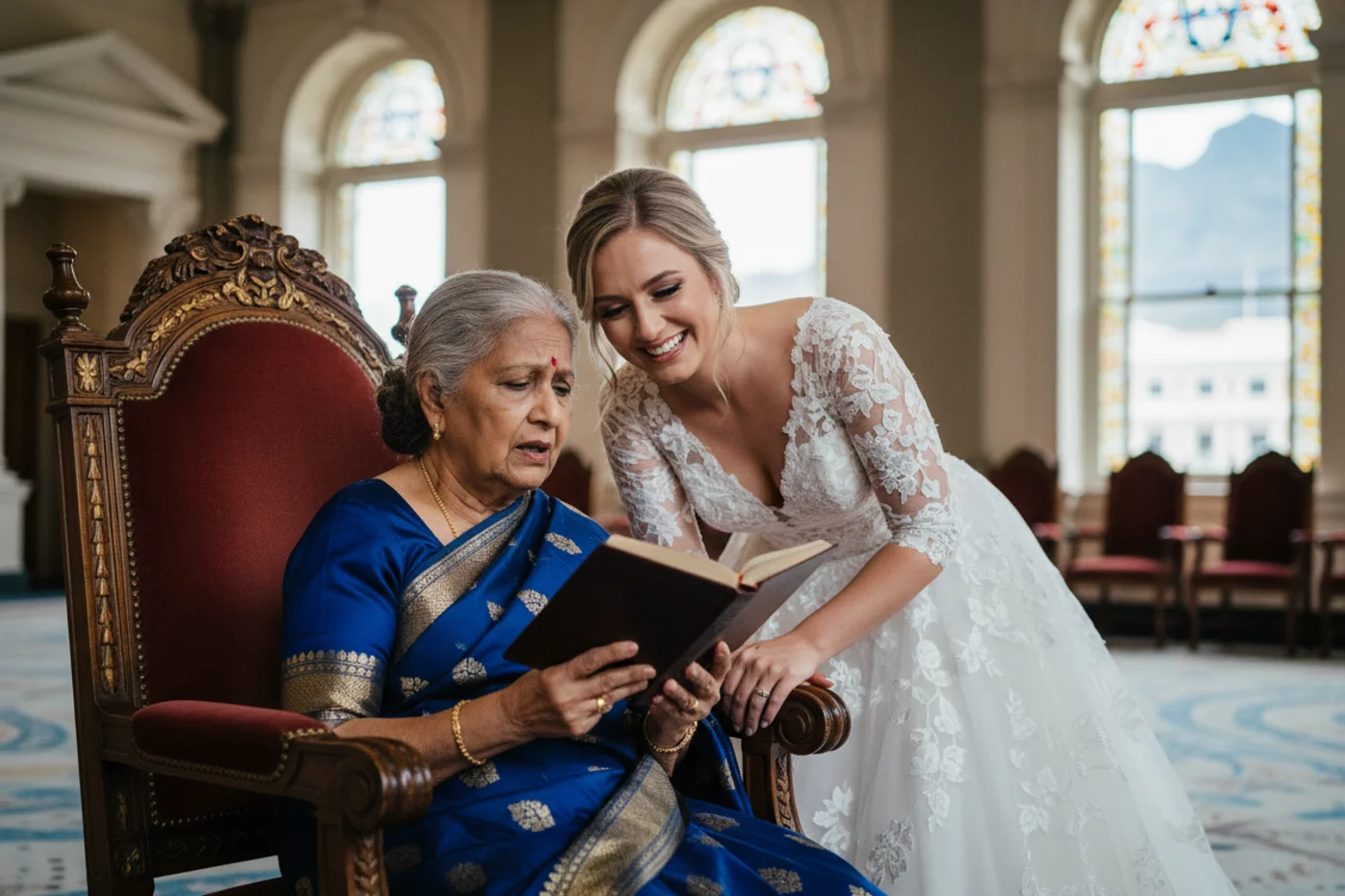
Romantic Poems Part IV: Readings to Say Aloud at Your Wedding
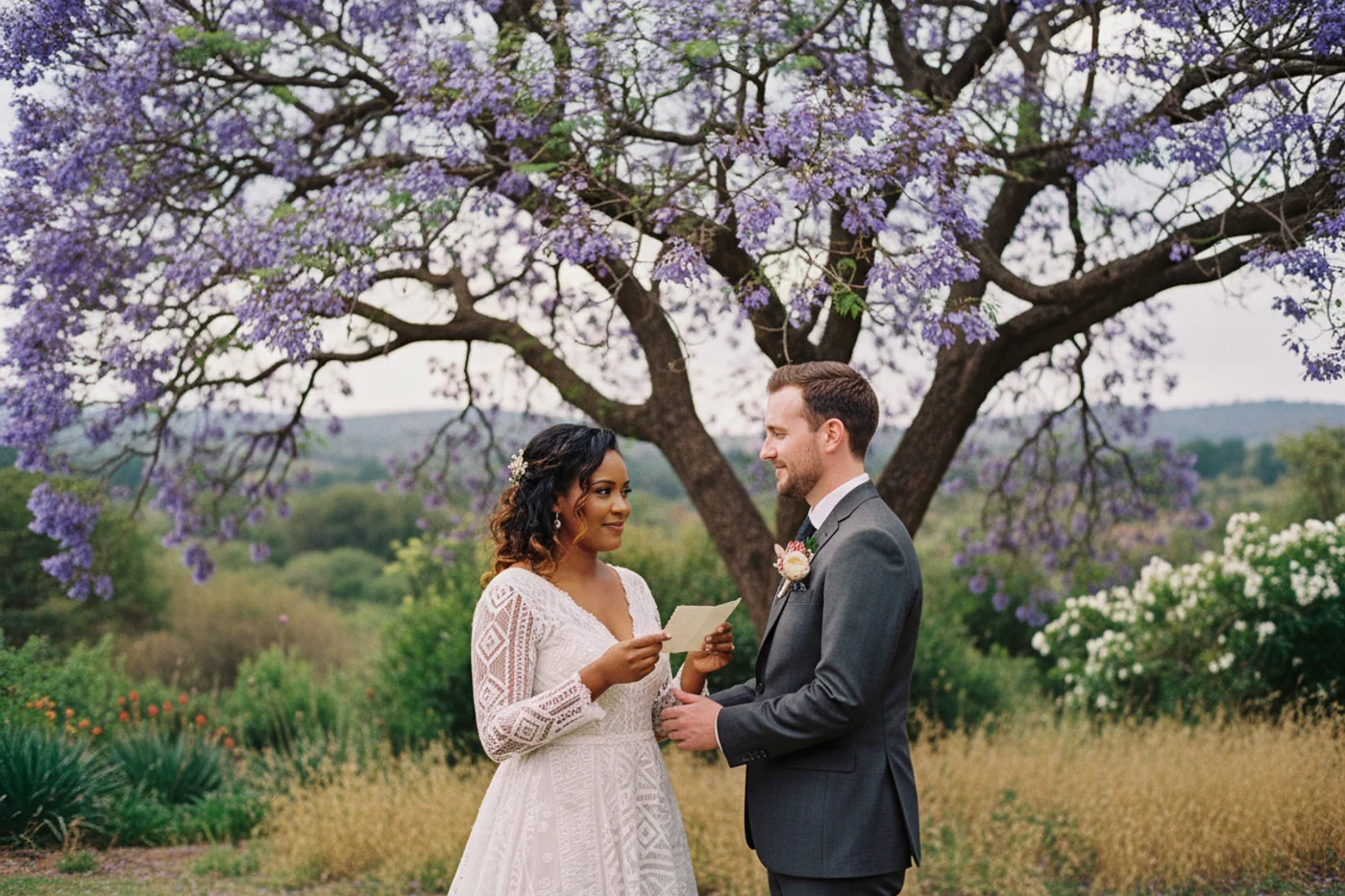
Classic Romantic Poems for Your Wedding Ceremony
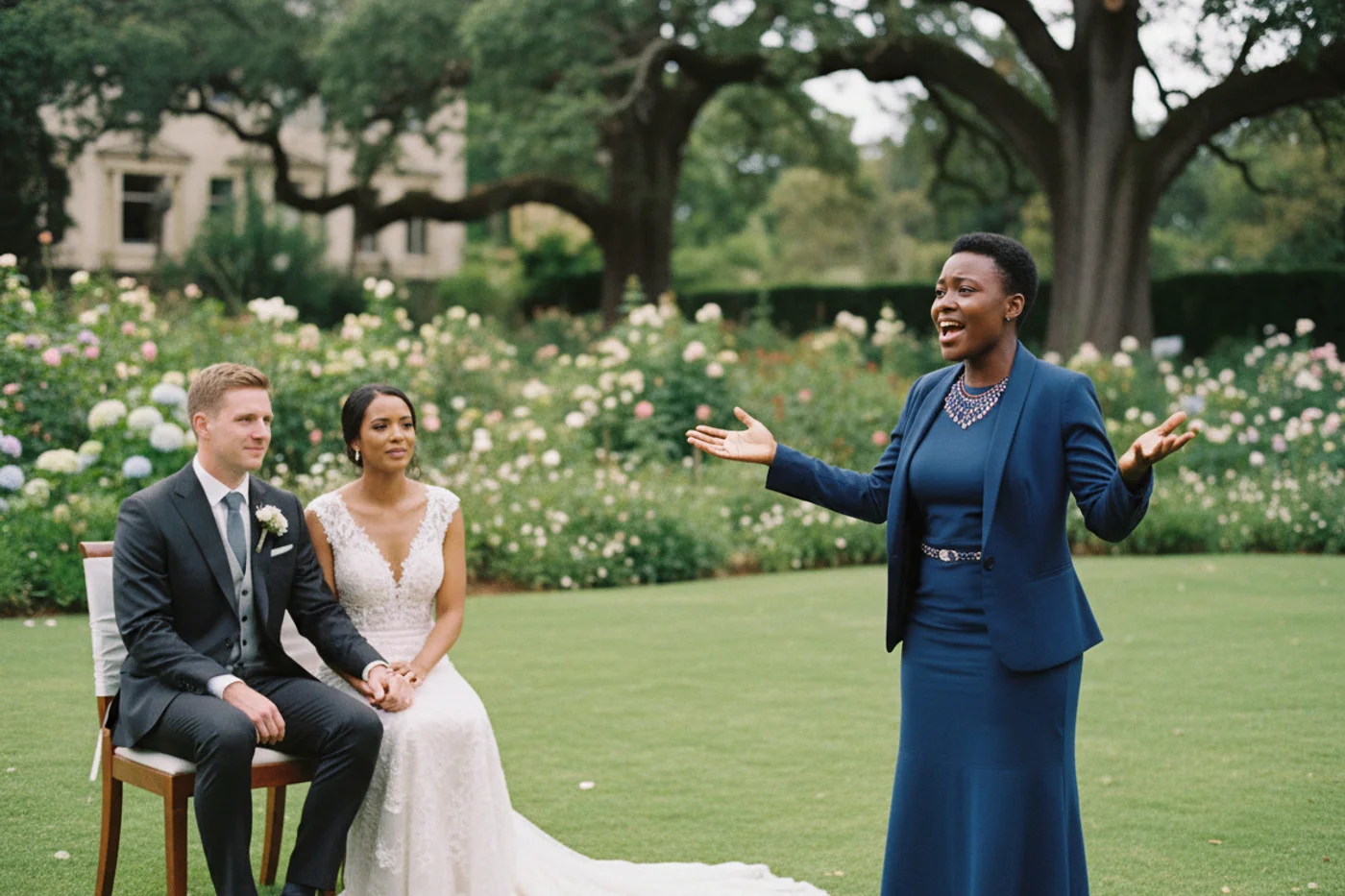
Shakespeare Sonnets for Your Wedding Reading

Meet Dr Heinrich Lottering: Pretoria's Marriage Officer With a Medical Degree and Two PhDs
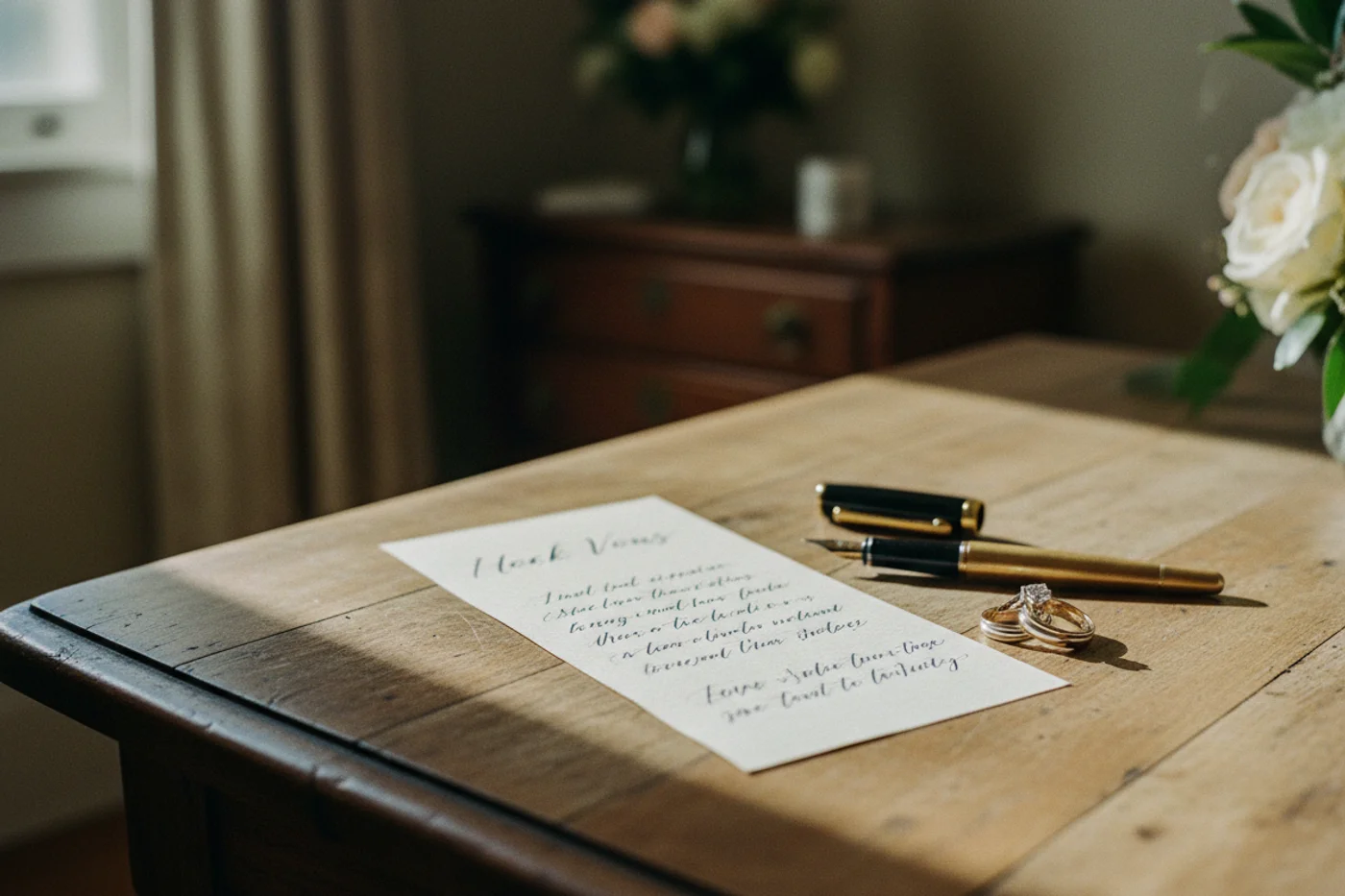
How to Write Your Own Wedding Vows (A Simple, Step-by-Step Formula)