Some couples want a reading that sounds like it belongs at their wedding specifically, written with them in mind. Others want the opposite: something that has been read at weddings for a hundred years or more, precisely because it already carries that weight. If you're in the second camp, classic poetry is exactly what you're after. These five poems span roughly three centuries of English verse, and every one of them has been read aloud at more weddings than anyone could count.
This collection focuses on the traditional end of the spectrum: Elizabethan and Romantic-era poets who wrote before free verse and modern style took over. If you want something more contemporary or unconventional, our other reading collections cover 20th-century poets, short readings for a tight programme, and Shakespeare's sonnets specifically. Here, we're staying with the classics.
The Passionate Shepherd to His Love
Come live with me and be my love, And we will all the pleasures prove, That valleys, groves, hills and fields, Woods or steepy mountains yields.
And we will sit upon the rocks, Seeing the shepherds feed their flocks By shallow rivers, to whose falls Melodious birds sing madrigals.
And I will make thee beds of roses, And a thousand fragrant posies, A cap of flowers and a kirtle Embroidered all with leaves of myrtle;
A gown made of the finest wool, Which from our pretty lambs we pull; Fair-lined slippers for the cold, With buckles of the purest gold;
A belt of straw and ivy buds, With coral clasps and amber studs; And if these pleasures may thee move, Come live with me and be my love.
The shepherds' swains shall dance and sing For thy delight each May morning; If these delights thy mind may move, Then live with me and be my love.
Christopher Marlowe (1564-1593), English dramatist and poet, wrote this as a pastoral invitation, a lover promising an idealised country life in exchange for companionship. It's one of the most famous opening lines in English poetry, and its gentle, list-like structure makes it easy to read aloud without stumbling. It suits an outdoor or garden ceremony particularly well, given its imagery of hills, rivers and flowers, and works nicely as an opening reading before the vows themselves.
Sonnet 43: How Do I Love Thee? Let Me Count the Ways
How do I love thee? Let me count the ways. I love thee to the depth and breadth and height My soul can reach, when feeling out of sight For the ends of Being and ideal Grace. I love thee to the level of everyday's Most quiet need, by sun and candle-light. I love thee freely, as men strive for Right; I love thee purely, as they turn from Praise. I love thee with the passion put to use In my old griefs, and with my childhood's faith. I love thee with a love I seemed to lose With my lost saints, I love thee with the breath, Smiles, tears, of all my life! and, if God choose, I shall but love thee better after death.
Elizabeth Barrett Browning (1806-1861) is arguably the most quoted Victorian poet at weddings today, and this sonnet is the reason why. It's the opening line, not just the poem, that made it famous, but the whole piece builds a case for a love that's steady, everyday and enduring rather than dramatic or fleeting. Browning married fellow poet Robert Browning in 1846 after a secret courtship, and he encouraged her to publish this sonnet even though she considered it too personal to share widely. It's a strong choice if you want a reading that feels intimate and personal despite being one of the best-known poems in the English language.
Life in a Love
Escape me? Never - Beloved! While I am I, and you are you, So long as the world contains us both, Me the loving and you the loth, While the one eludes, must the other pursue. My life is a fault at last, I fear; It seems too much like a fate, indeed! Though I do my best I shall scarce succeed. But what if I fail of my purpose here? It is but to keep the nerves at strain, To dry one's eyes and laugh at a fall, And baffled, get up to begin again, So the chase takes up one's life, that's all. While, look but once from your farthest bound, At me so deep in the dust and dark, No sooner the old hope drops to ground Than a new one, straight to the selfsame mark, I shape me - Ever Removed!
Robert Browning (1812-1889), English poet and playwright, married Elizabeth Barrett six years his senior in 1846, after a secret courtship of their own. This poem reads more like a determined chase than a settled declaration, which makes it a slightly unconventional choice for a wedding, more about persistence and devotion through difficulty than easy contentment. It works well for a couple whose relationship had real obstacles along the way, and who want their reading to acknowledge that rather than pretend it was always simple.
A Red, Red Rose
O my Luve's like a red, red rose That's newly sprung in June; O my Luve's like the melodie That's sweetly played in tune.
As fair art thou, my bonnie lass, So deep in luve am I; And I will luve thee still, my dear, Till a' the seas gang dry:
Till a' the seas gang dry, my dear, And the rocks melt wi' the sun; I will luve thee still, my dear, While the sands o' life shall run.
And fare thee weel, my only Luve, And fare thee weel awhile! And I will come again, my Luve, Tho' it ware ten thousand mile.
Robert Burns (1759-1796), Scottish poet and lyricist, actually wrote this as a song rather than a poem for the page, and it remains one of the most enduring declarations of love in the language. The Scots dialect throws some readers at first, but read slowly it flows naturally, and the imagery, seas running dry, rocks melting, is some of the most quoted in wedding readings anywhere in the world. If your family has any Scottish heritage, this one carries extra weight; if not, it still stands on its own as one of the great love poems.
Believe Me, If All Those Endearing Young Charms
Believe me, if all those endearing young charms Which I gaze on so fondly today Were to change by tomorrow and fleet in my arms Like fairy gifts fading away, Thou wouldst still be adored as this moment thou art Let thy loveliness fade as it will And around the dear ruin each wish of my heart Would entwine itself verdantly still.
It is not while beauty and youth are thine own And thy cheeks unprofaned by a tear That the fervor and faith of a soul can be known To which time will but make thee more dear. No, the heart that has truly loved never forgets But as truly loves on to the close As the sunflower turns to her God when he sets The same look which she turned when he rose.
Thomas Moore (1779-1852), Irish poet, songwriter and entertainer, wrote this originally as an Irish folk song, though it's now more commonly published and read as a poem. Its central idea, that love which is genuine only deepens as youth and beauty fade, makes it a particularly moving choice for an older couple, a second marriage, or simply anyone who wants their reading to promise something beyond the wedding day itself.
How to Choose the Right One for Your Ceremony
With five strong options, the deciding factor usually comes down to tone. If you want something gentle and pastoral, Marlowe's shepherd works beautifully, especially outdoors. If you want the single most recognisable line in wedding readings, Sonnet 43 is hard to beat. If your story includes real obstacles you had to work through together, Robert Browning's chase poem says something the others don't. If there's a Scottish connection in either family, Burns is an obvious and beautiful fit. And if you want a reading that speaks to a lifetime rather than a single day, Moore's poem does exactly that.
Whichever you choose, read it aloud to yourselves before deciding. Poetry that looks lovely on the page doesn't always sound natural spoken aloud in front of a room of a hundred people, and the version you'll actually love is the one that still feels right once you've heard it out loud a few times.
Tips for the Reader on the Day
Whoever you ask to read, give them the text well in advance, not the morning of the wedding. Suggest they practise it aloud at least three or four times before the day, ideally once in front of another person so they get feedback on pacing. Print the poem in a large, clear font on a single card rather than folded paper that can rustle near a microphone, and remind them that slowing down always sounds better than it feels; nerves speed people up more than they realise. A pause before the final line, in particular, gives it room to land the way it's meant to.
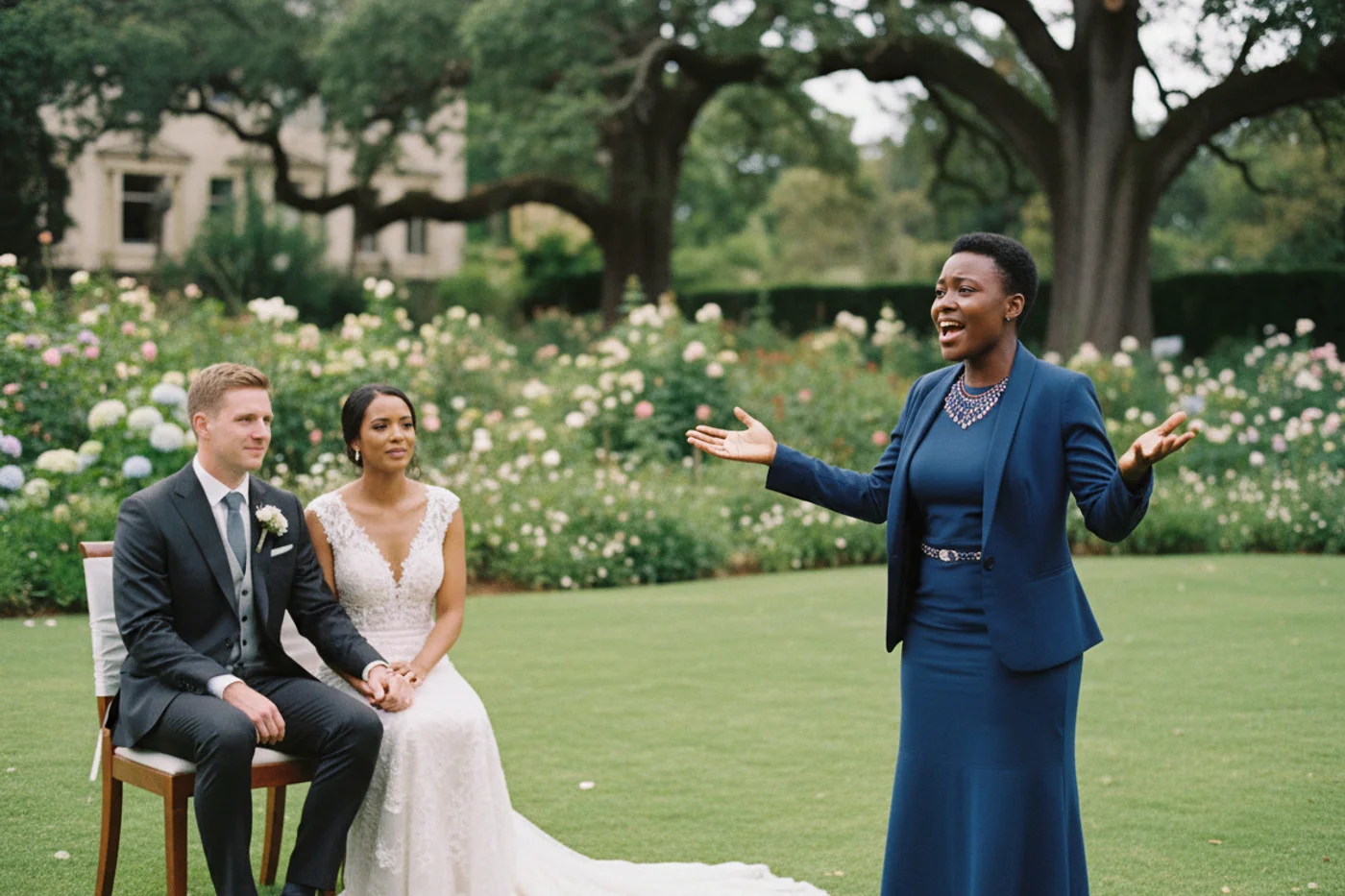
Shakespeare Sonnets for Your Wedding Reading
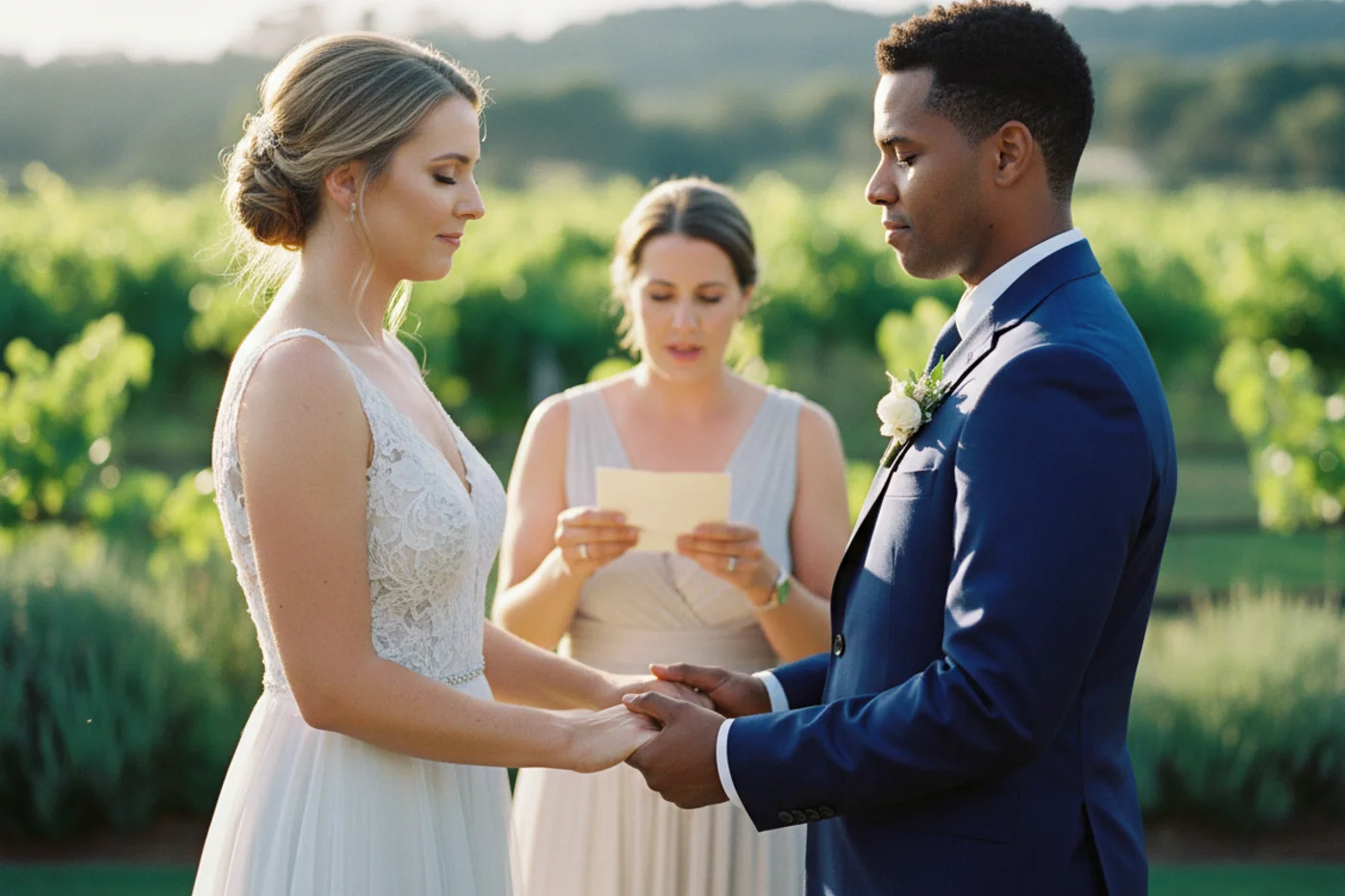
Shakespeare Poems Part III: Wedding Sonnets Beyond the Greatest Hits

The Most Famous Love Poems for Your Wedding

Garden Party Wedding
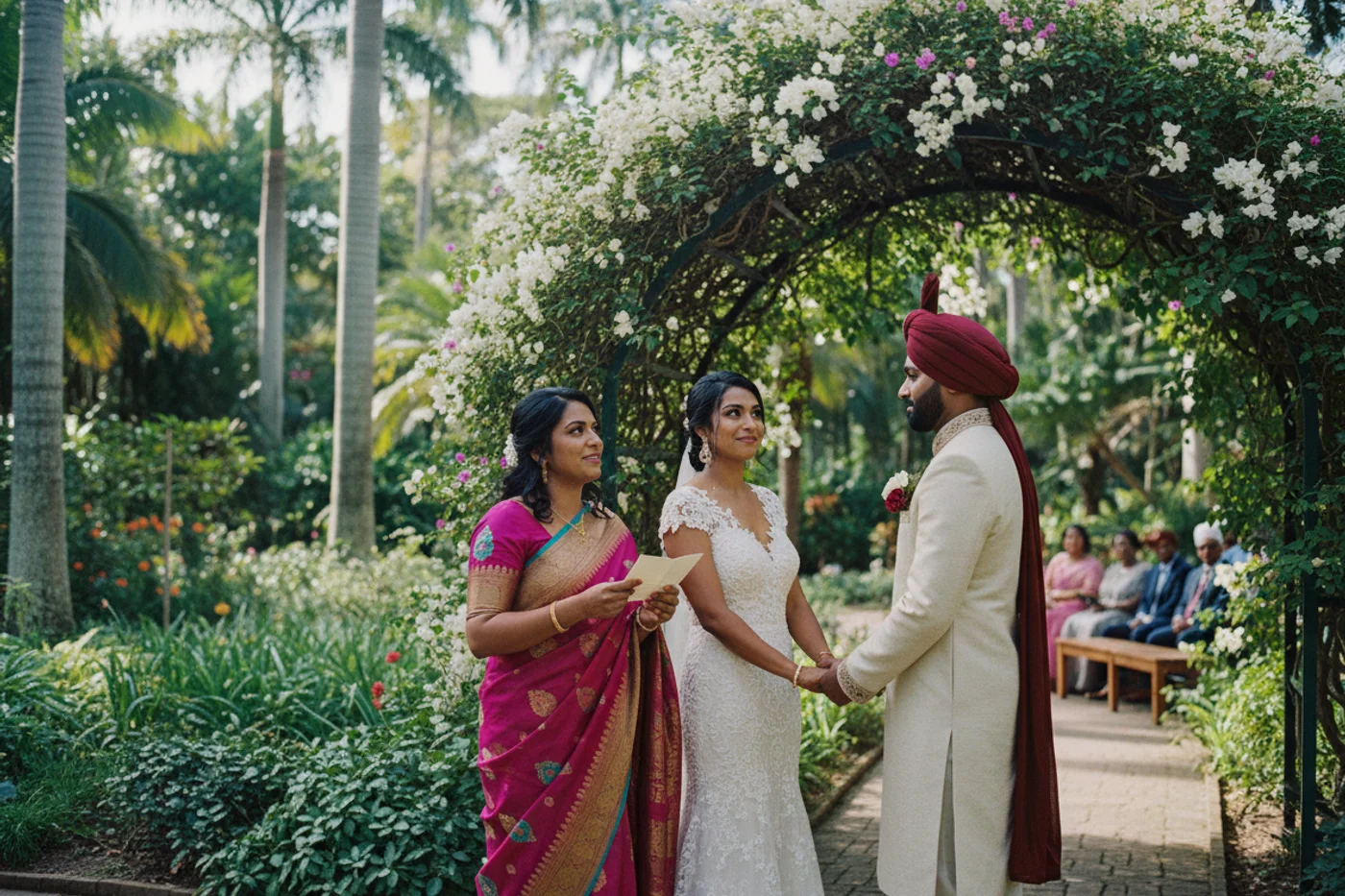
Short Wedding Readings for Ceremonies and Programs
