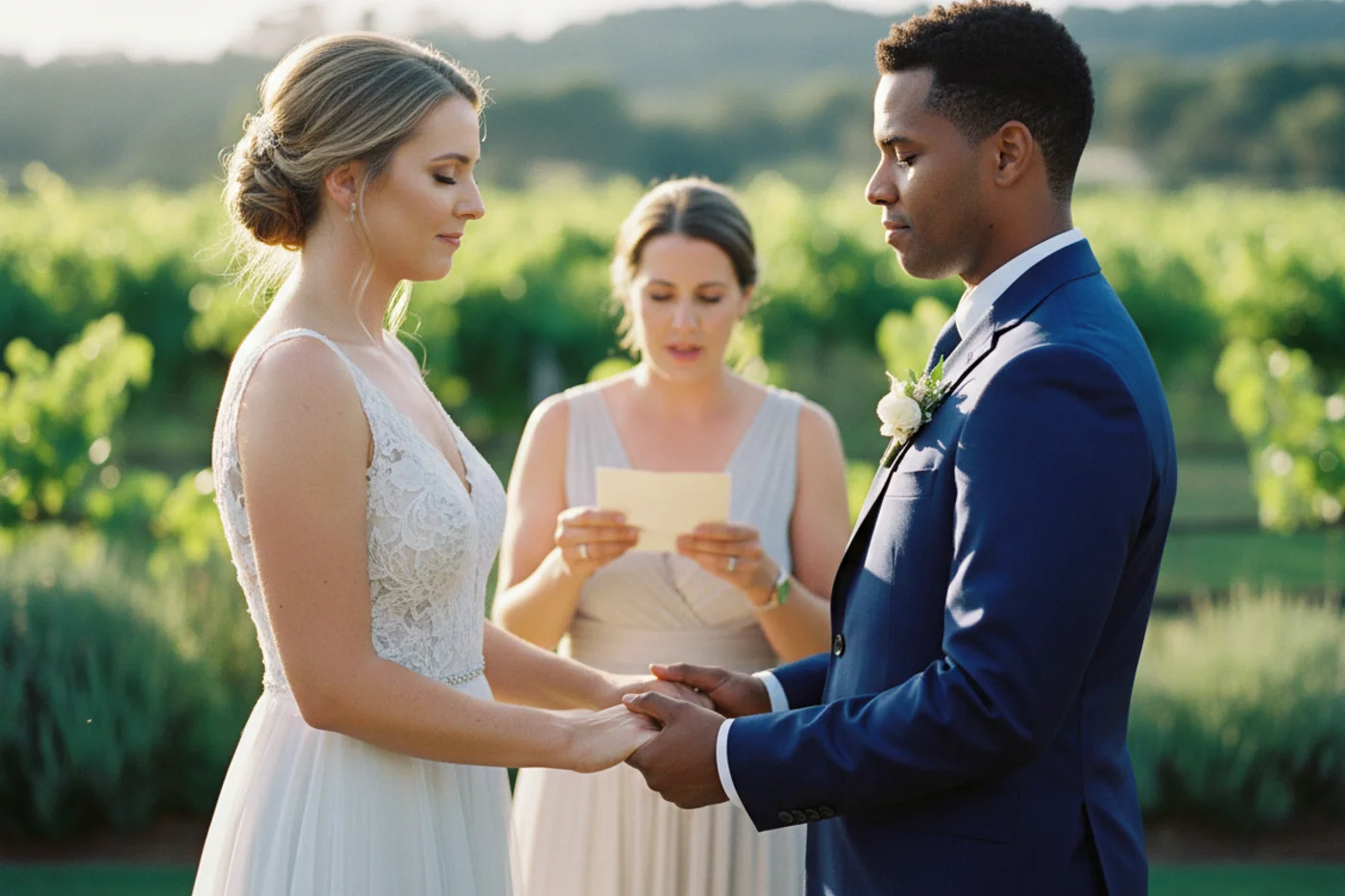
Couples across cultures and generations have used unity rituals to mark the moment two lives formally become one. Handfasting, communion, the breaking of a glass, unity candles, all of these have been performed for centuries and remain part of many wedding traditions today. Among the more modern additions to this tradition is the unity sand ceremony, which has grown from a relatively obscure ritual into one of the most popular symbolic moments couples choose to include in a modern ceremony.
What Is a Unity Sand Ceremony?
At its core, a unity sand ceremony involves two, or sometimes more, differently coloured streams of sand poured together into a single vessel, usually a clear glass container chosen specifically so the resulting pattern remains visible afterward. As the grains combine, they form a unique, permanent pattern that can never be fully separated back into its original colours, a visual metaphor for two individual lives merging into a shared one. It's become particularly popular for couples who want a unity ritual that doesn't rely on an open flame, which matters for outdoor ceremonies with wind, venues with strict fire regulations, or simply couples who'd rather avoid the logistics of candles altogether.
What You'll Need
The ceremony itself requires only a handful of items, most of which are widely available from wedding suppliers or craft stores.
- A clear glass vase or vessel, this becomes your keepsake, so choose something you'll want displayed in your home afterward
- Two (or more) smaller pouring vessels, one for each colour of sand being used
- Coloured sand, typically two colours that either match your wedding colour scheme or hold personal significance to you as a couple
- A paper or plastic funnel, useful if your main vase has a narrow neck
- A small table set up near where you'll stand during your vows
Many couples choose sand colours that reflect their wedding palette directly, while others select colours with personal meaning, a favourite shared holiday destination's beach sand colour, or shades that represent each partner's individual personality before combining into a third, blended colour that represents the marriage itself.
How to Perform the Ceremony
Set up your table near your ceremony spot with the main vase positioned centrally and the two (or more) smaller pouring vessels of coloured sand arranged around it. At the appropriate point in the ceremony, usually just after the exchange of vows and rings, your officiant introduces the ritual, briefly explaining its symbolism to your guests. Each partner then picks up their individual vessel of sand and pours it into the main vase simultaneously, allowing the two colours to mix and layer as they fall. Some couples pour slowly and deliberately, watching the pattern form, while others pour more quickly for a more dramatic, fully blended effect. There's no wrong way to do it. Once poured, the vase is typically sealed, either with a cork, wax, or simply set aside carefully, since it will be kept as a lasting keepsake of the day.
Adapting the Ceremony for Your Family
One of the reasons the unity sand ceremony has grown so popular is how easily it adapts to blended families. Couples with children from previous relationships often include them directly in the ritual, giving each child their own vessel of a distinct colour to pour in alongside the couple's own two colours. This turns the ceremony into a symbol of an entire new family forming, not just a marriage between two people, and it's become a particularly meaningful way to visibly welcome stepchildren into the day's proceedings. Some couples extend this further, including parents or even close friends with a small pour of their own colour, representing the wider support network the marriage is built on.
Writing the Ceremony Script
Most officiants have a standard script for introducing a unity sand ceremony, and most are happy to send it to you in advance so you can review and adjust it, but it's worth personalising the wording where you can. A simple, effective structure explains the symbolism briefly, notes that the individual colours can never be fully separated once combined, and connects that permanence directly to the commitment being made. If you're writing your own ceremony or working with a celebrant rather than a religious officiant, this is an easy section to make genuinely personal, referencing how you met, a shared memory, or what you hope this next chapter looks like, without needing to write an entirely new speech from scratch.
Displaying Your Sand Ceremony Vase Afterward
Because the finished vase becomes a permanent keepsake, it's worth thinking ahead about where it will live in your home. Many couples display it somewhere visible, a mantelpiece, a bookshelf, a bedroom dresser, as a quiet daily reminder of their wedding day. If you're at all concerned about the vase being knocked over or damaged during transport from the ceremony, ask a trusted family member or your wedding planner to take responsibility for moving it safely rather than trying to manage it yourselves amid the rest of the day's logistics.
Practical Considerations
A few small details make the difference between a smooth unity sand ceremony and a stressful one. Practice the pour at least once before the day, ideally with the actual vessels you'll use, since sand pours differently depending on the width of the container's opening and how full the smaller vessels are. If your ceremony is outdoors, check the wind forecast, since a strong gust can scatter sand before it reaches the vase, and consider a slightly more sheltered setup if conditions look unpredictable. Buy a little more sand than you think you'll need. It's a small cost, and running short mid-ceremony is a genuinely awkward moment to recover from gracefully. It's also worth assigning someone specific, a bridesmaid, best man or family member, to set the table up correctly before the ceremony begins and to check it hasn't been disturbed in the lead-up, so neither of you has to think about it in the moments before you walk down the aisle.
Alternatives Worth Considering
If a sand ceremony doesn't quite fit your vision but you like the concept of a shared symbolic ritual, there are a few close alternatives worth knowing about. A unity candle achieves a similar effect using flame instead of sand, though it requires more caution around wind and venue fire policies. Wine or water ceremonies involve pouring separate vessels of wine or water into a shared glass, sometimes followed by both partners drinking from it together. Tree planting ceremonies, where a couple plants a sapling together during the ceremony, offer a similar symbolic merging with the added meaning of something that continues to grow over the years, appealing to couples who want their ritual to have an ongoing, living presence rather than a static keepsake.
Choosing Your Sand Colours
Colour choice deserves more thought than couples sometimes give it. Beyond simply matching your wedding palette, plenty of couples build in a deeper layer of meaning: one colour representing where the bride grew up, another representing the groom's, or colours pulled from a place that matters to your relationship, the beach where you got engaged, the city where you first met. A third, blended colour, chosen deliberately or simply left to emerge naturally as the two original colours combine, can represent the marriage itself as something genuinely new rather than simply a combination of two existing things. If you want a more dramatic visual result, choosing sand colours with high contrast, a deep colour against a pale one, tends to photograph better and shows the layering pattern more clearly than two similarly toned colours poured together.
Where This Fits in Your Ceremony Order
Most officiants place the unity sand ceremony immediately after the exchange of rings and before the pronouncement of marriage, treating it as a natural bridge between the legal and symbolic parts of the ceremony. That said, there's no strict rule about placement, and some couples prefer to perform it earlier, right after their vows, so the pronouncement and first kiss become the final, climactic moment guests remember most vividly. If you're working with a celebrant to build a fully custom ceremony order, it's worth discussing where the ritual will land and rehearsing the transition into and out of it so there's no awkward pause while everyone figures out what happens next.
Is a Unity Sand Ceremony Right for You?
A unity sand ceremony suits couples who want a visual, symbolic moment built into their ceremony without the complications of an open flame, and it's especially well suited to blended families who want a tangible way to include children or other loved ones in the ritual itself. It takes only a few minutes to perform but produces a genuinely lasting keepsake, one that sits on a shelf for years afterward as a quiet, physical reminder of the day two lives formally became one. It's a small ritual with an outsized emotional impact, and for many couples it ends up being one of the moments they remember most clearly when they look back on their ceremony.
Shakespeare Quotes

Traditional & Religious Wedding Vows: Full Wording by Faith and Tradition

The Most Famous Love Poems for Your Wedding

Have You Considered a Jukebox?

Sotho and Tswana Traditional Weddings: Customs and Attire