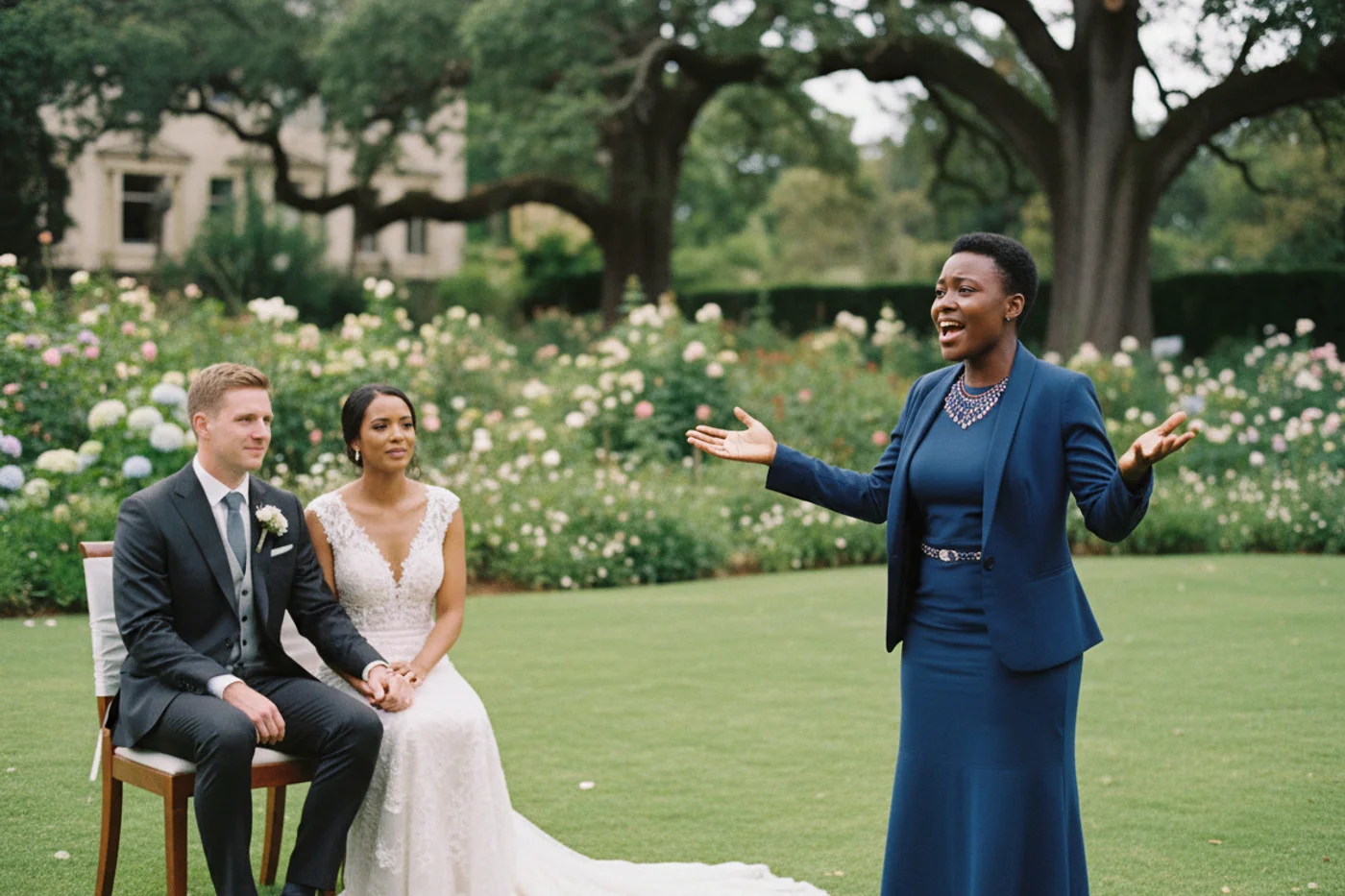
This fourth collection of Shakespeare passages for weddings takes a different angle from the ones before it in this series. Rather than gathering famous lines about falling in love or the ache of longing, this selection focuses specifically on steadfastness, the kind of love that's already been tested and has decided to stay anyway. These are passages well suited to being read aloud during an actual wedding ceremony, and each one comes with practical guidance on how and where to use it, since a beautiful line on the page doesn't always land the same way spoken to a room full of people.
"Let Me Not to the Marriage of True Minds" (Sonnet 116)
Love is not love
Which alters when it alteration finds,
Or bends with the remover to remove.
O no, it is an ever-fixèd mark
That looks on tempests and is never shaken.
Sonnet 116 is arguably the most quoted piece of writing about marriage in the English language, and there's a reason it's survived four centuries of weddings. It doesn't describe love as a feeling but as a decision, something that holds its shape "even to the edge of doom" regardless of circumstance. Because it's so widely known, it works particularly well read by a parent or close friend rather than the couple themselves, since a slightly familiar passage delivered by someone other than the bride or groom often lands with more gravity than when the couple reads something about their own relationship in the third person. Read it slowly. The sonnet's power comes from its measured, declarative rhythm, and rushing it undercuts exactly what makes it work.
"The Course of True Love Never Did Run Smooth" (A Midsummer Night's Dream)
Ay me! For aught that I could ever read,
Could ever hear by tale or history,
The course of true love never did run smooth.
This is a shorter, more conversational piece, and it works well early in a ceremony, before vows, as a wry acknowledgement that no relationship reaches the altar without some friction along the way. It suits a couple who dated for years before marrying, survived a long-distance stretch, or simply want to open their ceremony with a touch of humour rather than pure sentiment. A celebrant or officiant reading this line as part of their opening remarks, rather than saving Shakespeare for a single formal reading slot, is an easy, low-pressure way to work it into the day.
"If Music Be the Food of Love, Play On" (Twelfth Night)
If music be the food of love, play on;
Give me excess of it, that surfeiting,
The appetite may sicken, and so die.
This opening line from Twelfth Night is more playful and less directly about marriage than the others on this list, but it's an excellent choice for a ceremony that includes live music, read just before a musical interlude or before the recessional, as a literary nod to whatever piece you've chosen to walk out to. It's short enough to use as a spoken introduction from an officiant rather than a standalone reading, which makes it a good option for couples who want a Shakespeare reference without committing an entire reading slot to it.
"I Do Love Nothing in the World So Well As You" (Much Ado About Nothing)
I do love nothing in the world so well as you: is not that strange?
Much Ado About Nothing gives us Benedick and Beatrice, two characters who spend most of the play insisting, loudly and to anyone who'll listen, that they have no interest in love or marriage, before eventually admitting the opposite to each other. This particular line captures that reluctant, almost surprised honesty, "is not that strange?" and it suits a couple with a similarly slow-burn history: friends before partners, or two people who genuinely didn't expect to fall for each other. It reads well as a personal reading delivered by the couple to one another rather than to the room, since its tone is intimate and slightly wry rather than formally romantic.
"Here's My Hand" (The Tempest)
Here's my hand.
And mine, with my heart in't.
This brief exchange between Ferdinand and Miranda, spoken as they commit themselves to one another, is one of the shortest pieces of Shakespeare regularly used in weddings, and its brevity is exactly its strength. It works beautifully as a spoken exchange between the couple themselves, one line each, timed to coincide with an actual joining of hands during the ceremony, whether that's the moment rings are exchanged or a separate handfasting-style ritual. Because it's only two lines, it's easy to memorise rather than read from a card, which adds a level of intimacy that longer passages can't quite match.
How to Actually Use Shakespeare in a Modern Ceremony
Reading Shakespeare aloud at a wedding takes a bit more care than reading a modern passage, mostly because Early Modern English rhythms and vocabulary aren't something most people practise regularly. If you or your chosen reader aren't confident with the language, rehearse the passage aloud several times beforehand, paying attention to where the natural pauses fall rather than reading in a flat, unbroken stream. Shakespeare's verse is built on rhythm, and finding that rhythm, rather than rushing through unfamiliar words, is what makes a reading land rather than confuse the room. It's also worth briefly explaining which play a passage comes from before reading it, a single sentence of context is usually enough, since not every guest will place the reference immediately, and a little context helps the words carry more meaning once spoken.
Consider pairing a Shakespeare reading with a shorter, more modern piece elsewhere in the ceremony, rather than using Shakespeare exclusively throughout. The contrast between older, more formal language and something written in a contemporary voice gives a ceremony more texture, and it means a reading doesn't need to carry the entire weight of the ceremony's tone on its own.
Choosing the Right Reader
Not every reading needs to come from the officiant or a member of the bridal party. A grandparent or older family member reading Sonnet 116, for instance, carries a different weight than the same lines spoken by a twenty-something best man, simply because of the lived experience behind the delivery. Think about who in your circle has the vocal presence and comfort with public speaking to do a passage justice, rather than assigning readings purely based on wedding party hierarchy. A nervous reader stumbling through unfamiliar Early Modern phrasing can undercut even the most beautifully chosen passage, so it's worth having an honest conversation with whoever you ask about whether they're genuinely comfortable taking it on, and giving them an easy way to decline if public reading isn't something they'd enjoy.
Placing Readings Within Your Ceremony Order
Where you place a Shakespeare reading changes how it lands. A passage read before the vows sets a tone the rest of the ceremony builds on, while one read after the exchange of rings functions more like a closing reflection on what's just happened. Sonnet 116 works particularly well in this second position, since its declarative certainty about enduring love acts as a fitting seal on vows that have just been spoken. Shorter, more playful passages, like the line from A Midsummer Night's Dream or the opening of Twelfth Night, sit more naturally earlier in the ceremony, before the tone shifts toward the formal exchange of promises. If you're working with a celebrant on a fully custom ceremony order, discuss placement explicitly rather than simply slotting a reading in wherever there's a gap, since the same words can carry a noticeably different emotional weight depending on what comes immediately before and after them.
Printing the Passage for Guests
If your ceremony includes a printed programme, consider including the full text of any Shakespeare reading rather than assuming guests will catch every word as it's spoken. Early Modern vocabulary and inverted sentence structure can be genuinely difficult to follow purely by ear, especially in an outdoor venue with wind or ambient noise competing with the reader's voice. A guest following along on the page, even briefly, often gets more out of the passage than one relying entirely on live delivery, and it gives anyone who wants to revisit the words afterward, as a keepsake or simply out of curiosity, an easy way to do so.
A Final Thought on Choosing Passages
The right Shakespeare passage for your ceremony isn't necessarily the most famous one, or the one that shows up first in every wedding readings list online. It's the one that actually reflects something true about your specific relationship, whether that's a love that's weathered real obstacles, a slow-burn friendship that turned into something more, or simply two people who found the right words already written for them centuries ago. Read a few options aloud together before deciding, since a passage that reads beautifully silently on the page doesn't always carry the same weight once spoken in the room where you'll actually be standing on the day itself, surrounded by everyone you love.
Wedding Vows Examples: For Him, For Her, and Every Kind of Couple
Shakespeare Poems for Your Wedding, Part I: The Great Love Sonnets
Romantic Quotes Part III: Lines for Vows, Toasts and Thank-You Cards
Top Ten: Classical Ceremonial Music

Traditional Wedding Attire in South Africa: Zulu, Xhosa, Tswana, Sotho, Ndebele & Venda