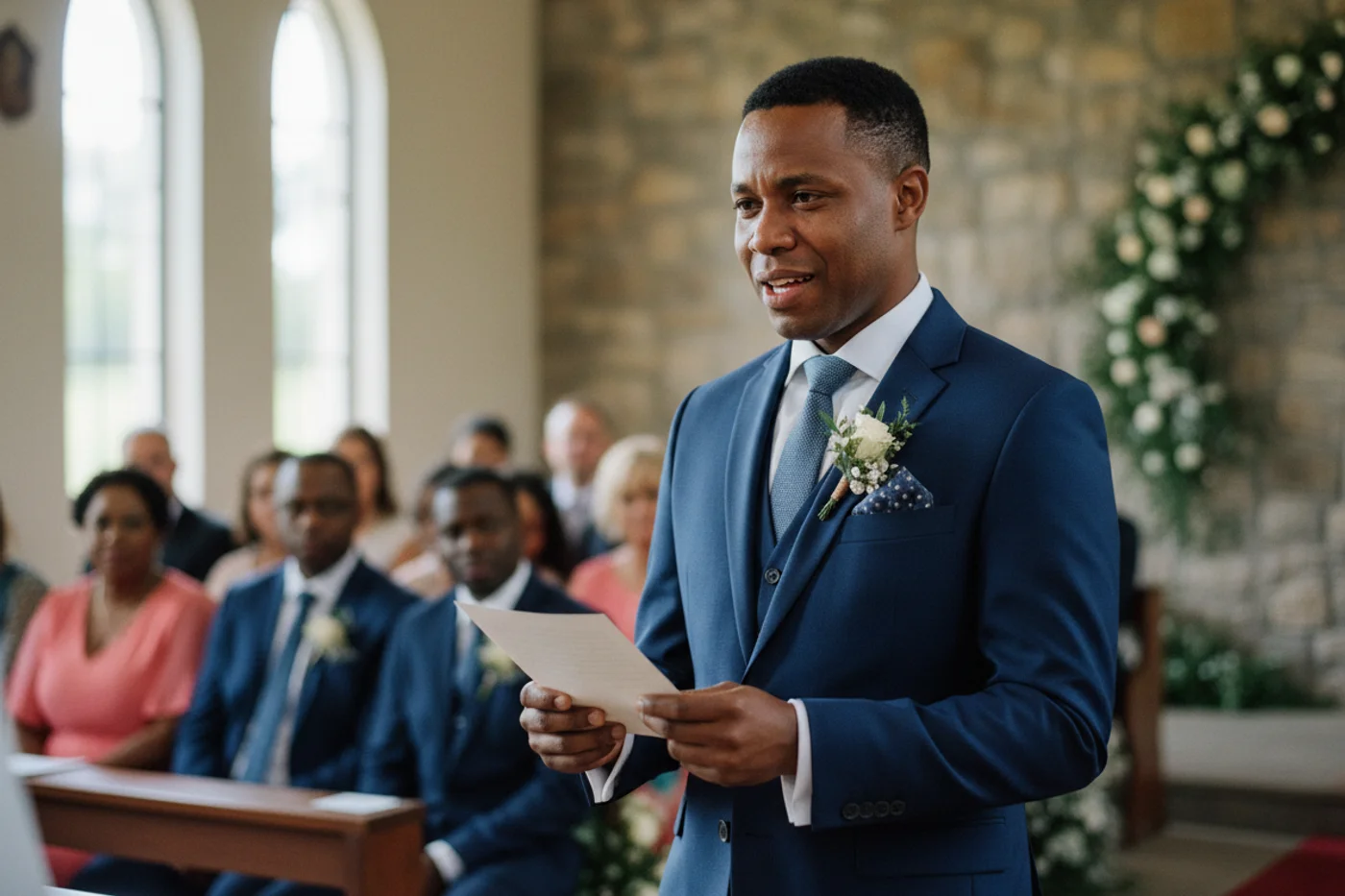
Some poems earn their place at weddings decade after decade, not because they're the easiest to find on a Google search, but because they say something about love that hasn't gone out of date in a hundred, or in one case, several thousand years. This collection focuses on the essential classics: the poems couples reach for again and again because they capture something true and lasting, rather than something fashionable. If you want a reading with real literary weight behind it, start here.
Sonnet 43: How Do I Love Thee? Let Me Count the Ways
How do I love thee? Let me count the ways.
I love thee to the depth and breadth and height
My soul can reach, when feeling out of sight
For the ends of being and ideal grace.
I love thee to the level of every day's
Most quiet need, by sun and candle-light.
I love thee freely, as men strive for right;
I love thee purely, as they turn from praise.
I love thee with the passion put to use
In my old griefs, and with my childhood's faith.
I love thee with a love I seemed to lose
With my lost saints. I love thee with the breath,
Smiles, tears, of all my life; and, if God choose,
I shall but love thee better after death.
Elizabeth Barrett Browning wrote this in the 1840s as part of a sequence addressed to her husband, the poet Robert Browning, and it remains one of the most quoted love poems in the English language for a reason: it moves systematically through every register of love, spiritual, everyday, remembered, future, without ever feeling like a list. The final line, extending love beyond death itself, gives it real weight for a wedding reading, since it speaks to permanence rather than a fleeting feeling.
Song of Solomon 8:6–7
Set me as a seal upon thine heart, as a seal upon thine arm: for love is strong as death; jealousy is cruel as the grave: the coals thereof are coals of fire, which hath a most vehement flame.
Many waters cannot quench love, neither can the floods drown it: if a man would give all the substance of his house for love, it would utterly be contemned.
This passage, thousands of years old, remains one of the most powerful descriptions of love's intensity ever written, comparing it to fire and flood, to something no amount of wealth could ever purchase. It suits both religious and secular ceremonies, since its imagery works as poetry independent of any specific faith tradition, and it carries a weight and gravity that few modern poems can match, simply by virtue of how long it has already endured.
A Birthday, by Christina Rossetti
My heart is like a singing bird
Whose nest is in a water'd shoot;
My heart is like an apple-tree
Whose boughs are bent with thickset fruit;
My heart is like a rainbow shell
That paddles in a halcyon sea;
My heart is gladder than all these,
Because my love is come to me.
Raise me a dais of silk and down;
Hang it with vair and purple dyes;
Carve it in doves and pomegranates,
And peacocks with a hundred eyes;
Work it in gold and silver grapes,
In leaves and silver fleurs-de-lys;
Because the birthday of my life
Is come, my love is come to me.
Christina Rossetti's 1857 poem captures something less commonly expressed in wedding readings: pure, uncomplicated joy. There's no obstacle here, no history of hardship overcome, just delight, rendered through some of the most vivid natural imagery in Victorian poetry. It's a wonderful choice for a couple whose relationship has been genuinely easy and happy, who don't need a poem about overcoming struggle to feel like their story is being told honestly.
On Marriage, by Kahlil Gibran
Then Almitra spoke again and said, "And what of Marriage, master?"
And he answered saying:
You were born together, and together you shall be forevermore.
You shall be together when the white wings of death scatter your days.
Aye, you shall be together even in the silent memory of God.
But let there be spaces in your togetherness,
And let the winds of the heavens dance between you.
Love one another, but make not a bond of love:
Let it rather be a moving sea between the shores of your souls.
Fill each other's cup but drink not from one cup.
Give one another of your bread but eat not from the same loaf.
Sing and dance together and be joyous, but let each one of you be alone,
Even as the strings of a lute are alone though they quiver with the same music.
Give your hearts, but not into each other's keeping.
For only the hand of Life can contain your hearts.
And stand together, yet not too near together:
For the pillars of the temple stand apart,
And the oak tree and the cypress grow not in each other's shadow.
Written in 1923, this remains one of the most requested wedding readings of the past century, and for good reason. Unlike most love poems, which celebrate merging two lives into one, Gibran makes the case for a marriage built on togetherness and independence held in careful balance, "let there be spaces in your togetherness." For modern couples who value their individual identities as much as their shared life, this reading often resonates more deeply than a poem about total union.
Why These Particular Poems Endure
What ties this selection together isn't era or style, they range from ancient scripture to Victorian verse to early twentieth-century philosophy dressed as poetry, but the fact that each one says something specific and true about love rather than reaching for vague, interchangeable sentiment. Barrett Browning counts the exact ways love shows up in daily life. The Song of Solomon insists on love's raw intensity. Rossetti captures pure, unclouded joy. Gibran argues for independence within togetherness. Each poem takes a clear position rather than simply gesturing at romance in general terms, which is exactly why they've survived long enough to become classics in the first place.
Choosing Between Them for Your Ceremony
If your relationship has been steady and enduring, Barrett Browning's exhaustive, methodical accounting of love fits beautifully. If your love story has real intensity and passion at its core, the Song of Solomon carries a weight nothing modern quite matches. If your relationship has simply been joyful, uncomplicated and easy, Rossetti's poem tells that story honestly rather than forcing drama where none exists. And if independence and individual identity matter deeply to you both within your partnership, Gibran's "On Marriage" articulates that better than almost anything else ever written on the subject.
Reading Classic Poetry Well Aloud
Older English, whether Victorian, Elizabethan or biblical in register, benefits from a slower, more deliberate reading pace than contemporary language. Encourage whoever is reading to practise aloud several times, paying attention to natural pause points at commas and line breaks rather than rushing through to the end. If a passage uses unfamiliar or archaic words ("thee," "thine," "vair"), a brief, casual note before the reading ("this is from an 1840s sonnet, so the language is a little old-fashioned") helps guests settle into the register rather than being distracted by it.
Splitting a Longer Reading Between Two Voices
Gibran's "On Marriage" and the Song of Solomon passage both work well split between two readers, perhaps two close friends, or a sibling from each side of the family, alternating lines or short sections. This adds a sense of shared voice fitting for a passage about partnership, and it also shortens how long any one person needs to hold the room's attention alone, which can ease nerves considerably for a reluctant public speaker.
Pairing a Classic Reading With a Modern One
You don't have to choose only one register for your ceremony readings. Plenty of couples pair one of these enduring classics with a shorter, more contemporary piece, a favourite song lyric, a line from a novel that means something to you both, to get the best of both worlds: the weight and credibility of literary history alongside something that feels unmistakably personal and current. If you go this route, place the classic reading earlier in the ceremony and the more personal, modern piece closer to the vows, so the emotional arc builds naturally toward the most intimate part of the day.
Where to Find the Full Texts
All four works excerpted here are in the public domain and widely available in full online and in printed poetry anthologies, so there's no cost or copyright concern in using them for your ceremony programme or reading cards. If you'd like to use a longer excerpt than what's included here, particularly from Gibran's "On Marriage," which continues for several more lines in the original text, search for the full passage from The Prophet and choose the portion that speaks most directly to your relationship.
Final Thought
There's a reason these poems keep appearing at weddings across generations and continents: they've already proven, over decades or centuries, that they say something true about love that resonates broadly and specifically at the same time. If you want a reading that feels timeless rather than trend-driven, one of these four classics is a safe, meaningful place to start.
Classic Romantic Poems for Your Wedding Ceremony
Shakespeare Poems Part III: Wedding Sonnets Beyond the Greatest Hits
Romantic Poems Part III: Short Poems for Wedding Readings
Tsonga Traditional Wedding: Customs, Attire and Ceremonies
Romantic Quotes Part I: Where to Use Them on Your Wedding Day