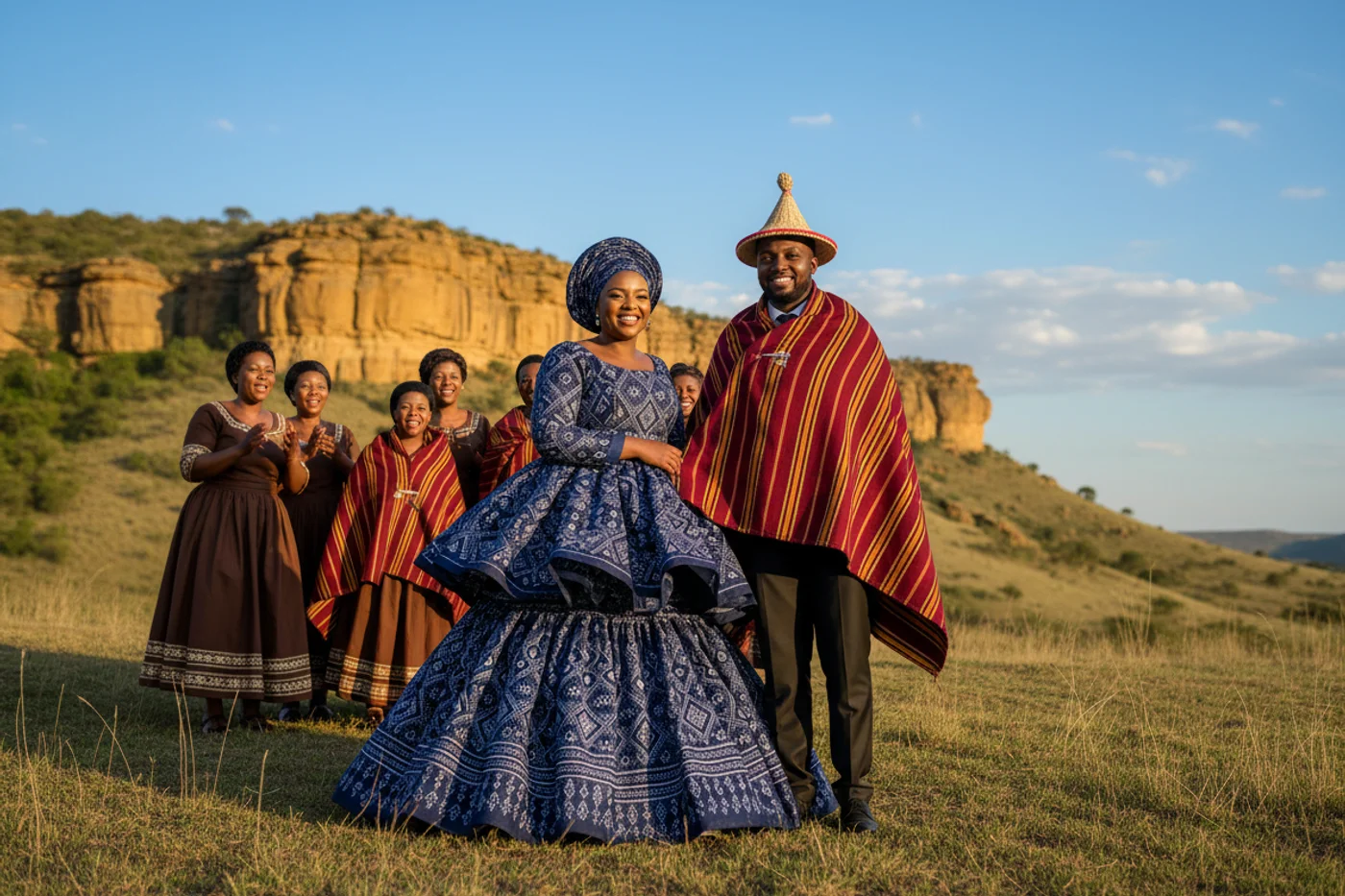
A Tsonga traditional wedding is loud in the best possible way. Women in layered xibelani skirts shake their hips until the fabric swirls, aunts ululate as the bride appears, and somebody's speaker is always playing Tsonga disco. Underneath the colour sits something serious. Two families are negotiating, gifting and feasting their way into becoming one.
This guide follows a Tsonga wedding from the first approach and the lobola talks (lovola, in Xitsonga) through the bride's move into her new family, the attire, the music and the food. It also covers how most couples now pair the traditional day with a white wedding. Keep in mind that Vatsonga practice is not uniform. A family in Giyani may do things differently from one in Bushbuckridge, Soweto or Maputo, and clans have their own ways of doing even the same step.
Use what follows as a starting point for the conversation with your elders. They have the final word.
Who the Vatsonga are, and a word on "Shangaan"
The Vatsonga (one person is a Mutsonga) speak Xitsonga, one of South Africa's official languages. In South Africa most live in Limpopo and Mpumalanga, especially in the lowveld country west of the Kruger National Park, with large communities in Gauteng too. Across the border, southern Mozambique is home to millions more Tsonga speakers, and smaller communities live in Zimbabwe and Eswatini. Under apartheid, the Gazankulu homeland, with its capital at Giyani, was created for Tsonga and Shangaan people. It has been part of Limpopo since 1994.
The naming needs a moment. "Shangaan" comes from Soshangane, a Nguni military leader who built the Gaza kingdom over Tsonga-speaking clans in the 1800s. Strictly, it refers to the people linked to his rule, but in everyday South African speech it is often used for Tsonga people as a whole, and "Tsonga-Shangaan" is common too. Some people are proud to call themselves Shangaan. Others find it inaccurate or even offensive when applied to them, and prefer Tsonga or Vatsonga. The simplest rule at a wedding is to use whatever your partner's family uses.
One more point. The Vatsonga are a different people from the Tonga of Zambia and Zimbabwe, despite the similar name.
The stages of a Tsonga traditional wedding
Families describe the process in their own way, and many fold steps together, but the broad shape looks like this.
- The approach. The couple tells their families, and the groom's family sends word to the bride's family that they wish to open talks.
- Lovola negotiations. Delegates from both sides meet, usually at the bride's home, to agree the bride wealth.
- Payment and gifts. Lovola is handed over, in cash, cattle or both, and the families exchange gifts.
- The celebration. A feast with a slaughter, singing and dancing, often at one or both family homes.
- The bride joins the groom's family. She is accompanied to her in-laws' homestead, received there and counselled by the older women.
The Xitsonga phrase ku teka ni ku lovola, roughly "taking a wife and paying lobola", was the title of a 1942 study of Shangaan marriage law by H. E. Ntsanwisi. It sums up the two halves of the process well. In many families, a marriage without lovola is not regarded as a complete marriage at all.
Lovola: the Tsonga lobola negotiations
Lovola is the Xitsonga word for lobola, the bride wealth the groom's family gives to the bride's family. The verb is ku lovola. Historically it was counted in cattle, and older accounts record hoes and later money being used too. Today most families agree a cash amount, sometimes alongside livestock. Families frame it as a thank-you to the bride's family for raising her and as the start of a relationship between two households, not as a price.
Who goes to the table
The couple doesn't negotiate. The groom's family sends senior relatives, usually uncles and respected elders, to the bride's home, where her family fields its own representatives. Older accounts describe one intermediary speaking for each side, and many families still keep the talks in the hands of a small, trusted group. The meetings can be formal, slow and occasionally tense, which is exactly as it should be. The atmosphere tends to change the moment agreement is reached.
The mouth opener and the figure
As in many South African cultures, the groom's delegation often brings a "mouth opener", a sum of money or a bottle of brandy that gets the conversation started. In historical practice, once the bride's father had agreed to the match, the groom's father sent a cow to seal the agreement before the main negotiations began. How the final figure is set, how many meetings it takes and whether it is paid at once or in instalments is for the families to decide. Our lobola guide for South Africa covers letters, etiquette and realistic figures in detail.
A note on the law
Lovola matters legally too. Under the Recognition of Customary Marriages Act, a customary marriage needs both spouses to be over 18, to consent, and for the marriage to be negotiated and celebrated according to custom. South African courts have heard Tsonga cases where the whole question was whether a payment was a mouth opener or lovola itself, so keep a clear record of what was paid and when.
Gifts and the families coming together
Once lovola is settled, the mood turns celebratory. At many Tsonga weddings the families exchange gifts to show that they now belong to each other. Cloths, headwraps and blankets are common, and women of one family may be dressed or wrapped in fabric by the other. What is given, by whom and when differs a great deal between families, so ask early rather than turning up with the wrong things.
A slaughter usually follows. A goat or cow is typical, and the meat feeds the guests while the act itself speaks to the ancestors. At some weddings the bride's father announces to everyone that lovola has been paid in full, and both families dance in circles around the couple. Expect some version of that public moment. It is the point where the agreement stops being private.
The bride's welcome into the groom's family
Traditionally, a Tsonga bride leaves her home in a formal farewell. Older accounts describe a sacrifice made as she takes leave of her family and their ancestors, followed by her family handing her over to her new family and a feast at the groom's muti, his family homestead. Once that feast is done, the couple is regarded as married.
Arriving at her new home
The bride is usually accompanied by women from her own family, and she is received by her in-laws with song and ululation. At some weddings she arrives in her own family's colours and later changes into an outfit in the groom's family's colours, a simple and moving way of showing that she has crossed from one family to the other. Many brides also wear a blanket over their shoulders, which families describe as the warmth of the home she is entering.
Counsel from the older women
Expect the elders, particularly the aunts, to sit the bride down and explain what is expected of her as a wife in this family. In Tsonga families an aunt often remains a lifelong counsellor to a married niece. You may hear the saying vukati va kandza hi mbilu, usually translated as "marriage needs a strong heart". Some Tsonga scholars have criticised how the saying is used to ask endurance only of wives, and plenty of modern couples talk this part through openly before the ceremony.
Life with the in-laws
In the traditional pattern, the new wife lived at her mother-in-law's homestead, helped with the cooking and household work, and learned the family's customs from her. Many families now apply this lightly, especially when both spouses work in a city, so agree on expectations beforehand.
Traditional Tsonga wedding attire
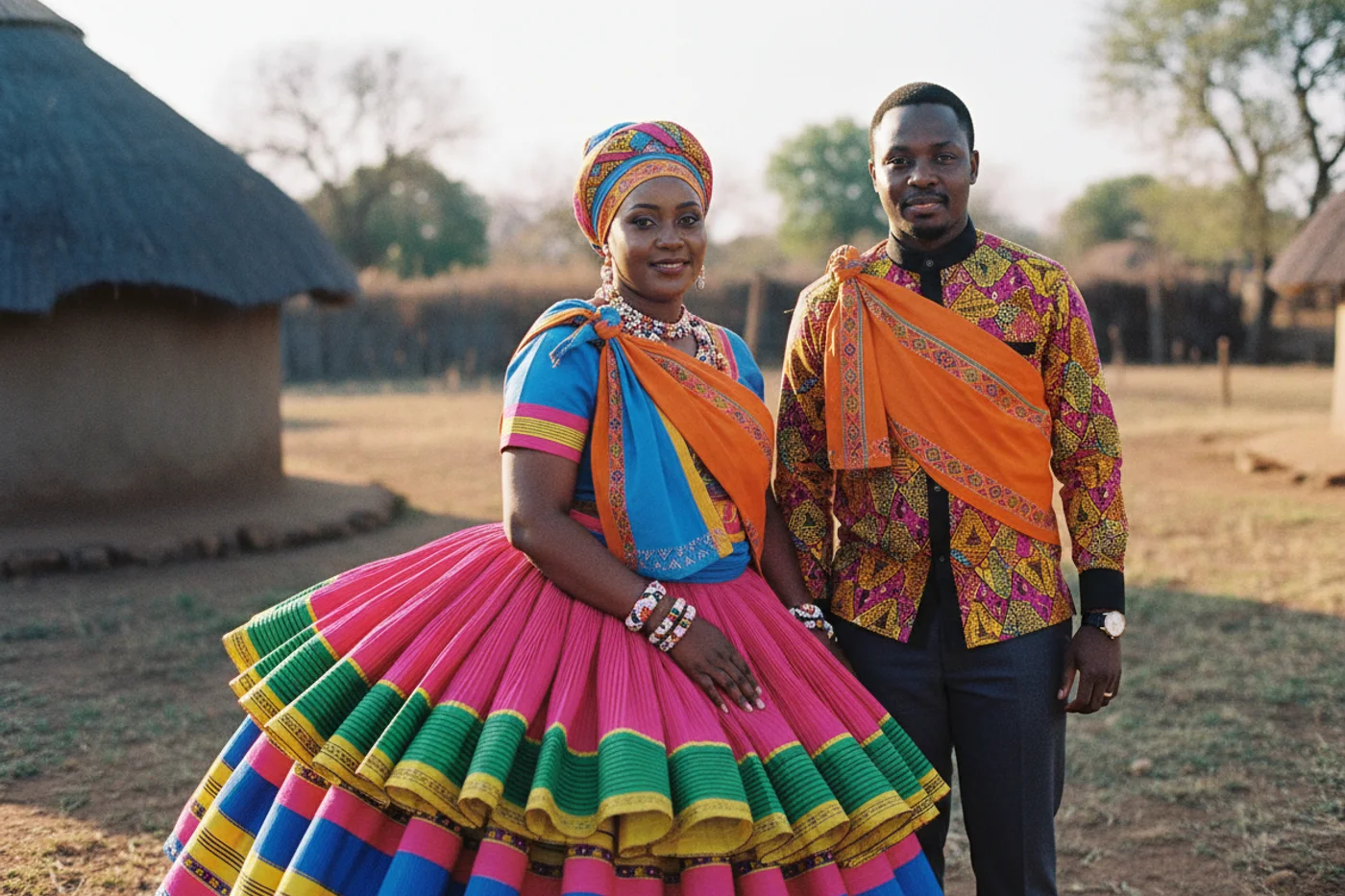
Tsonga wedding dress is among the most joyful in the country, and it is built around a few signature pieces. For a comparison across cultures, see our guide to traditional wedding attire in South Africa.
The xibelani skirt
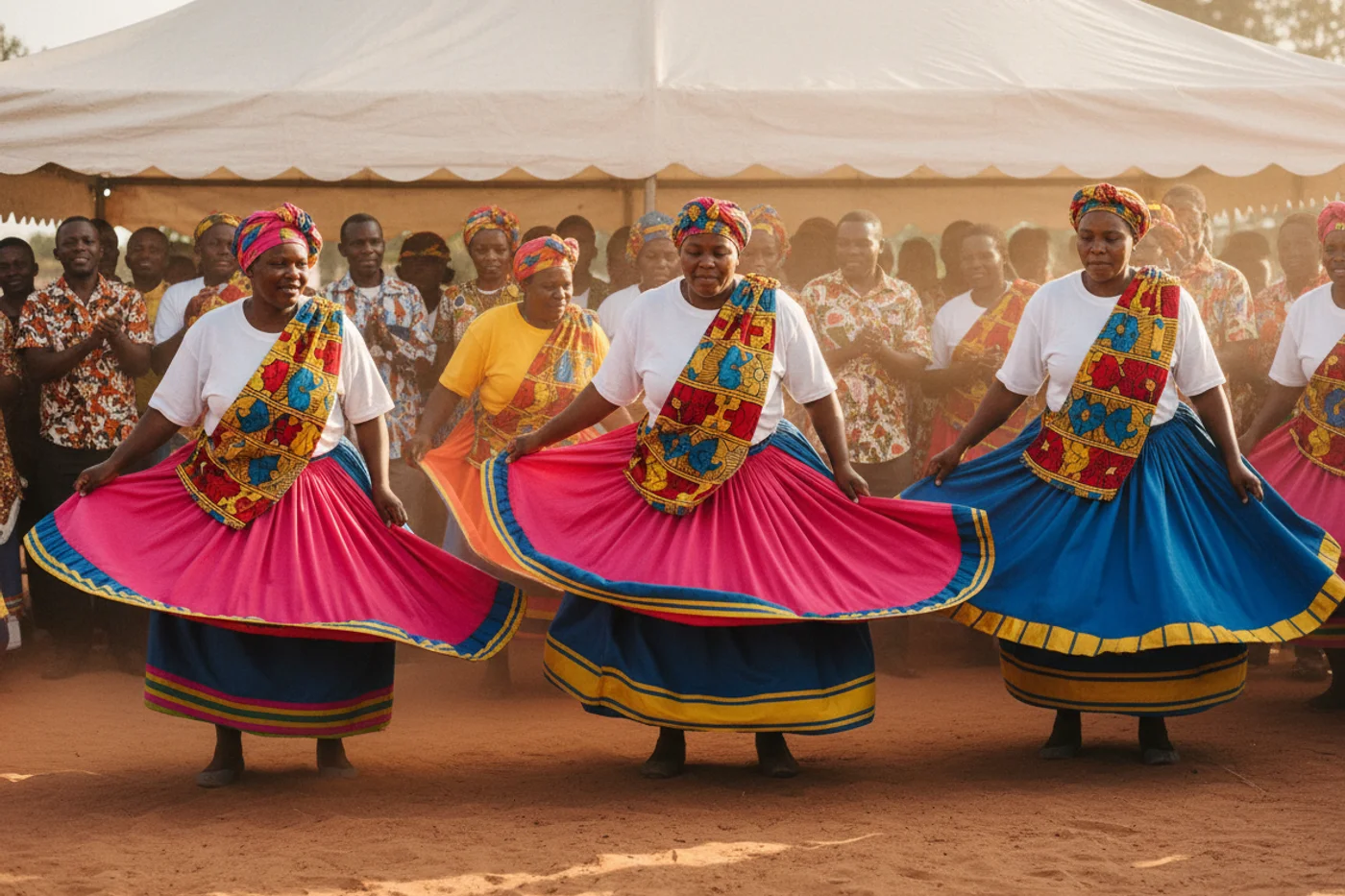
The xibelani is a full, heavily gathered wraparound skirt designed to make the hips look bigger and to swing dramatically when the wearer dances. The skirt itself is also called tinguvu, while "xibelani" refers to both the skirt and the dance. Older versions were made from grass, fibre and string. Today's are usually wool or strong cloth in bright, layered colours, often with beaded or contrasting bands. A good xibelani is heavy, and you'll see it in the way it moves.
Minceka
Minceka (also spelled miceka) are rectangular cloths tied crosswise over the body, typically knotted at the shoulder and worn over a blouse or T-shirt. They are often bright, edged in contrasting colours and embroidered or appliquéd with motifs that say something about the wearer. The style developed in northern Limpopo in the 1800s and has become one of the most recognisable images of Tsonga identity.
Beadwork and headwraps
Tsonga beadwork tends towards coloured geometric shapes on a white ground, worn as necklaces, bracelets and belts. Beads in Xitsonga are vuhlalu. Headwraps are part of almost every outfit, tied to match or contrast with the minceka. Families and beadmakers read colours differently, so follow your own family's guidance over any chart online.
The bride and groom
Brides today often have a gown made from Tsonga-inspired fabric, sometimes designing the cloth themselves, with a headwrap and beadwork to finish. Many change outfits during the day. Most Tsonga men have long worn Western clothing day to day, and grooms usually wear a shirt or jacket cut from Tsonga print fabric or trimmed with minceka-style panels, often matched to the bride. Dancers sometimes wear animal-skin pieces called tinjhovo.
Music, dance and the xibelani
You can't separate a Tsonga wedding from its dancing. The xibelani dance is traditionally performed by women, who tie the skirt at the waist and shake their hips fast and precisely to the beat, making the layers fly. Tsonga girls often learn it young as an expression of pride in their heritage, and at a wedding the bride's and groom's sides may try to outdance each other.
Other dances you may see include muchongolo, a stamping dance often described as a Tsonga national dance, and makhwaya, traditionally danced by men. Drums like the xigubu keep the rhythm at cultural performances. On the dance floor, though, it's usually Tsonga disco, the fast, electronic sound associated with artists like Thomas Chauke and Penny Penny. If you're booking a DJ, give them a Tsonga playlist and expect the aunties to judge it.
Food at a Tsonga wedding
Expect pots over open fires from early morning, and a menu that leans heavily on peanuts and maize.
- Meat from the slaughter. Usually goat or beef, cooked in big pots or braaied.
- Tihove. A dish of maize and pounded peanuts, often served first at weddings and family gatherings.
- Xigugu. Toasted maize and peanuts crushed together into a firm, rich mixture.
- Tshopi. Mashed pumpkin or butternut mixed with maize meal.
- Masonja. Mopane worms, served cooked in a sauce or as a crunchy snack, a lowveld favourite.
- Pap, salads and sides. The everyday backbone of any South African celebration.
If a caterer is working alongside the family cooks, agree early who makes what. Traditional dishes like tihove are usually best left to the women who have made them for decades.
Combining a Tsonga wedding with a white wedding
Most couples now do both, and there is no single right order. The common patterns are these.
| Approach | How it usually works | Good for |
|---|---|---|
| Traditional first, white later | Lovola and the traditional celebration at the family homes, with a church or venue wedding months or even a couple of years later | Spreading costs and giving each event its own day |
| One long weekend | Traditional ceremony at the homestead on the Saturday, white wedding at a venue on the Sunday | Guests travelling to Limpopo or Mpumalanga from far away |
| A combined day | Vows in a white gown, then an outfit change into xibelani and minceka for the reception | Couples with one venue and a tight budget |
The legal side is worth sorting out before you book anything. A customary marriage is valid in its own right once the requirements are met, and it should be registered with Home Affairs. If you are also planning a civil or religious ceremony, check how the two interact. Our guide to customary marriage in South Africa explains registration, property and what happens if you also marry civilly.
For the white-wedding half, browse wedding venues in Limpopo and wedding venues in Mpumalanga, or start with our roundups of the top wedding venues in Limpopo and the top wedding venues in Mpumalanga. A photographer who has shot traditional ceremonies before is worth paying for, so look at our top wedding photographers in Limpopo too.
How Tsonga, Zulu and Xhosa weddings differ
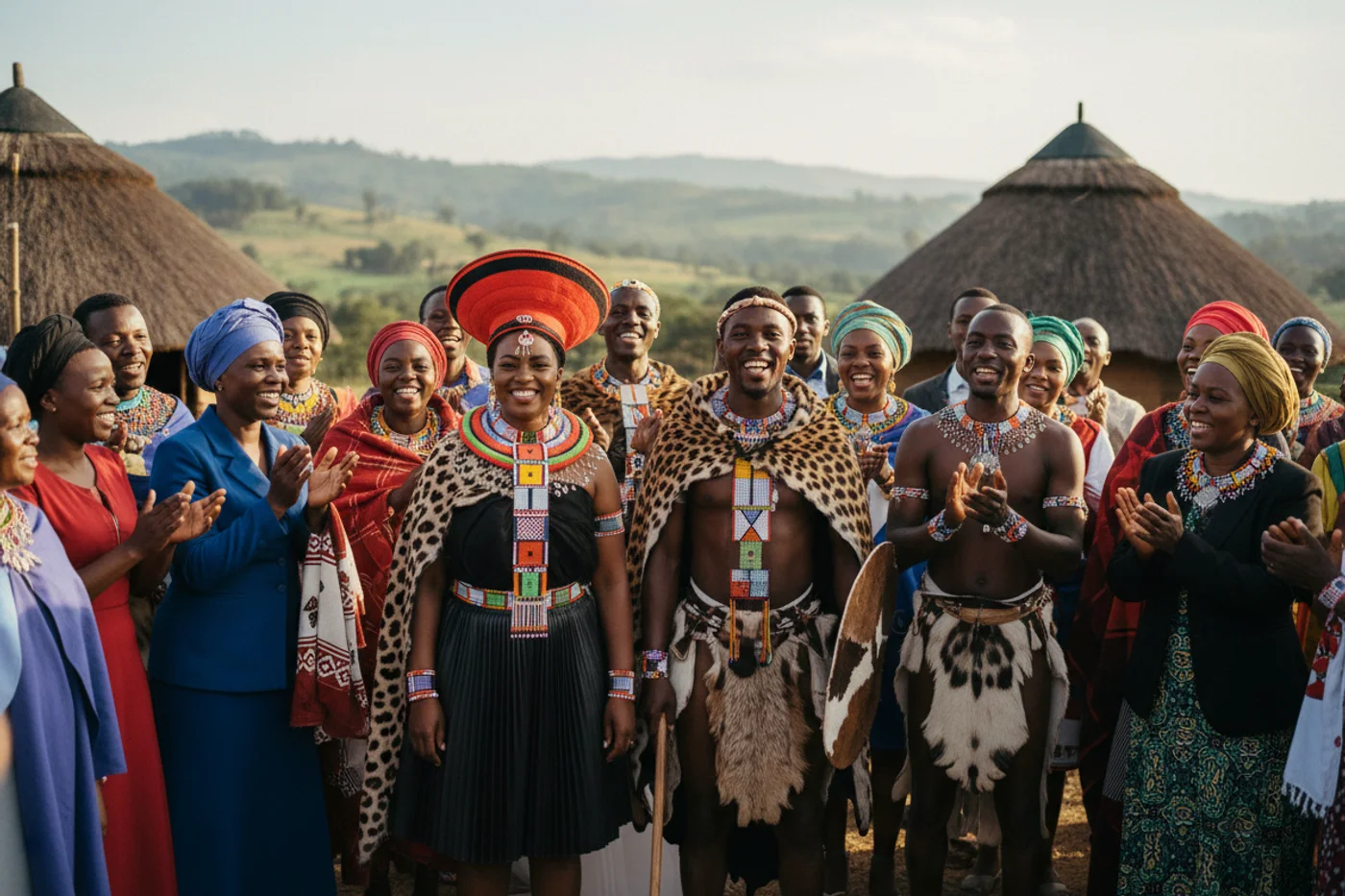
All three share lobola, a slaughter and a bride who formally joins her husband's family, so it's easy to blur them. The details differ. Zulu weddings have their distinct umembeso and umabo stages, the isicholo hat and the isidwaba skirt, and Xhosa weddings centre on the bride's welcome, her new name, umbhaco cloth and the makoti period. A Tsonga wedding is recognisable by its xibelani and minceka, its dancing and its Xitsonga vocabulary. Compare them in our traditional Zulu wedding guide and traditional Xhosa wedding guide, and see how they all fit together in our hub on traditional weddings in South Africa.
Practical tips for planning
- Ask both families how they do it. Find out what each stage is called in their home and who leads it, and write it down.
- Get the naming right. Tsonga, Vatsonga or Shangaan, use the word your partner's family uses.
- Order attire early. Custom xibelani skirts, minceka and beadwork take time, especially before the December rush.
- Plan for the homestead. If celebrations are at a family home, think about tents, chairs, water, fire space and parking.
- Keep a record of lovola. Note what was paid, when and to whom. It helps when you register the marriage.
- Book a DJ who knows Tsonga music. The xibelani needs the right beat.
Frequently asked questions
What is lobola called in Xitsonga?
Lobola is called lovola in Xitsonga, and the verb is ku lovola. It is the bride wealth the groom's family gives to the bride's family, traditionally in cattle and today usually in cash.
What do Tsonga brides wear?
Tsonga brides often wear a gown or outfit made from Tsonga-inspired fabric, with minceka cloths, beadwork and a headwrap. Many also wear a colourful xibelani skirt for the dancing.
What is a xibelani?
A xibelani is a full, layered wraparound skirt, also called tinguvu, designed to swing when the wearer shakes her hips. The name also refers to the Tsonga women's dance performed in it.
Are Tsonga and Shangaan the same?
The terms are often used interchangeably, but "Shangaan" strictly refers to people linked to the 19th-century leader Soshangane. Some people embrace the name and others prefer Tsonga or Vatsonga, so use whichever your family uses.
What happens at a Tsonga traditional wedding?
The families negotiate and pay lovola, exchange gifts and hold a celebration with a slaughter, food and dancing. The bride is then accompanied to the groom's family home, where she is received and counselled by the older women.
What food is served at a Tsonga wedding?
Expect meat from the slaughter, pap and traditional dishes such as tihove, made from maize and peanuts, and xigugu, toasted maize and peanuts crushed together. Masonja (mopane worms) are popular too.
Find vendors for your Tsonga wedding
The Wedding Directory lists South African photographers, caterers and décor and hire specialists who understand traditional ceremonies. Browse the full wedding vendor directory by region and enquire directly.
Traditional Zulu Wedding: From Lobola to Umabo, Step by Step
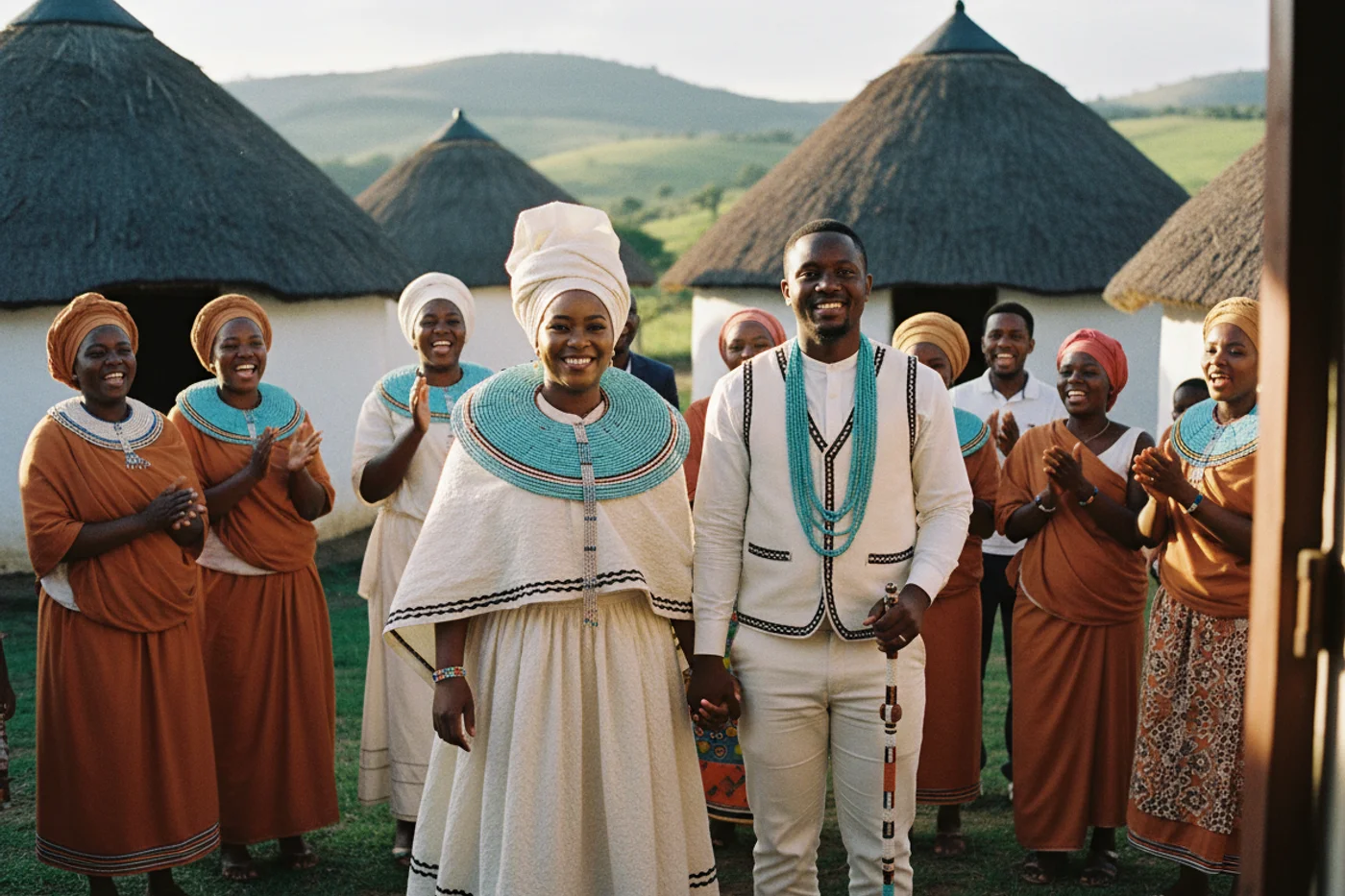
Traditional Xhosa Wedding: Customs, Attire and Ceremonies