A traditional Xhosa wedding is not one day. It is a sequence of visits, negotiations, slaughters and songs that can stretch over months, and by the end of it two families have been formally joined, not just two people. The bride arrives at her in-laws' homestead as a stranger and leaves the welcome ceremonies as umtshakazi, the new bride, with a new name and a new place in the family.
This guide walks through the stages in the order most families follow them, from the first approach and the lobola talks (ikhazi, in isiXhosa) to the bride's welcome, the attire, the food and the clan names that tie it all together. One thing to hold onto throughout is that amaXhosa practice is not uniform. A rural family near Cala or Mthatha may do things differently from a family in Gqeberha, Cape Town or Johannesburg, and clans have their own ways of doing even the same ritual.
Treat what follows as a well-informed starting point for conversations with your elders, not a script.
The stages of a traditional Xhosa wedding
Families describe the process in different ways and some combine steps, but the broad shape looks like this.
- The approach. The couple tells their families, and the groom's family sends word that they want to open talks.
- Negotiations and ikhazi. Delegates from the groom's side meet the bride's family to agree the bride wealth, traditionally cattle and today often cash.
- The celebrations. Once ikhazi is agreed and paid, there is feasting, often with a slaughter at one or both homes.
- The bride's welcome. The bride is received into the groom's family, fed, dressed as a married woman and given a new name. Many families call this utsiki.
- The makoti period. The new bride wears married women's dress and takes on household duties for a period her in-laws set.
Many couples also hold a church or white wedding, either the same weekend or months later. We come back to that further down.
Ukuthwala: the history and the line the law draws
No honest guide to Xhosa marriage can skip ukuthwala, and none should romanticise it either.
In its traditional, accepted form, ukuthwala was a staged "abduction" agreed on in advance. A young woman who had come of age and her partner would arrange for her to be taken to his family's home, often because her parents opposed the match or the families were stalling. Her family would be told where she was, and negotiations would follow. In Jezile v S (2015), the Western Cape High Court described this traditional form as requiring the consent of both the bride and the groom, a pretend abduction, and a strict ban on sexual intercourse during it.
The same court called the forced version "aberrant". That case involved a 14-year-old girl from the Eastern Cape, and the court upheld convictions for rape and human trafficking, ruling that custom offers no defence. The South African Law Reform Commission has described forced ukuthwala as an illegal distortion of the custom, and researchers writing in The Conversation have pointed out that coercion has a longer and darker history in some rural communities than that framing suggests.
The position today is clear. A customary marriage needs both spouses to be over 18 and to consent. The Children's Act prohibits giving a child out in marriage or engagement, and abducting a girl to force her into marriage is a crime, whatever it is called. If you or someone you know is at risk, the Department of Social Development's helpline is 0800 428 428.
Most modern Xhosa couples never go near ukuthwala. Their families simply open talks the conventional way.
Lobola negotiations and ikhazi
Ikhazi is the isiXhosa word for the marriage cattle, the bride wealth the groom's family gives to the bride's family. The verb for the custom is ukulobola. Historically the payment was counted in cattle. Today a cash value is usually agreed per cow, and many families settle wholly or partly in money.
Who goes to the table
The couple themselves usually don't negotiate. The groom's family appoints a small group of senior relatives, typically uncles and respected elders, who travel to the bride's home. Her family fields its own delegates. The first meeting can be oddly formal for people who may already know each other well, and that's the point. These are two families meeting as families.
Brandy has a well-known place in these talks. Among many amaXhosa families, bottles are presented at stages of the negotiation, and a little is poured onto the ground to involve the ancestors, a practice called ukunqula. Exactly how many bottles and when depends on the family, so ask rather than assume.
How the figure is set
The number of cattle (or their cash equivalent) reflects the family's own norms and circumstances, and talks can take more than one meeting. Our full lobola guide for South Africa covers the letters, the negotiation etiquette and realistic figures in detail, so we won't repeat it here.
Iziduko: why clan names matter at every stage
Before anyone talks cattle, the families want to know who they are dealing with, and that means clan names. Iziduko (singular isiduko) are names that trace a family back to a founding male ancestor. Among amaXhosa they often carry more weight than a surname. Nelson Mandela's clan name, Madiba, is the best-known example.
Clan names do real work in a marriage.
- Who may marry. Two people of the same clan are generally regarded as related, so many families will not allow the match.
- Respect. Addressing someone by their clan name, or reciting the longer clan praises, is a mark of high respect. You will hear it constantly during negotiations and speeches.
- A wife's identity. A married woman keeps her own clan name and is often addressed with the prefix "Ma-" in front of it, even after she takes her husband's surname.
If you're marrying into a Xhosa family and come from a different background, learning your partner's clan name and how to say it properly is one of the warmest gestures you can make.
The bride's welcome into her new family
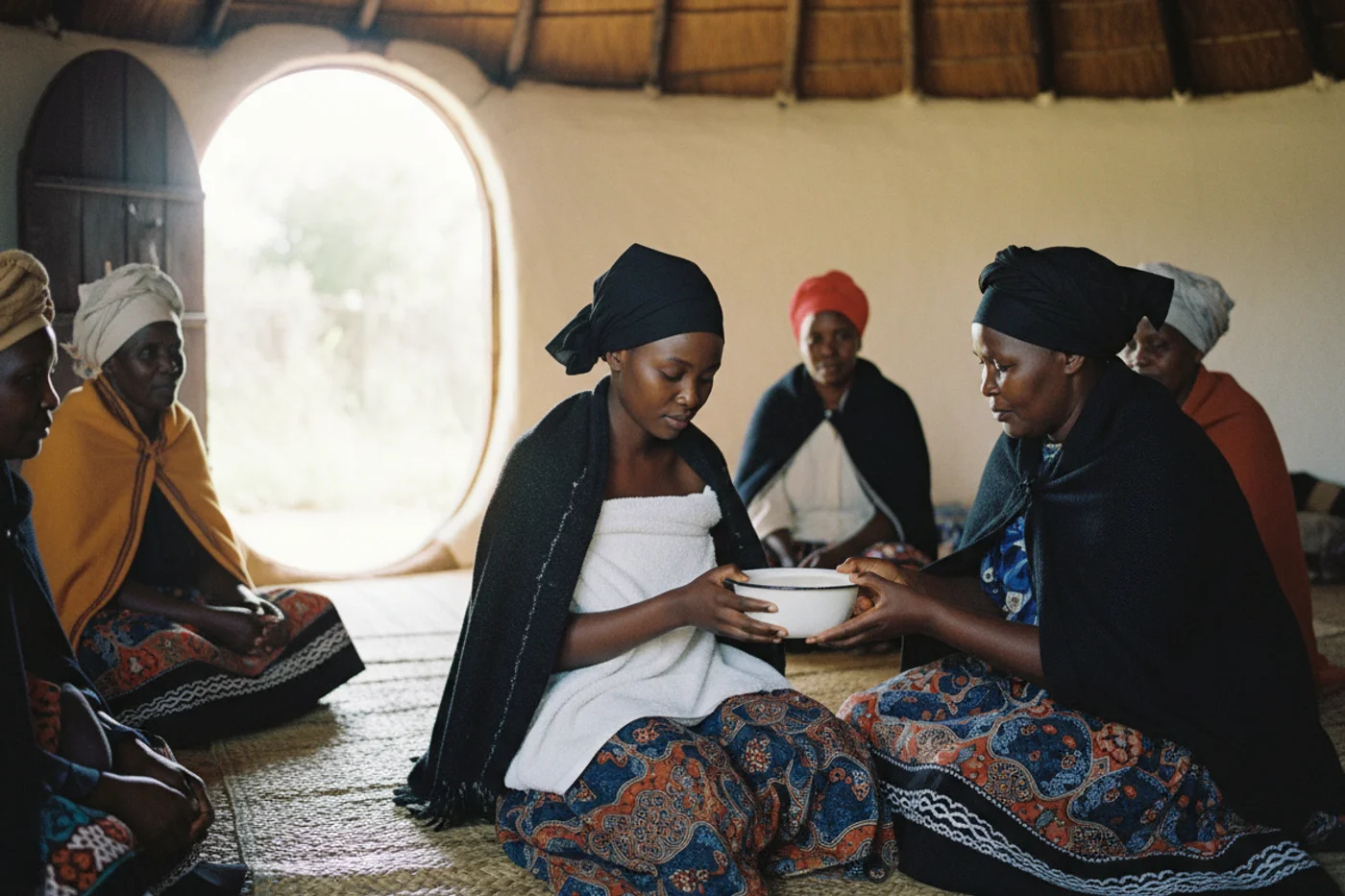
This is the emotional heart of a traditional Xhosa wedding. Once ikhazi is settled, the bride is taken to the groom's family home to be received as their daughter-in-law.
Utsiki and ukudliswa amasi
Many families call the welcome utsiki. In one family's practice near Cala, described in a 2021 Western Cape High Court judgment, a sheep is slaughtered and young men of the family feed the bride some of its meat before she is dressed as umtshakazi. Other families speak of ukudliswa amasi, literally "being fed amasi", where the bride is given the family's fermented milk to show she now belongs to the household. Some combine the two, and some use different names for the same moments.
The bride usually keeps her eyes lowered and speaks little during these ceremonies. In many Xhosa homes, avoiding direct eye contact with elders is a sign of respect, not shyness.
The new name
During the welcome, the groom's family gives the bride a new name. It is chosen with care, often expressing what the family hopes she will bring to them, and from then on her in-laws may call her by it. The custom is very much alive. When broadcaster Anele Mdoda completed her traditional ceremonies at the end of 2025, her husband publicly greeted her by the name her in-laws had given her, Mthawelanga.
Advice from the women
Expect the older women of the family to take the bride aside. Their counsel covers how to carry herself, how to respect her elders and how to hold the family's private matters close. In some families, a towel worn wrapped around the chest symbolises exactly that, keeping the household's business to herself.
The makoti period
After the welcome, the new bride enters a period of wearing married women's dress and taking on duties in her in-laws' home, such as making the morning tea or washing up. How long it lasts is the family's call. It can be a few weeks, three months, a year, or until her first child is born.
Working brides have changed how this plays out. Many families are more relaxed now, and some brides wear the full attire only when they are at the family home or after work. Talk about expectations openly before the ceremony, so nobody is caught off guard.
Traditional Xhosa wedding attire
Xhosa wedding dress is instantly recognisable, and it has a language of its own. For a wider look across cultures, see our guide to traditional wedding attire in South Africa.
Umbhaco
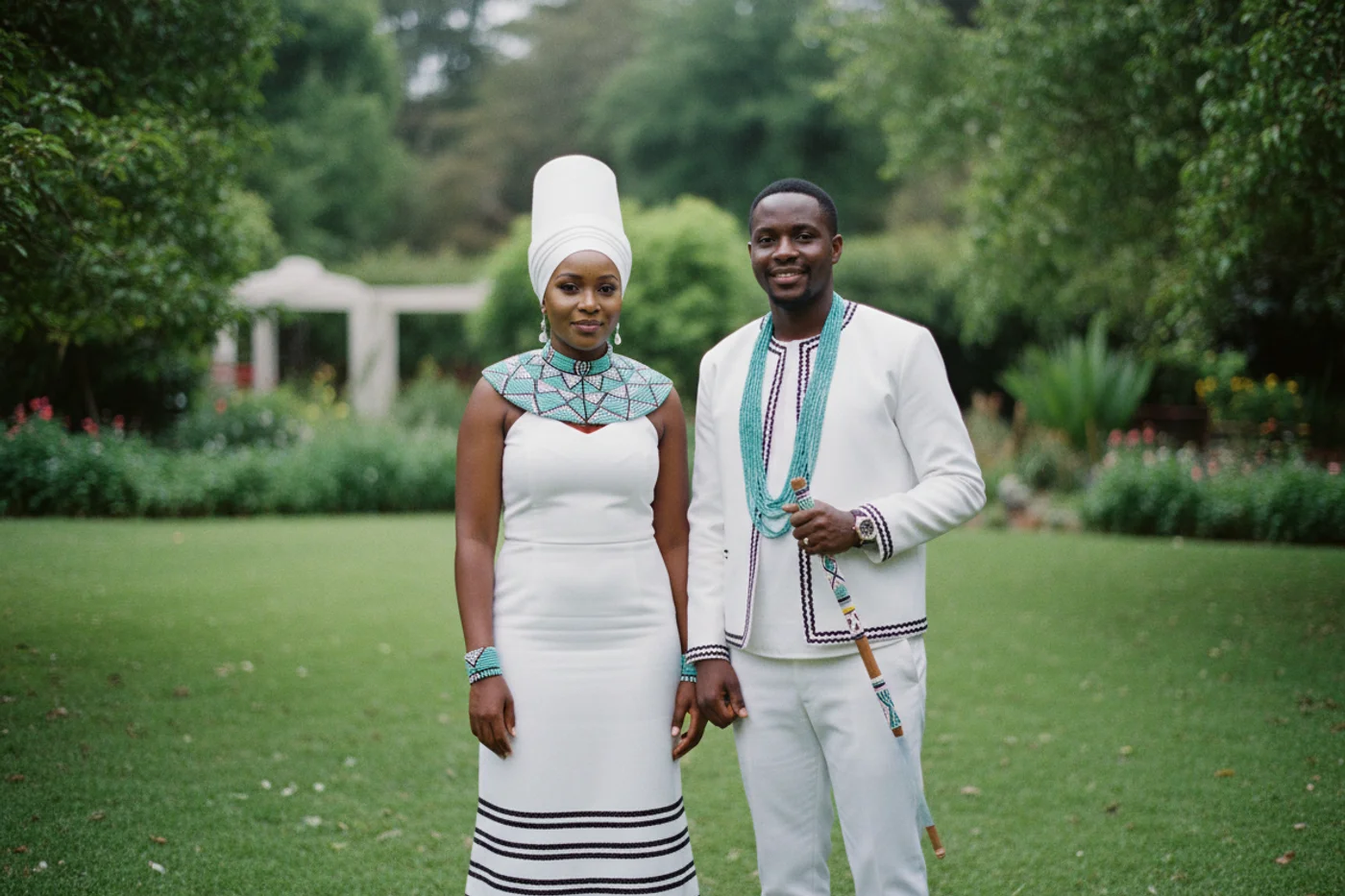
Umbhaco is the classic Xhosa cloth. In its traditional form it is a heavy cotton fabric, white or coloured with ochre to a rich reddish brown, finished with rows of black braid running parallel to the hem, sometimes edged with beads. Today it is cut into everything from full skirts and wraps to fitted, off-the-shoulder gowns for the bride and matching jackets or waistcoats for the groom. When former Miss Universe Zozibini Tunzi held her Eastern Cape traditional wedding in 2025, she wore an off-white umbhaco gown with a turquoise beaded neckpiece, and her husband wore a matching piece.
Beadwork
Xhosa beadwork has historically signalled age, marital status and where a person comes from. Long, many-stranded necklaces, broad beaded collars, arm bands and headbands all appear at weddings. One name you will hear is isidanga, a long necklace of many bead strands, often in shades of blue or turquoise, worn at festivities. Colour meanings differ between regions and clans, so trust your family's beadmaker over any online colour chart.
The iqhiya
The iqhiya, the headwrap, is essential. Brides and guests often wear tall, sculptural wraps in umbhaco or matching fabric. A makoti, however, traditionally wears hers low on the forehead, often in black, as a sign of respect for her elders.
The makoti outfit
The everyday dress of a new bride usually combines a black headscarf worn low, a long skirt often made from isishweshwe print fabric, a small blanket or shawl over the shoulders, a towel wrapped around the upper body and a scarf at the waist. Each piece carries meaning, from respect for elders to the family's trust in her.
The groom
Grooms typically wear umbhaco trousers, a waistcoat or jacket with black braid trim, beaded necklaces and sometimes a blanket or shawl over the shoulders. Many carry a beaded stick. Brides and grooms increasingly have their outfits made by the same designer so the colours and beadwork tie together.
Food, drink and celebration
A Xhosa wedding smells of wood smoke. Three-legged pots sit over open fires from early morning, and the women of the family run the cooking with military precision.
- Meat from the slaughter. Usually a sheep, goat or cow, depending on the ritual and the family. The slaughter also speaks to the ancestors, so it isn't simply catering.
- Umngqusho. Samp and beans, slow-cooked until creamy. Nelson Mandela famously named it his favourite dish.
- Umqombothi. Home-brewed sorghum and maize beer, sour and cloudy, shared from a common vessel.
- Brandy. Poured for the ancestors as well as shared among guests.
Then there's the singing. Groups arrive singing, the bride's and groom's sides answer each other, and women ululate as the bride appears. Expect it to go on well into the night.
Blending a traditional Xhosa wedding with a white wedding
Most couples today do both. Common patterns include:
- Traditional first, white later. Ikhazi and the welcome ceremonies happen at the family homes, with a church or garden wedding some months on.
- One big weekend. Traditional ceremonies on the Saturday at the homestead, a white wedding at a venue on the Sunday, or the reverse.
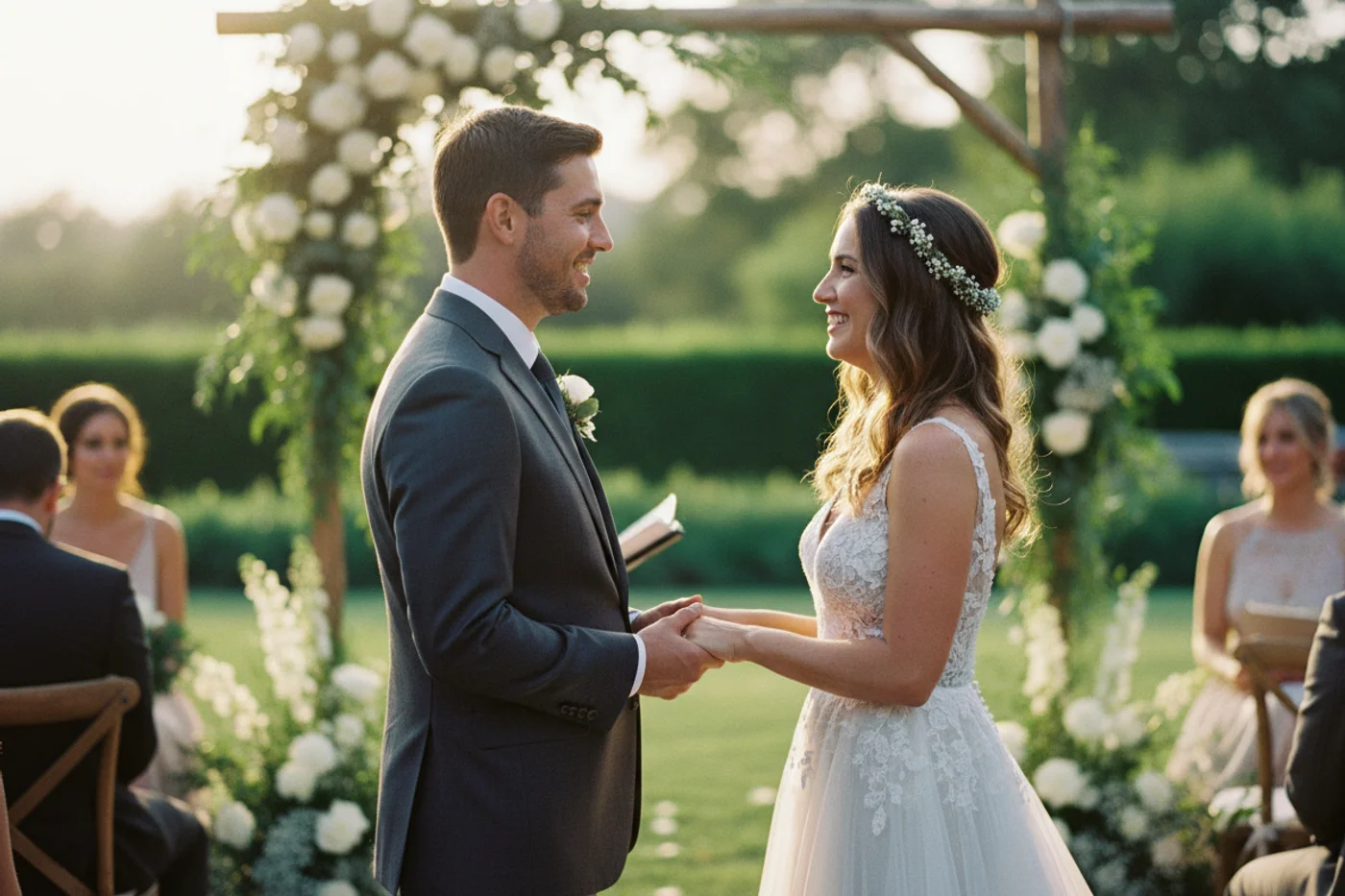
- A combined day. Ceremony in a white gown, then an outfit change into umbhaco for the reception, with traditional songs and dances on the dance floor.
Whichever you choose, the legal side matters. A customary marriage is valid in its own right once the requirements are met, and it should be registered with Home Affairs. If you also plan a civil ceremony, check how the two interact before you book anything. Our guide to customary marriage in South Africa explains registration and what it means for property and inheritance.
For the white-wedding half, many Eastern Cape families look close to home. Browse wedding venues in the Eastern Cape, or our roundups of the top wedding venues in the Eastern Cape and top wedding photographers in the Eastern Cape. Choose a photographer who has shot traditional ceremonies before. They will know when to step back.
How Xhosa and Zulu weddings differ
The two are often lumped together, and they share a lot, including lobola, slaughter, and a bride who formally joins her husband's family. The details differ. Zulu weddings have their distinct umembeso and umabo stages, the isicholo hat and the isidwaba skirt, while Xhosa weddings centre on the bride's welcome, the new name, umbhaco cloth and the long makoti period. Compare for yourself in our step-by-step traditional Zulu wedding guide, and see how both fit among the country's other cultures in our hub on traditional weddings in South Africa.
Practical tips for planning
- Start with the elders. Ask both families how they practise each stage, and what each is called in their home. Write it down.
- Know the clan names early. It affects whether the match is acceptable to some families, and you will need them for speeches.
- Order attire well ahead. Custom umbhaco and beadwork take time, especially in the December rush.
- Plan the catering around the homestead. If ceremonies are at a family home, discuss fire space, water, tents and chairs, and whether a caterer will work alongside the family cooks.
- Agree the makoti expectations. Especially if you work, settle what the period will look like before the welcome.
Frequently asked questions
What happens at a traditional Xhosa wedding?
The groom's family negotiates ikhazi (lobola) with the bride's family, and once it is settled the bride is welcomed into the groom's home. She is fed, dressed as a married woman and given a new name, followed by feasting, singing and a makoti period.
What is ikhazi?
Ikhazi is the isiXhosa term for the marriage cattle, the bride wealth the groom's family gives to the bride's family. Today it is often paid partly or fully in cash.
Is ukuthwala legal in South Africa?
Forced ukuthwala is illegal. A customary marriage requires both spouses to be over 18 and to consent, and courts have convicted men of rape and trafficking for abducting girls under the guise of custom.
Why does a Xhosa bride get a new name?
The groom's family gives her a name during her welcome to mark her new place in the family. It usually expresses a hope or quality they see in her, and in-laws may call her by it from then on.
What do Xhosa brides wear?
Brides often wear umbhaco, a heavy cloth trimmed with black braid, with beaded collars or necklaces and a tall iqhiya headwrap. After the welcome, a makoti wears a low black headscarf, a long skirt, a shawl or small blanket and a towel around the upper body.
Can two people with the same clan name marry?
Many Xhosa families do not allow it, because people who share an isiduko are regarded as related. Practice varies, so check with both families' elders early.
Find vendors for your Xhosa wedding
The Wedding Directory lists South African photographers, caterers and décor and hire specialists who understand traditional ceremonies. Browse the full wedding vendor directory by region and enquire directly.
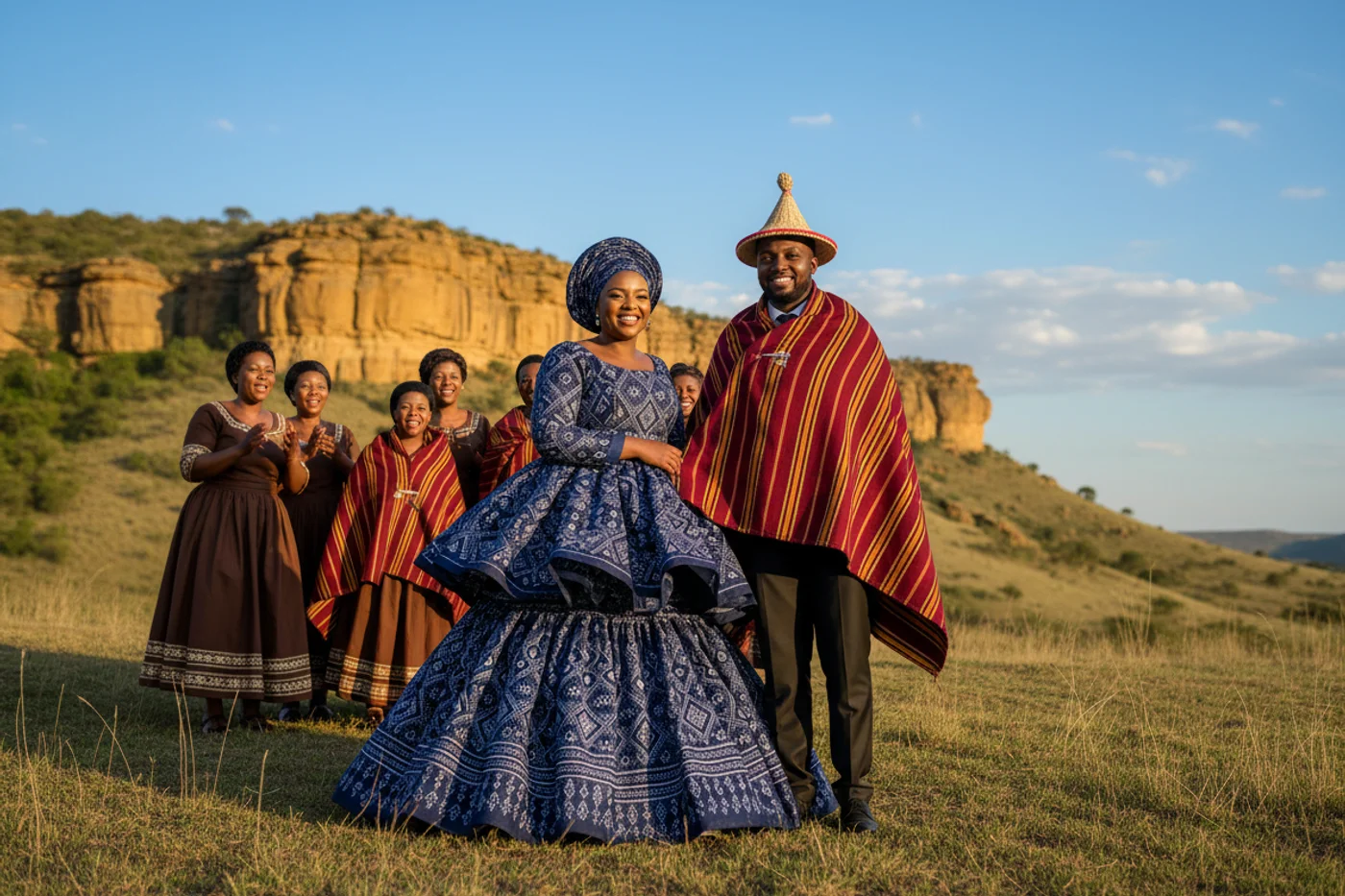
Sotho and Tswana Traditional Weddings: Customs and Attire
Tsonga Traditional Wedding: Customs, Attire and Ceremonies
Traditional Zulu Wedding: From Lobola to Umabo, Step by Step
Shakespeare Wedding Readings Part IV: Words for Steadfast Love
Top Ten: Classical Ceremonial Music