A traditional Zulu wedding is not one day. It is a journey that can stretch over months, sometimes years, moving from closed-door lobola talks to gift days, and finally to umabo, the day the bride is formally received into her husband's family and introduced to his ancestors. By the time the cow is slaughtered and the first blanket is laid over an aunt's shoulders, two families have already spent a long time getting to know each other.
This guide walks through the whole sequence in order, with the most attention on umabo itself, because that is the day most couples are actually planning. It sits within our wider guide to traditional weddings in South Africa, which covers the other cultures too.
One thing before we start. Zulu custom varies between families, clans and districts. A family in Nongoma may do things differently to one in Umlazi, and both will be right. Use this as a map for the conversation with your elders, not as a rulebook.
The stages of a traditional Zulu wedding, in order
Most families follow a broadly similar path, even if the names, timing and details shift. A common sequence looks like this.
- Ilobolo (lobola). The groom's family sends delegates, or abakhongi, to negotiate with the bride's family.
- Izibizo. The bride's family shares a list of gifts they would like from the groom's side.
- Umembeso. The groom's family delivers those gifts to the bride's home, with singing and dancing.
- Umbondo. In many families, the bride's side reciprocates with groceries and household goods for the groom's family.
- Umabo. The traditional wedding day itself, usually held at the groom's family home.
Some families fold izibizo and umembeso into one occasion. Some skip umbondo or hold it the same weekend as umabo. A few hold umabo years after a white wedding. None of that is unusual.
Ilobolo and the negotiations
Zulu lobola negotiations open the process. Traditionally, ilobolo was paid in cattle, and many families still talk in terms of cows even when the agreed amount is settled in cash. The negotiators speak for the families, not the couple, and the groom is often not in the room at all. It can take more than one visit. Our full lobola guide explains the letters, the delegations, the etiquette and what families pay today, so we won't repeat it here.
Izibizo and umembeso
Once lobola is agreed, the bride's family draws up izibizo, a list of gifts, usually split between the bride's mother and father. Blankets, clothing, headscarves, grass mats and food are common. Umembeso is the day the groom's family arrives at the bride's home to present them, singing at the gate before they are welcomed in. It is festive, loud and full of colour. We cover it properly in our guide to umembeso, the Zulu gift-giving ceremony.
What umabo means
Umabo is the wedding in the traditional sense. It is the day the bride, now umakoti, is officially welcomed into her husband's family and lineage. Many Zulu families hold that a couple is not fully married until umabo has happened, however lovely the church service was. Some couples who married only in church or at Home Affairs choose to perform umabo years later, often when an elder feels the ancestors have not yet been properly told.
That is the heart of it. The ancestors, amadlozi, of both families need to know about the union. Umabo is how they are told, through clan names called aloud, through the slaughter of an animal, and through the bride's respectful entry into her new home.
What happens on the day of umabo
Every family runs the day its own way, but the shape below appears again and again in accounts from KwaZulu-Natal.
The bride leaves home
The day starts early, often before sunrise. Before umabo, many families slaughter a goat for their daughter at her own home and burn impepho, a fragrant herb used to speak to the ancestors, to tell them she is leaving to join another family. On the morning itself, she leaves wrapped in a blanket from her mother, usually led by her father or a senior male relative, who may call out the clan names, izithakazelo, as they go. In many families she is told not to look back. It is a quiet, emotional moment before a very loud day.
Arriving at the groom's homestead
At the groom's home, the bridal party is met with song. In some families the bride walks around the outside of the house before entering, which introduces her to her husband's ancestors. The groom's family elders and the bride's family elders gather, and the formal part of the day usually begins around midday. The head of the groom's family welcomes his new daughter-in-law. Her father, or whoever speaks for her family, replies and gives his blessing.
The slaughter and the ancestors
The slaughter is the most sacred part of umabo. Depending on the family, it may be a cow, a goat, or both. Some families slaughter a cow from each side and exchange particular portions of the meat, a practical way of saying the two families are now joined. In some households the bride places money on the animal as a sign that she accepts her new family and they accept her. The details here vary more than anywhere else, so it is worth asking the elders exactly what each family expects, and who will lead the rites.
Welcoming umakoti
Through the day, the bride's role is one of respect, inhlonipho. She is often seated on a grass mat, quiet, eyes lowered, while others act on her behalf. It can look passive to outsiders. It isn't. She is showing the humility expected of a new daughter-in-law, and many brides say it is the moment the whole thing felt real.
The bride's gifts to her new family
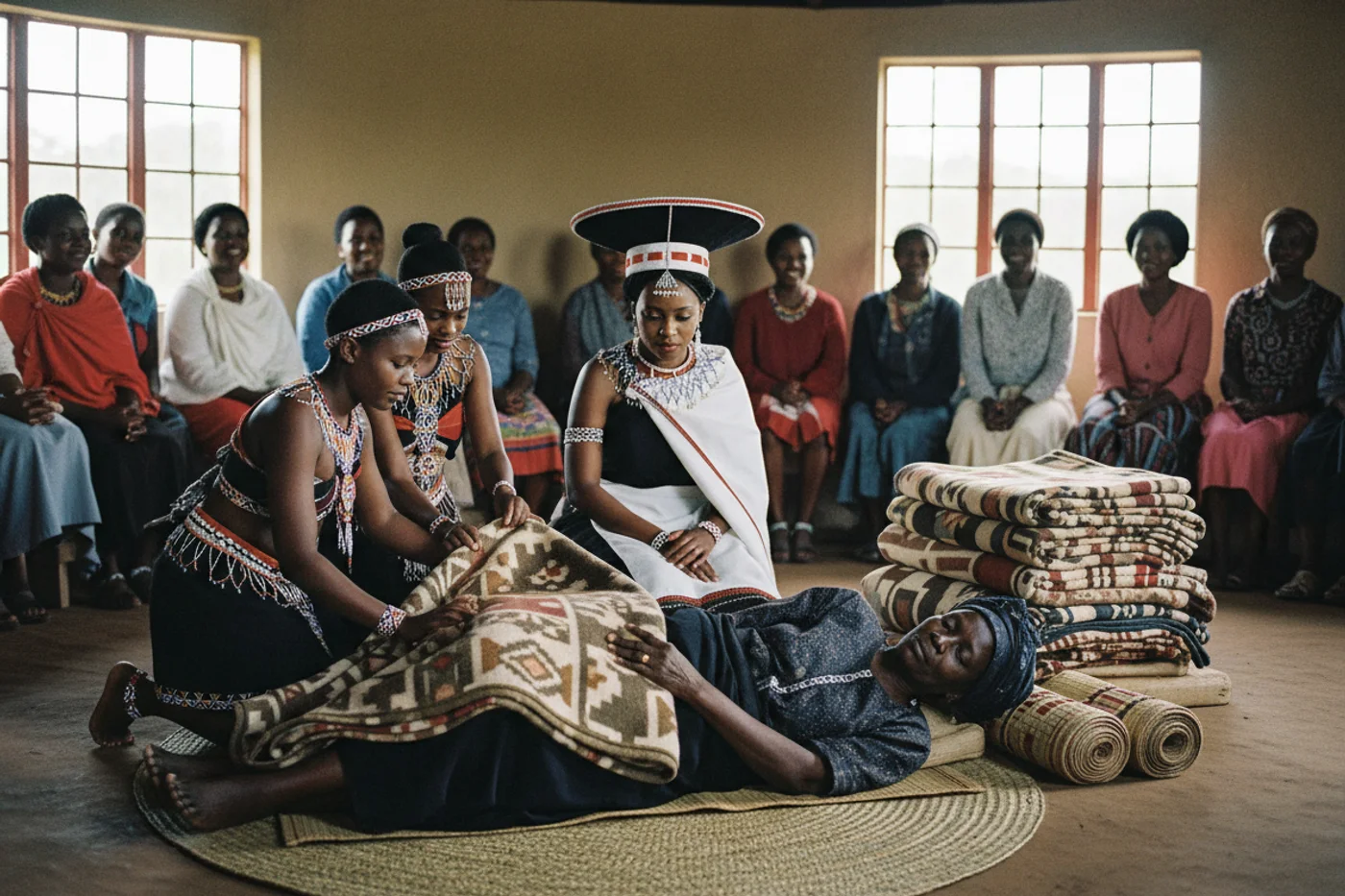
At umembeso the groom's family gives. At umabo, the giving flows the other way. The bride brings gifts for her in-laws, and the presentation of them, often called ukwaba, is one of the most joyful parts of the day.
Typical gifts include:
- Blankets for the women of the family, often one for nearly every adult relative
- Grass mats (amacansi)
- Clay beer pots or other gifts for the men
- Furniture and household items for the couple and the family
- Brooms, pots and kitchen goods for the home she is joining
Her bridesmaids and sisters hand the gifts out while she stays seated. Each recipient is called by name, usually the older women first, then the groom's sisters, then the men, with the groom often last. A relative lies on a mat, is covered with a blanket by someone from the bride's side, and then gets up to dance in thanks while the crowd ululates. Some families even present gifts on behalf of relatives who have passed away, received by a living family member in their place.
The blanket count is where budgets swell. If the groom's family is large, the bride may need thirty or more. Ask early for a list of names.
The dancing and the songs
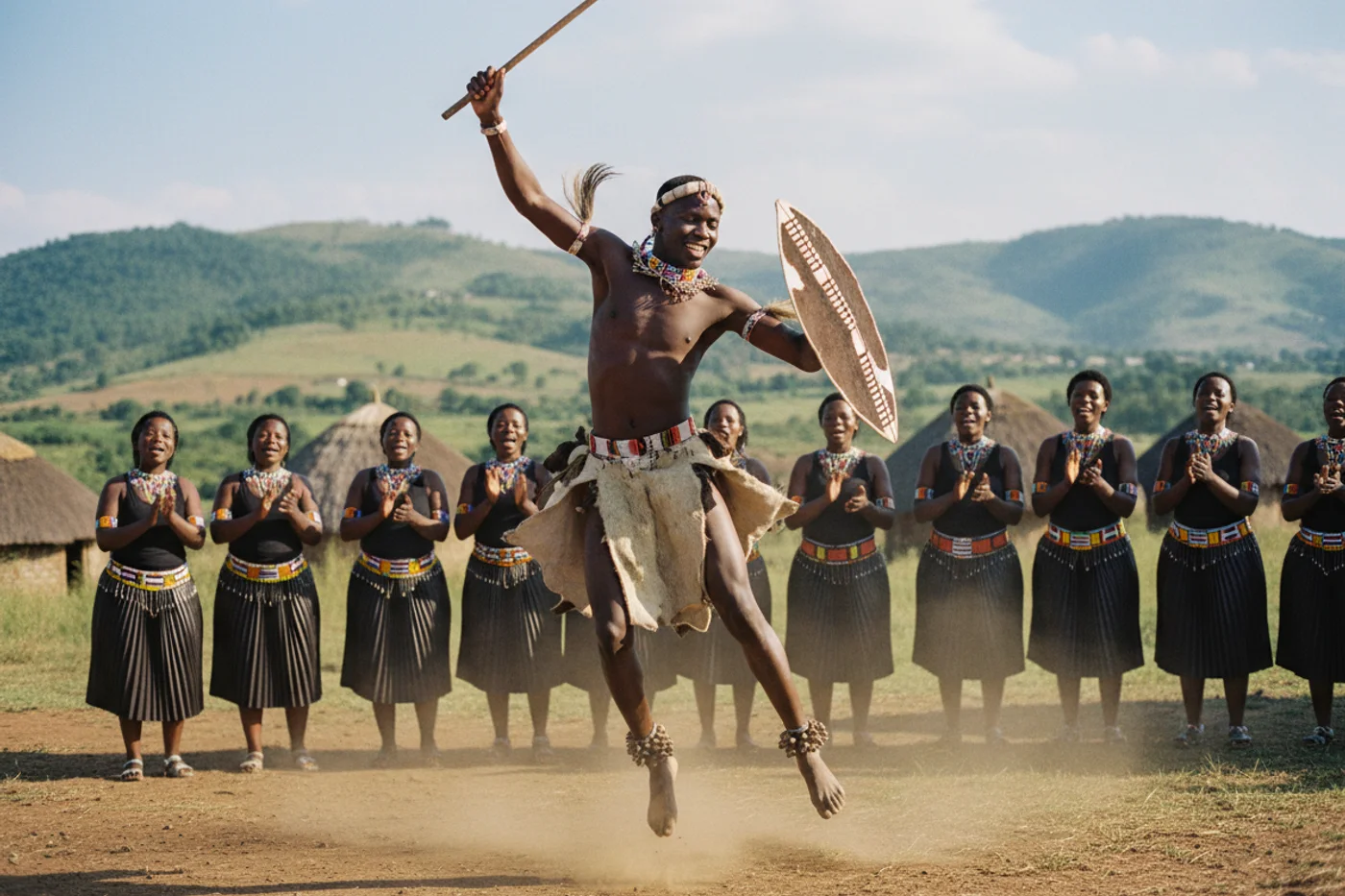
Umabo is a performance as much as a ceremony. Umgido, the celebratory dancing, runs through the afternoon and well into the evening. The bride's party and the groom's party often arrive with their own songs, and there is a good-natured rivalry as each side tries to outsing and outdance the other.
Men from both families will giya, leaping out of the crowd with a stick or shield to perform a short, fierce solo dance that mimes battle and praises the couple. Women dance in lines, stamping in rhythm, beadwork swinging. Indlamu, the high-kicking Zulu dance, often makes an appearance too. Wedding songs, sung in call and response, tease the groom, praise the bride and advise the couple on married life. Older aunts tend to lead them, and they know every word.
If you are hiring a sound system for the evening, keep it switched off during the traditional part. Nobody needs a DJ competing with a room full of aunts.
Zulu bride and groom attire
The Zulu bride is one of the most striking sights in South African weddings. Common pieces include the isicholo, the wide, flat-topped hat associated with married women; the isidwaba, a pleated skirt traditionally made of cowhide; a cloth or hide chest covering; and generous beadwork, ubuhlalu, on the neck, arms and ankles. Colours and patterns in the beadwork can carry family or regional meaning. Some brides wear a blanket over their shoulders for part of the day, and some carry a small spear or knife.
The groom often wears amabheshu, the hide apron worn at the back, with an isinene at the front, a headband (umqhele), and sometimes a leopard-print cape or animal skin across the shoulders. He may carry a shield (ihawu) and a stick (induku). For a fuller look at each garment, and where to buy or hire them, see our guide to traditional wedding attire in South Africa.
The food at a Zulu wedding
The meat from the slaughtered animals feeds the guests, and it is cooked in big three-legged potjies over open fires, usually by the women of the family. Expect beef stew, tripe (ulusu), pap or phuthu, samp and beans (umngqusho), dombolo (steamed bread), chakalaka, beetroot and coleslaw. Traditional sorghum beer, umqombothi, is brewed for the elders in many homes. Many couples now bring in a caterer for the salads, desserts and drinks while the family handles the meat, which keeps the tradition and takes pressure off the aunties.
Combining umabo with a white or civil wedding
Most modern Zulu couples do both. The popular options are:
- Same weekend. A white wedding on Saturday, umabo on Sunday, or the reverse. Efficient, but exhausting.
- Same day. A church or garden ceremony in the morning, then a costume change into traditional attire for the afternoon. Common at hired venues.
- Months apart. Umabo first at the homestead, white wedding later, or the other way round. Easier on the budget.
Legally, a customary marriage concluded under Zulu custom can be recognised under the Recognition of Customary Marriages Act, and it should be registered with Home Affairs. Couples can also marry each other in a civil ceremony. Our guide to registering a customary marriage in South Africa explains the paperwork. If you are writing vows for the church or civil part, our collection of traditional and religious wedding vows is a good place to start.
A realistic Zulu wedding timeline
There is no fixed calendar, but this is a sensible pace for couples who want everything done properly.
| When | Stage | What to sort out |
|---|---|---|
| 12 to 18 months before | Lobola | Letters, delegations, agreeing the amount |
| 8 to 12 months before | Izibizo and umembeso | Gift list, transport, food for the bride's home |
| 4 to 8 months before | Umbondo | Groceries and household goods for the groom's family |
| 3 to 6 months before | Umabo planning | Livestock, blanket list, attire, caterers, tents, white wedding if any |
| The day | Umabo | Slaughter, ukwaba, umgido, feast |
Many families compress this into a few months, and some stretch it over years while lobola is paid off. Both are fine.
Rough budget pointers
Costs depend enormously on the size of the family and the guest list, which can easily pass 300 at a homestead. Some ballpark figures to plan around:
- Livestock. Commercial cows have been selling at auction for roughly R8,000 to R15,000, and goats from around R1,500 to R2,500. Animals bought for ritual slaughter often cost more, especially close to busy wedding months.
- Blankets for ukwaba. Good blankets run from a few hundred rand to over R1,000 each. Thirty of them adds up fast.
- Attire. Custom beadwork, an isicholo and isidwaba for the bride, plus the groom's outfit, can range from a few thousand rand to well over R20,000.
- Decor and tents. Traditional decor packages for around 100 guests are commonly quoted between R6,500 and R16,000, before tents, chairs and toilets.
- Catering extras. Salads, dessert, drinks and staff on top of the family's own cooking.
Our wedding cost guide for South Africa is useful for pricing the white wedding side if you are doing both.
Practical tips for planning umabo
Homestead or hired venue?
The homestead is the traditional and most meaningful choice, because umabo is about the bride entering her husband's home. It is also cheaper on venue fees. The trade-off is logistics, with tents, toilets, water, parking and power to organise, plus neighbours to keep happy. A hired venue makes sense if the family home is small or far away, or if you are doing the white wedding on the same day. Plenty of couples hold the rites at home in the morning and move to a venue for the reception. Browse wedding venues in KwaZulu-Natal or our roundup of the top wedding venues in KwaZulu-Natal, and check that the venue allows open fires and, if it matters, the slaughter.
Caterers and decor
Choose caterers who have worked traditional weddings before, so they understand that the family's meat is the centrepiece and they are there to support it. The same goes for decor and hire companies. Ask for photos of Zulu weddings they have styled, and be clear about the colour palette of your attire so the tent doesn't clash with the beadwork.
Photography
Book a photographer who knows the order of the day and when not to point a camera, particularly during the rites with the ancestors. Our list of top wedding photographers in KwaZulu-Natal is a good shortlist.
The conversations that matter
- Ask both families who leads the rites and what animals each side expects to provide.
- Get the blanket list, with names, at least two months ahead.
- Agree who cooks, who serves and who cleans up.
- Confirm the attire for the bride, the bridesmaids and the groom's party well in advance, as beadwork takes time.
- Plan the date around the elders, not only the couple.
Frequently asked questions
What is umabo in a Zulu wedding?
Umabo is the traditional Zulu wedding ceremony, usually held at the groom's family home, where the bride is formally welcomed into her husband's family and introduced to his ancestors. It includes a slaughter, the bride's gifts to her in-laws and a day of dancing and feasting.
What is the difference between umembeso and umabo?
At umembeso the groom's family brings gifts to the bride's family at her home. At umabo, the bride brings gifts, mainly blankets and grass mats, to the groom's family at his home, and she is received as their daughter-in-law.
What does a Zulu bride wear?
A Zulu bride often wears an isicholo hat, an isidwaba skirt, a chest covering and colourful beadwork, sometimes with a blanket over her shoulders. Exact pieces and colours vary by family and region.
Do you have to slaughter a cow at umabo?
Most families slaughter at least one animal, either a cow, a goat or both, because the slaughter informs the ancestors of the marriage. Which animals and who provides them depends on the families involved.
Can you have a white wedding and umabo?
Yes. Many couples hold a white or civil wedding and umabo on the same day, the same weekend or months apart. Many families consider the marriage complete only once umabo has taken place.
How much does a traditional Zulu wedding cost?
Beyond lobola, the main costs are livestock, blankets for the in-laws, attire, decor and catering. A homestead umabo can range from tens of thousands of rand to well over R100,000, depending largely on guest numbers.
Find vendors for your Zulu wedding
The Wedding Directory lists caterers, decor and tent hire specialists, photographers and venues across KwaZulu-Natal and the rest of South Africa. Browse the full wedding vendor directory to find teams who understand what umabo asks of them.

Umembeso: The Zulu Gift-Giving Ceremony Explained

Traditional Wedding Attire in South Africa: Zulu, Xhosa, Tswana, Sotho, Ndebele & Venda
