Hiring a wedding tent in South Africa usually costs R8,000 to R25,000 for the structure alone in 2026, and R25,000 to R80,000 once you add flooring, sides, lighting, power and toilets for around 100 guests. A simple stretch tent on a family farm sits at the low end. A clear-span frame marquee with a hard floor, glass-look walls and a chandelier can pass R100,000 for a big guest list. The tent itself is rarely the biggest number. What turns an empty field into a working venue is everything that goes in and around it.
This guide explains what each type of tent costs, the extras that make up most of the bill, how load-shedding and weather change the budget, and the honest ways to spend less on a tented wedding without ending up with cold guests and a muddy dance floor.
If you're still setting the overall budget, start with our breakdown of how much a wedding costs in South Africa. And if you're weighing a tent against a traditional venue, our wedding venue cost guide is worth reading alongside this one.
How much does marquee and tent hire cost in South Africa?
Here's the short version, in 2026 rands, for a tent big enough for roughly 100 seated guests with a dance floor. Prices usually include delivery, setup and collection within the supplier's normal area, but always check.
| Type of tent | Typical hire price (about 100 guests) | What you're paying for |
|---|---|---|
| Stretch tent | R8,000 to R20,000 | A flexible fabric canopy on poles, open sides, shapes to the site |
| Peg-and-pole marquee | R10,000 to R30,000 | A classic peaked canvas or PVC tent with centre poles and guy ropes |
| Frame or clear-span marquee | R20,000 to R60,000+ | An aluminium frame with no interior poles, walls and a level floor possible |
| Bedouin, tipi or sailcloth | R15,000 to R45,000 | A styled look with fewer suppliers, often sold as a package |
| Full tented venue package | R40,000 to R100,000+ | Tent, floor, sides, lighting, power, toilets and furniture from one company |
The sweet spot for most couples is a stretch tent with hired sides and a dance floor, roughly R20,000 to R40,000 all in. It suits South Africa's climate, it photographs beautifully, and it copes with sloping farm ground far better than a rigid frame. Choose a frame marquee only if you need a fully enclosed, level space, such as a winter wedding or a site with no flat ground.

Stretch tents, peg-and-pole or frame marquees?
Stretch tents
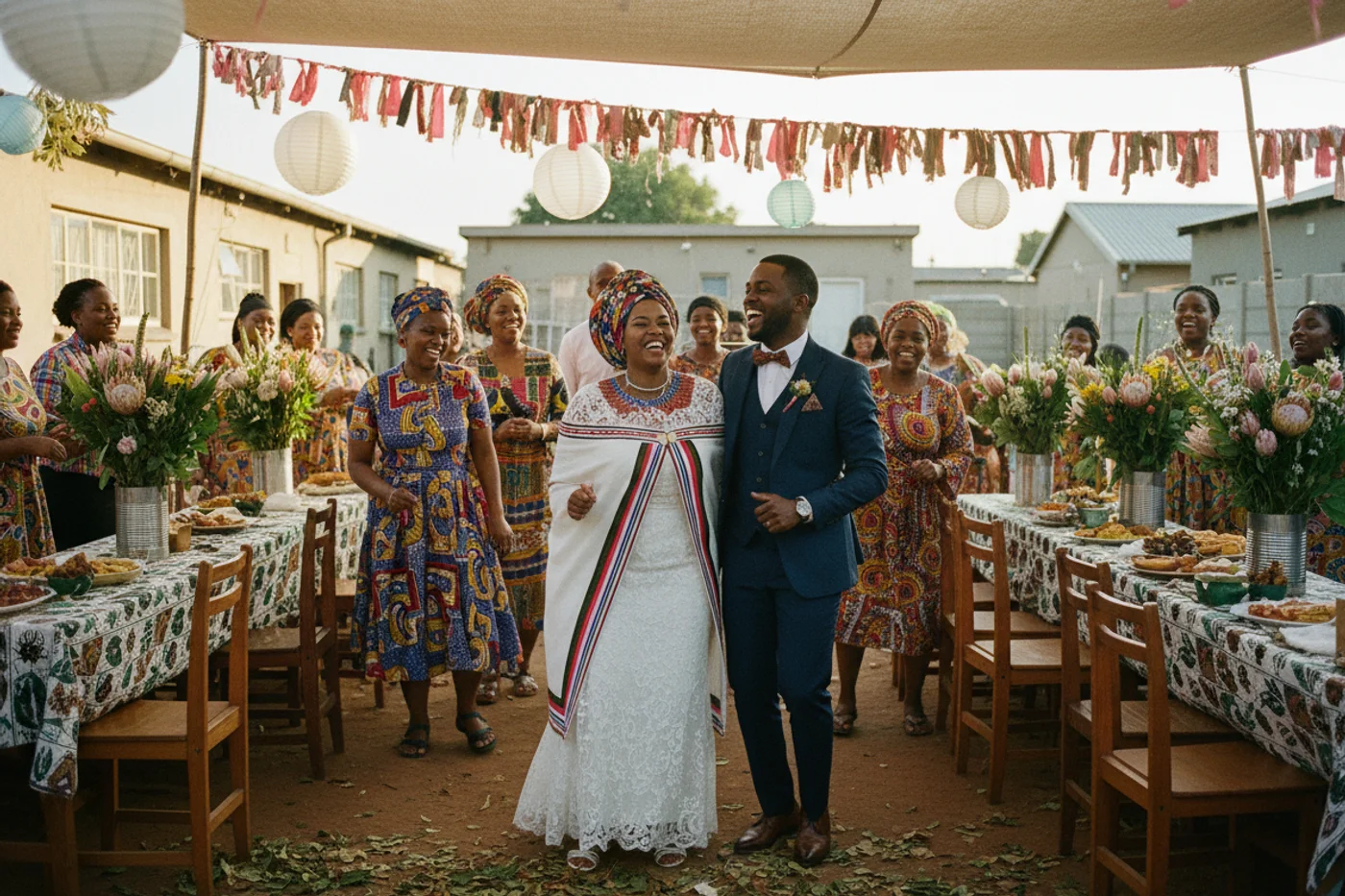
Stretch tents are the most popular choice for South African weddings, and for good reason. The fabric is tensioned over poles and pegged into the ground, so it can be pitched high on one side and low on the other, wrapped around a tree or fitted onto a slope. Open sides keep guests cool in summer. They're also the most affordable to hire, because they're quick to set up and a single crew can pitch one in a morning. The trade-off is that they need soft ground to peg into, and the open sides need hired walls or clear panels if the weather turns.
Peg-and-pole marquees
The classic peaked marquee has a romantic, old-fashioned look and works well on lawns and fields. The centre poles are dressed with fabric or greenery and become part of the décor. They need a lot of space for guy ropes around the outside, which matters on tight sites, and they also need soft ground.
Frame or clear-span marquees
Frame marquees stand on an aluminium structure with no poles inside, so you can put them on tar, paving, a tennis court or uneven ground with a levelled floor. They take solid walls, doors, windows and even air-conditioning, which makes them the safest choice for winter and for very large guest lists. They're also the most expensive, because they need more equipment, a bigger crew and often a day or two to build.
What pushes the price of tent hire up
Size and guest count
As a rough guide, allow 1.2 to 1.5 square metres per seated guest, plus space for the dance floor, bar, buffet and band. A 100-guest wedding with dancing typically needs around 200 to 250 square metres. Every extra row of tables means more tent.
Distance and access
Most suppliers include delivery within their home area and charge per kilometre beyond it. A remote farm in the Karoo or the Drakensberg foothills can add several thousand rand in travel and crew accommodation. Tricky access, such as a steep track or a site the truck can't reach, adds labour.
Setup days
Stretch tents usually go up the day before. Frame marquees can take two or three days to build and strip, and some suppliers charge for every day the tent stands on site.
The site itself
A level lawn is cheap to tent. A slope, gravel or hard surface needs ballast weights, levelling or a raised floor, all of which cost more.

The extras that make up most of the bill
This is where tented weddings blow their budgets. On a bare farm, the extras can easily cost more than the tent.
- Flooring: grass matting is cheapest, interlocking hard floor costs roughly R40 to R120 per square metre, and a raised, levelled floor costs more. Specialists like Connecta-Floor hire modular event flooring and dance floors from Johannesburg and Cape Town.
- Dance floor: R2,500 to R8,000 for a hired black-and-white, wooden or LED floor.
- Sides and walls: R1,500 to R6,000 for a stretch tent's side panels, more for clear PVC or solid frame walls. Budget for them even in summer. A Highveld storm can arrive in twenty minutes.
- Lighting: R3,000 to R15,000 for fairy lights, festoons, chandeliers and uplighting. Our guide to outdoor wedding lighting ideas has the looks that work best under canvas.
- Power: a silent generator usually costs R4,000 to R12,000 for the day, plus diesel and an operator. Even with grid power on site, a backup generator is non-negotiable for the band, caterers and lights.
- Toilets: R3,000 to R12,000 for a luxury trailer unit or VIP portable toilets. Companies like Classic Flush in Cape Town hire luxury restroom units for weddings.
- Heaters or fans: R500 to R1,200 per patio heater for the evening, plus gas.
- Furniture and draping: tables, chairs, linen and roof liners usually come from your décor company. Our wedding décor cost guide covers those prices.
- A catering tent or kitchen: your caterer needs a covered prep area with power and water. Our guide to wedding catering styles and costs explains what caterers need on a bare site.
Load-shedding, weather and the backup plan
A tented wedding has no building to fall back on, so the backup plan is part of the budget. Make sure your generator is sized for everything at once (lights, sound, the caterer's warmers, a coffee urn) and ask the supplier to confirm the fuel needed for a full day and night. If the site has grid power, still run the generator as backup, because a power cut halfway through the speeches is a long, dark wait.
For weather, ask about wind ratings and the supplier's policy for storms, and keep the side panels on site even if the forecast is perfect. Gauteng summer storms and Western Cape winter fronts are both very real. Our rainy-day wedding plan walks through what to have ready, and for June to August dates read our winter wedding tips before you choose between a stretch tent and a fully enclosed frame.
Tent hire prices across South Africa
Gauteng has the most tent suppliers and the most competitive stretch tent prices, especially around Pretoria and the East Rand, where many companies are based. The Western Cape has strong demand from winelands and farm weddings, so prices are similar or slightly higher, and the best suppliers book out early for October to April. Our guide to outdoor wedding venues in Cape Town covers sites that already have tent-friendly lawns.
In KwaZulu-Natal, stretch tents are everywhere for both white weddings and traditional celebrations, and prices are often slightly below Gauteng. In smaller towns and rural areas, local suppliers can be very affordable, but check they have enough stock and crew for your date and a backup generator. If you're planning several family events, some manufacturers sell tents outright. Home Bargain Tents, for example, sells stretch tents from about R7,000, which can make sense if the family will use it for future functions.
You can find tent, flooring and décor hire companies by region in our décor hire directory.
When to book, and how deposits work
Book your tent nine to twelve months ahead for a Saturday in peak season, and at least six months ahead otherwise. Good stretch tent crews are often booked for two or three events a weekend in summer. Most suppliers ask for a 50% deposit to hold the date, with the balance due a week or two before setup. Ask for a site visit before you pay, so the supplier can measure the ground, check access and spot slopes or underground pipes.
Get the quote in writing and make sure it lists the tent size, setup and strike times, delivery, every extra, the damage deposit, and VAT. Ask who is responsible if the tent is damaged by wind, and whether the supplier carries public liability insurance.
How to spend less on marquee hire
- Choose a stretch tent. It's usually the cheapest structure and needs less décor because the shape does the work.
- Book one supplier for the lot. A package of tent, floor, sides, lighting and power is often cheaper than hiring each separately, and there's one number to call on the day.
- Use the site's shade. A ceremony under trees and drinks on the lawn means the tent only needs to seat dinner.
- Get your guest count right first. Every 20 guests adds tent space, flooring and lighting.
- Go midweek or off-peak. Suppliers are more flexible on a Friday or in winter.
- Skip the hard floor on firm, level lawn. Rent a dance floor and let the grass do the rest.
Frequently asked questions
How much does it cost to hire a wedding tent in South Africa?
The tent alone usually costs R8,000 to R25,000 for about 100 guests in 2026. With flooring, sides, lighting, a generator and toilets, most tented weddings spend R25,000 to R80,000.
Is a stretch tent cheaper than a marquee?
Usually, yes. Stretch tents are quicker to pitch and need a smaller crew, so they typically cost less than a frame marquee of the same size. Frame marquees cost more but can stand on hard or uneven ground and be fully enclosed.
What size tent do I need for 100 guests?
Allow about 1.2 to 1.5 square metres per seated guest, plus space for a dance floor, bar and buffet. Most 100-guest weddings need roughly 200 to 250 square metres.
Do I need a generator for a tented wedding?
Yes. Even with grid power on site, a silent backup generator protects you from load-shedding and outages. Expect R4,000 to R12,000 for the day, plus diesel.
Is a farm wedding in a tent cheaper than a venue?
It can be, especially if the land is free, but toilets, power, a catering area, furniture and transport add up quickly. Price out every extra before assuming a tent will save money.
How far in advance should I book a marquee?
Book nine to twelve months ahead for a peak-season Saturday, and at least six months ahead otherwise. Ask for a site visit before paying the deposit.

How Much Do Bridesmaid Dresses Cost in South Africa? (2026 Price Guide)

How Much Does an Engagement Ring Cost in South Africa? (2026 Price Guide)

How Much Does Wedding Décor Cost in South Africa? (2026 Price Guide)
What would be a good wedding budget, when planning a wedding?
Can I wear another colour besides white on my wedding day?